

The Step You Can't Skip When Baking With Blueberries
We may receive a commission on purchases made from links.
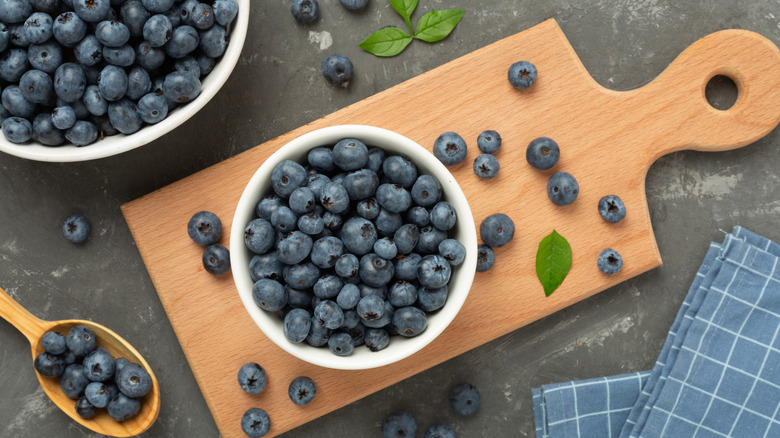
Blueberries are one of the most worthwhile ingredients to incorporate into your regular baking routine. They're a bona fide superfood with their antioxidants and host of nutrients that can aid with everything from lowering blood pressure to keeping your memory sharp. They're also delicious — there are several different unique varieties of blueberries, but you can trust you'll be getting a satisfying pop of juiciness, tartness, and sweetness in every bite. Happily, there are so many irresistible blueberry recipes, from pancakes to pies. But no matter what you choose, there's one crucial step to take when baking with blueberries. To learn more, we consulted with an expert: Mariam Daud, author of the cookbook "I Sleep in My Kitchen: Comfort Food Recipes from My Palestinian American Home."
The step is coating blueberries with cornstarch before adding them to your mix. "Blueberries leak a lot as they bake, and that juice can mess with the crumb or make things a bit wet," Daud explains. "The cornstarch soaks up some of that moisture, so the berries stay more contained." Dredging in cornstarch gives you more control over the berries and resulting texture of your bake, as it keeps them intact and their moisture in check. Plus, Daud says, "it also helps keep them from sinking. The coating gives them a little grip, as long as your batter is the right consistency, so they're less likely to drop straight to the bottom."
How to propery use the cornstarch-coating step
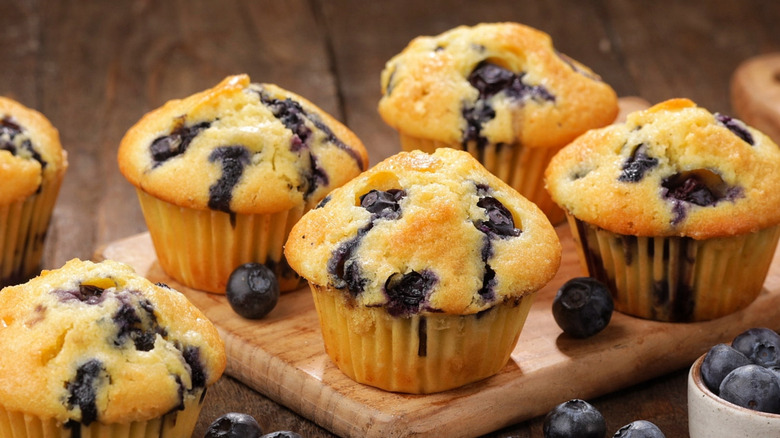
Coating blueberries in cornstarch is always a good idea, but Daud does clarify that it's less necessary with pies and galettes — she says she doesn't tend to bother with this step when making those, as these recipes aren't batter-based. There's nowhere for the blueberries to really sink, and their creating a little bit of juicy jamminess is actually desired. But whenever you're using blueberries in a batter, skipping the cornstarch coating is one of the biggest mistakes you can make with blueberries. And if you do decide to take this step with dishes like pies, you'll still have a bit more control over how the blueberries behave in the course of the bake. So, how can you get the most out of this step?
Firstly, you don't need much cornstarch, Daud says. "About 1 to 2 teaspoons of cornstarch per cup of blueberries is plenty. I usually toss them in right before folding them into the batter and make sure to sift off any extra so it doesn't mess with the batter." Timing also matters. "If you do it too early, the cornstarch hydrates and gets kind of slimy, so I always do this step right before adding it to whatever recipe I'm making." Remember that your batter does need some structure to it to hold fruit to begin with. Daud notes that while it's effective, this cornstarch dredge won't save a loose batter and the blueberries may still sink. But with a batter well balanced between moisture, density, and leavening agents plus this cornstarch coating, you'll have a beautiful blueberry bake every time.