

No, Spider Rolls Don't Contain Bugs — A Sushi Chef Explains What's Really Inside
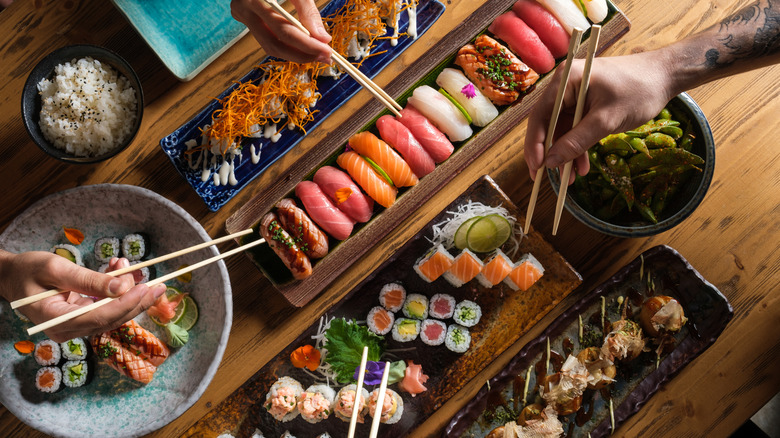
You're telling me a spider rolled this sushi?! For diners unfamiliar with sushi, encountering the name "spider roll" on a menu can be a little jarring; first, you're preparing yourself to eat raw fish, and now you're being asked to eat bugs. Despite the ominous name, a spider roll does not contain any insects. It's built around soft-shell crab, and what are crabs if not ... the spiders of the sea?
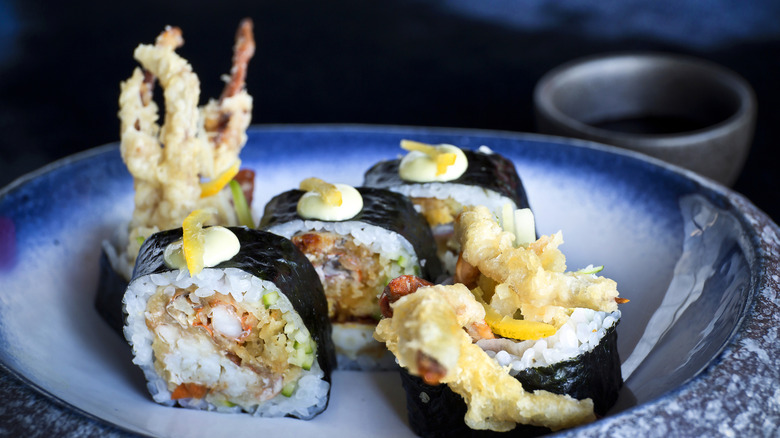
According to chef Andrew Oh at Momoya Sushi in SoHo, spider rolls are typically made with fried soft-shell crab and a short list of familiar supporting ingredients, "spider rolls often include soft-shelled crab that has been fried with a starch coating, as well as cucumber and avocado," he explains. The battering and deep frying of the whole crab creates an extra-crunchy exterior, boosting the texture of the shell and contrasting the soft sushi rice that packs it into the roll.
Because soft-shell crab is eaten whole, including the shell, frying is essential. The hot oil tenderizes the shell and crisps up the batter, so that the meat has a similar bite to tempura, as opposed to the softer texture of raw fish rolls or sashimi. Because the protein in spider rolls is fully cooked, it tends to appeal to diners who prefer their food hot, or those who need or want to avoid raw fish. If that's you, there's actually a decent number of no-raw-fish sushi options. Variations on the basic spider roll are common, says Oh, "some interpretations include tobiko (flying fish roe), tempura flakes, and gobo (pickled mountain root)." These additions add texture, salinity or a bright tanginess, but the foundation stays the same: crispy-crunchy crab balanced with cooling, mild vegetables.
Waiter, what's this spider doing in my roll?
While spider rolls are a pretty familiar sight on American sushi menus — found alongside 'volcano rolls' and other such fusion-sushi dishes encrusted with panko, splattered with Japanese barbecue or special sauce (usually Kewpie mayo and sriracha) and layered with avocado in various configurations that innovate on the rather restrained art of sushi — they're not a traditional Japanese sushi offering. American sushi has long experimented with bold textures and combinations alongside more traditional preparations, but as Oh explains, "in Japan, spider rolls are actually very difficult to find."
The popularity of these wild sushi rolls, and all their saucy brethren, is a part of the American sushi lineage, which is influenced by the famously American love for large portions, sauces and deep-fried food, and by the creative stylings of kitchen workers from all different parts of the globe. In the U.S., sushi menus often include gateway rolls designed to be approachable to diners who may be new to the cuisine, with familiar, identifiable ingredients, like the spider roll's avocado and cucumber.
So why 'spider'? It's not so mysterious. When prepped and plated in the right way, the fried crab's legs can extend outward from the roll, creating a spindly, spider-looking shape on the plate. Technically, crabs have ten legs, not the eight that a spider does, but who's counting? While the name can be off-putting to some, it's meant to be slightly funny, and it's definitely distinctive and memorable. It might also be appealing to a kid who would otherwise turn their nose up at a raw fish option, but could be convinced to try something with an ersatz gross-out factor. In any case, rest assured, no spiders in the spider roll, unless you order it that way.