

This Apple Variety Is Hands-Down One Of The Worst For Baking
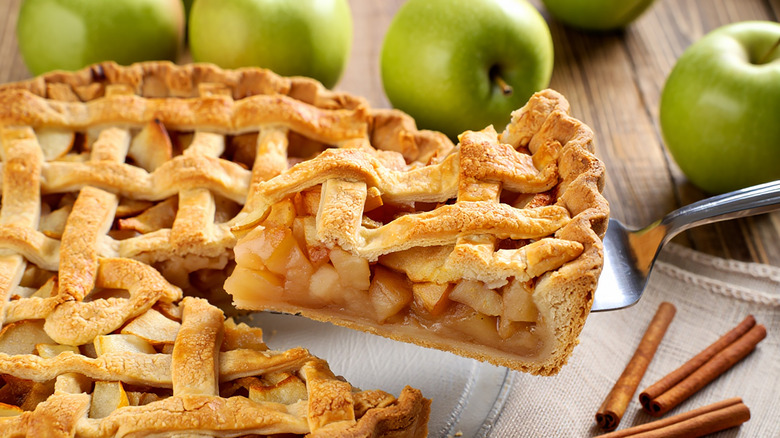
Close your eyes and picture an apple. The image that probably comes to mind is the ironically misnomered Red Delicious apple. NYC's big apple? Red Delicious. Snow White's poisoned fruit? You guessed it. They're one of the most popular, or at least well known, kinds of apples. They are quintessential, ubiquitous, symbolic, and ... derided as the worst baking apple you can "pick."
In the oven, they soften too quickly and slump into a bland mush once exposed to heat. For bakers, those traits are frustrating at best and disastrous at worst. Expert baker and recipe developer Alex George of Lily P Crumbs agrees, explaining that the variety's reputational shortcomings are structural as much as flavorful, "Red Delicious apples have a pretty rough reputation in the baking world: mealy, mushy, bland, the insults keep coming." A good baking apple needs the integrity to hold its shape against long application of heat, keeping some bite and enough acidity to stand up to the sweetness as it cooks. You can count on Red Delicious to fail on all three counts. As George explains, "the critiques are somewhat justified, considering Red Delicious apples do have a pretty tough exterior and lack the acidity we normally associate with that refreshing, crisp apple taste."
When apples bake, their cell walls soften and their starches convert to sugars. Varieties that make the best pies excel in the oven because they manage that transition gradually, retaining enough firmness to hold their shape while releasing concentrated, juicy flavor instead, not a thin and paltry dilution. "When baking with apples, you want an apple that retains its shape, texture, and flavor throughout the baking process." Red Delicious looks like the platonic ideal of an apple, but it cooks like a sponge, releasing moisture early and collapsing soon after, leading to watery, indistinct textures.
When a good apple goes bad
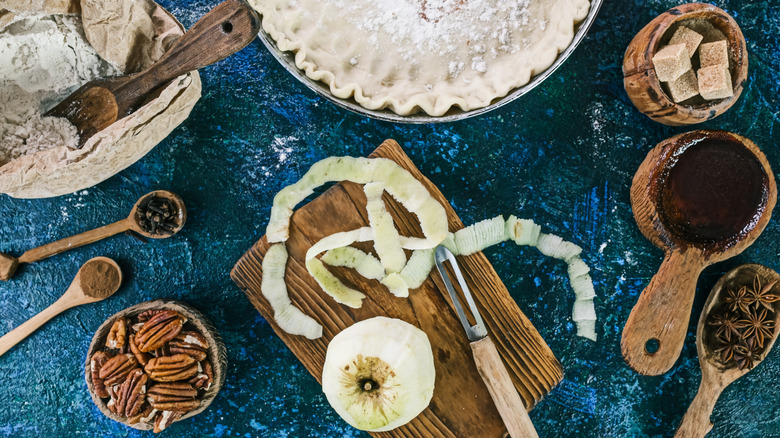
The Red Delicious wasn't always reviled. When the variety rose to prominence in the late 19th and early 20th centuries, it was valued for its aroma and sweetness. Over time, however, the apple market transitioned from regional fruits, with heirloom varieties grown for seasonal, local markets, to national commodities bred for durability, long-storage potential and transportability. Red Delicious apples cooperated better than more obscure, funky varieties.
Pomologically, the apple mutates easily, producing deeper red "sports" that breeders repeatedly selected for visual appeal. Thicker skins reduce bruising, and lower acidity allowed the fruit to taste mild even after months in cold storage, which is where apples live, sometime for months, between harvest and consumption, like a high-tech cellar, allowing them to be sold year-round. In other words, these apples were bred to be bad. They are a system artifact, optimized by a food system that values shippable consistency and shelf life over gustatory delectability or real-recipe kitchen performance. Red Delicious could survive long supply chains and aesthetically dominated supermarket displays, becoming synonymous with apples themselves, even as they eroded culinary usefulness.
This botanical and marketing evolution flattened public expectations of what an apple should be. As shipping and cold storage technologies improved in the mid-20th century, people moved away from eating apples off the old tree in the back yard, or from their local farmer, and toward shelf-stable, overly waxed, homogenous fruits. Red Delicious became the default reference point. The more ephemeral qualities that once defined apples, their sharpness, fragrance, even their very imperfections, fell out of the mainstream desirability. Supermarket experiences and branding trained shoppers and eaters to equate redness with ripeness, and uniformity with quality. Apples that bruised easily, or ripened unevenly, or tasted tartly assertive, were gradually sidelined.
The apple that lost its bite
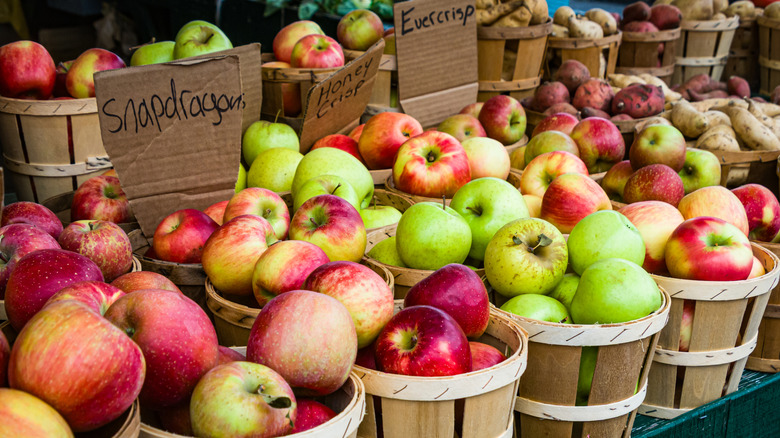
The decline of Red Delicious in the kitchen mirrors its broader trajectory in American agriculture. At its peak in the 1980s, it dominated commercial orchards; in the big apple state of Washington, where 60% of the nations apples are grown, it once accounted for an incredible three quarters of the harvest. As consumer tastes shifted and better-tasting varieties gained ground, the Red Delicious lost its cultural authority. Once considered the king of American apples, reigning for over fifty years, so highly prized for its conical shape and distinctively stackable coke-bottle bottom, it's now relegated to the butt of jokes, wrapped in plastic at the continental breakfast spread of a highway hotel, and generally considered a bottom-tier facsimile of an important national symbol and commodity crop.
If you had a disappointing, mealy experience with a bad, boring apple in the past, consider reconsidering the fruit. Finding the one you like best is a joyful undertaking that requires the sampling an actually delicious cornucopia. For bakers who want predictable, toothsome results, just pick a different kind of apple, and there's a lot of good ones to choose from. George shares that her "go-to recommendations for baking with apples are Golden Delicious, Granny Smith, and Honeycrisp. Each has a different level of acidity and a slightly different texture once baked, but all have given me consistently delicious apple pies."
These varieties work so well in pies because they haven't had their personalities bred out. Their firm flesh holds up, and their acidity acts as scaffolding, keeping flavors vivid as the water content cooks away and the sugars intensify. Baking magnifies an apple's inherent traits instead of disguising them, which is why varieties optimized for storage, transport, and visual uniformity tend to fall apart once exposed to sustained heat.