

The Kroger Pricing Policy Worth Knowing Before Your Next Shopping Trip
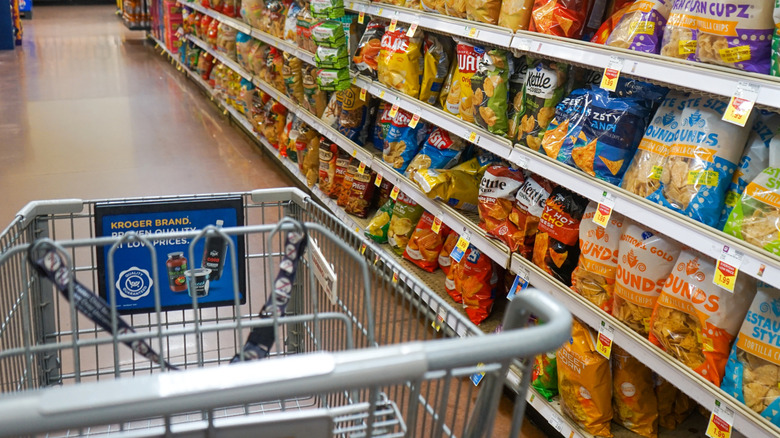
Nothing beats the tiny thrill of stumbling upon a sale at the grocery store. Whether it's a BOGO, a percentage deal, or a dollar-off that item already on your list, it's satisfying. And Kroger is one particular supermarket chain that always seems to be swimming in deals. Those yellow sales tags flutter around the store, promising cost savings in every department from frozen foods to baked goods.
However, as any extreme couponer or budget-conscious shopper would know, your items don't always ring up at the low price you expected. It can be frustrating, but that's why Kroger's 'Make It Right' policy exists. Essentially, under the policy, employees at Kroger locations (and sister stores like Fry's or Ralphs) can make small price adjustments at the register. That means they can honor the advertised sales price for your items, even if it didn't ring up that way.
According to a Kroger employee forum, the policy can manifest in different ways as well. One cashier said it could apply to a situation where, if a Kroger item was out of stock, a higher-value, name-brand product could be substituted at the same price as the Kroger item. A separate forum also mentions something called the 'Scan Right Guarantee'. Under this related policy, if an item rings up at a higher price than advertised, you can get the first one for free. Or, if it costs more than $5, you get a $5 discount on your overall bill.
Kroger has run into price discrepancy issues in the past
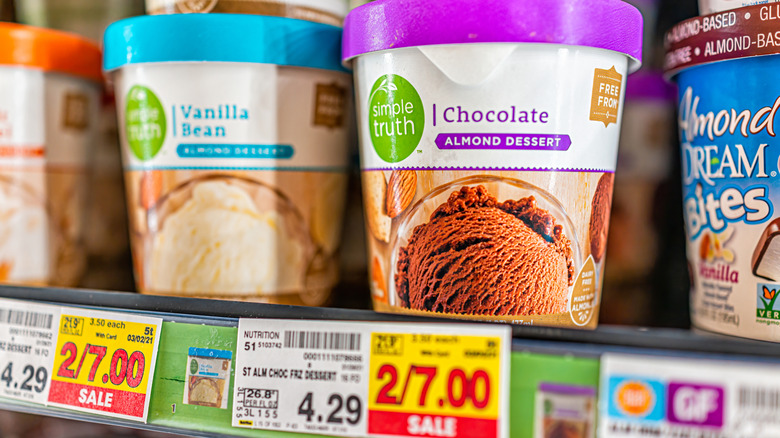
It's important to be mindful of prices when shopping at Kroger and to take advantage of the 'Make It Right' policy, or you may be overcharged. It happens more often than you may think.
The store has a reputation for price-labeling errors, and these issues were recently brought to light thanks to a 2025 investigation conducted by Consumer Reports and other news organizations. After a month of secret shopping at Kroger and its affiliates — like Harris Teeter and Fred Meyer — they found that shoppers were consistently paying full price for items marked as on sale. In many cases, sales labels still displayed on the floor were expired — sometimes up to 90 days past their expiration date. At the end of the experiment, they found that shoppers were overcharged by about 18.4% per item due to this mislabeling.
To protect yourself and your wallet, check prices closely as you shop — it's also a good idea to snap pictures of the price tags as you go. Then, at the register, pay attention as your items ring up, and let the cashier know if you catch any inconsistencies. If you run into any other pricing issues, you can also reach out to Kroger through its online contact page, its mobile app, or by calling 1-800-KRO-GERS (1-800-576-4377).