

The Difference Between Southern Food And Soul Food
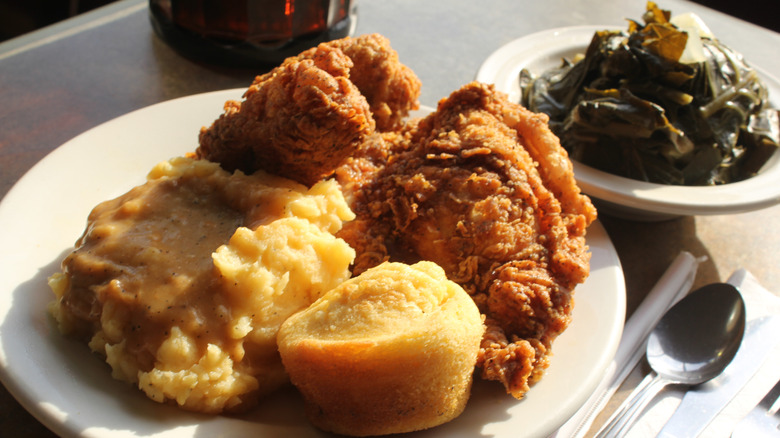
One of the most powerful things food can do is teach you about culture and history. From the outside looking in, it can be daunting to understand the subtle differences between cooking styles that are closely related. The difference between Southern recipes and soul food recipes, for instance, is hard to fully appreciate when you're just learning about them. There is a lot of overlap between the two, but there are also some differences. As cookbook author Bob Jeffries once said, "While all soul food is Southern food, not all Southern food is soul," per Grady Newsource.
The term "soul food" was born from the civil rights movement in the 1960s. Black Americans began using the name soul food to refer to their culinary legacy passed down through generations. These were recipes that represented their history, culture, and struggles. After all, no matter how times change, food is always there with us. Soul food bound people together who had lost much of their history as they migrated from the South across America. Jeffries related this to the fact that African-American cooks in the South did a lot with the very little they had.
Others have suggested the difference between soul food and Southern food lies more in preparation than in specific recipes. Soul food, to be blunt, has more soul. But what does that mean? The idea is that the food was not just cooked with passion, but conceived with a sense of identity and liberation. It should be marked by serious flavor, whether that comes from fiery spice elements or rich fats.
The heart and soul of soul food
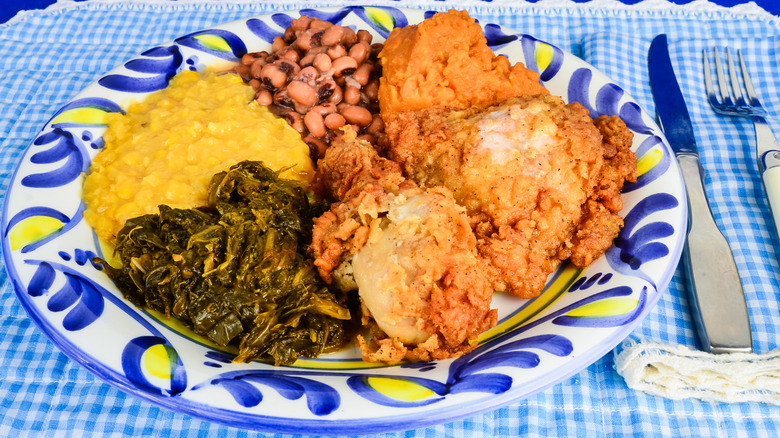
Dishes like macaroni and cheese, fried chicken, cornbread, collard greens, fried okra, and black-eyed peas, and ingredients like chitterlings, pig's feet, ham hocks, rice, potatoes, and cornmeal feature heavily in soul food. These ingredients became associated with soul food because they were local, plentiful, and affordable to African Americans. Even before the cuisine had a name, soul food cooks adapted to what was available and made it delicious.
It's easy to forget that one of the main distinctions between Southern and soul food is history. Soul food's origins are rooted in slavery. Many of these modern recipes were handed down by enslaved people. Ingredients like okra and black-eyed peas came from Africa, along with the techniques for cooking them. Corn, pork, and other ingredients found in the South were adapted to African cooking styles, leading to new methods.
Native American ingredients like corn and squash, as well as their preparations, are part of Southern tradition. Some techniques famous in the South, like Texas barbecue, draw inspiration from Spanish, Mexican, and European recipes and methods. Creole cooking borrows some traditions from soul food but also draws on roots in France, Spain, and other points in Europe. Dishes like egg Sardou have little in common with soul food.
Southern food often mirrors soul food because both use the same ingredients and were often cooked by the same people as they evolved, but southern food casts a wider net. Fried chicken is a staple of both, for example, but you may find more hot peppers in soul food versions. For both Southern cooking and soul food, the ingredients may be the same, and even some of the methods. But the true difference is the story of the people cooking.