

The Classic Comfort Food You Should Skip At An Irish Pub, And What To Get Instead

An Irish pub is a neighborhood staple where whiskey and Guinness flow freely, fueling friendly and lively banter. Irish pub fare can be an essential part of the experience, soaking up the alcohol in the most comforting way. Hot hearty stews are warming favorites — however, if you see beef stew on the menu, you should avoid ordering it.
While Irish beef stew might be a recipe you've seen, it isn't as Irish as the name implies. Historically, Irish dishes revolve around sheep or pork as the protein source. Cows were mostly valued for dairy products; everyone knows that Irish butter is among the best, with KerryGold butter a firm favorite in Ireland and beyond. Beef in stew is most likely a result of English influence, and often features multiple root vegetables and a hearty pour of stout to balance the umami-richness of the beef.
If you want a truly authentic Irish comfort-food experience, order Irish stew, the national dish of Ireland, which should be made with either lamb or mutton. Originating in the early 19th century as a peasant food, a traditional Irish stew consists of mutton slow cooked with onions, potatoes, and barley in water. The slow-cooking cauldron method was useful to soften tough mutton cuts. The simple yet filling dish utilized basic and plentiful native ingredients and was a reliable meal that helped see many in Ireland through the Great Famine. For this reason, it's come to signify the resilience and resourcefulness of the Irish people.
Irish stew variations and pub-fare classics to order
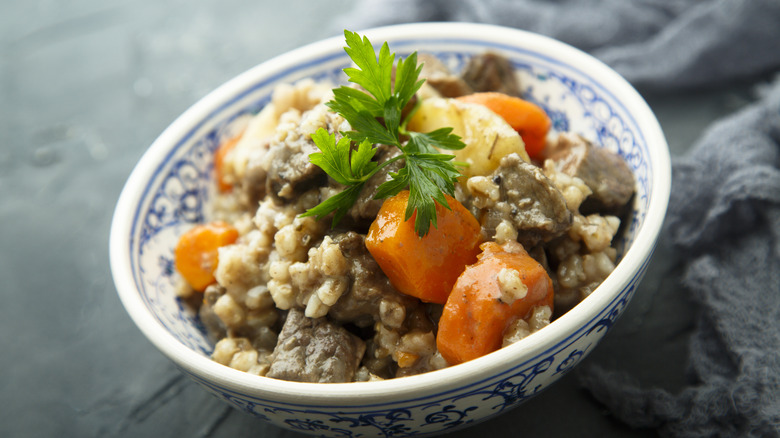
Irish stew has taken on a few changes since the 19th century, starting with the main protein. Mutton is still used on occasion, but lamb is more popular in modern recipes. While both are sheep meat, mutton is adult meat with a much gamier flavor and tougher chew. Lamb is young meat with a milder flavor and more tender texture. While slow-cooking mutton will tenderize it, slow-cooked lamb will all but melt in your mouth. Another change is to swap a simple water base for beef or lamb broth. Scratchmade stock from leftover lamb bones and vegetables is ideal, but a good-quality beef broth is the umami upgrade that'll bring richness to the stew. Added aromatics like celery, onion, and bay leaves are now common ingredients, as are carrots for a pop of sweetness and color. But if you spot barley, you know that it's at least based on a trad recipe. Irish stew generally comes with Irish soda bread to sop up all the broth. The wholemeal Irish flour used to make soda bread is hard to find, so many Irish pubs in the U.S. use coarse whole wheat flour or a blend of flour and oat flour, instead.
For appropriate drink pairings, a stout like Guiness, or a single malt Irish whiskey will stand up to and complement the robust and rich flavors of Irish stew. Other Irish dishes worth ordering at the pub include shepherd's pie, bacon and cabbage, and Irish potato pancakes called boxty.