

Slow Cooker Chicken Turning Out Dry? Here's Why (And What To Do About It)
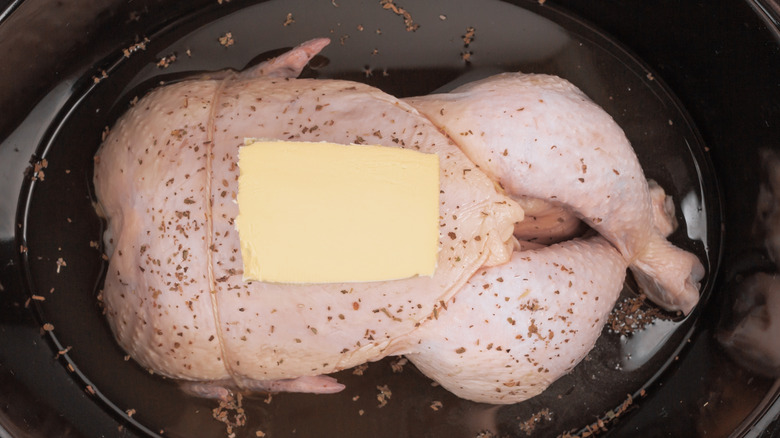
If your slow cooker chicken keeps turning out dry or stringy, it might be because of the cut you're using. Chicken breast is a common go-to, but it's biologically ill-suited to the low and slow cooking style of cooking slow cookers utilize. It might seem like slow cookers should protect lean meat, but because chicken breast is made up primarily of fast-twitch muscle fibers — which are low in fat and connective tissue, two things that are conducive to juicy and flavorful slow cooker chicken — it actually needs the opposite treatment: a shorter cooking time and precise temperature control.
When cooked for a long time, proteins contract and squeeze out moisture. Even in the best slow cookers, that process happens gradually but relentlessly. The meat begins to lose moisture as the myosin muscle filaments coagulate, which starts around 120 degrees Fahrenheit. As the temperature increases to 150 to 163 degrees Fahrenheit, the tougher actin protein fibers further tighten. At the lowest setting, slow cookers typically come to 190 to 200 degrees Fahrenheit, meaning the meat is effectively overcooked and held there for hours.
So why do people keep cooking chicken breast recipes in the slow cooker? Maybe out of habit, maybe because of its reputation as a lean, "healthy" protein. Breast meat seems basic, easy. It's familiar, and often recommended in diet-driven cooking. But that leanness is exactly what works against it in the slow cooker, lacking any of the fat and connective tissue needed to protect it from drying out.
Why chicken thighs are a better choice for the slow cooker
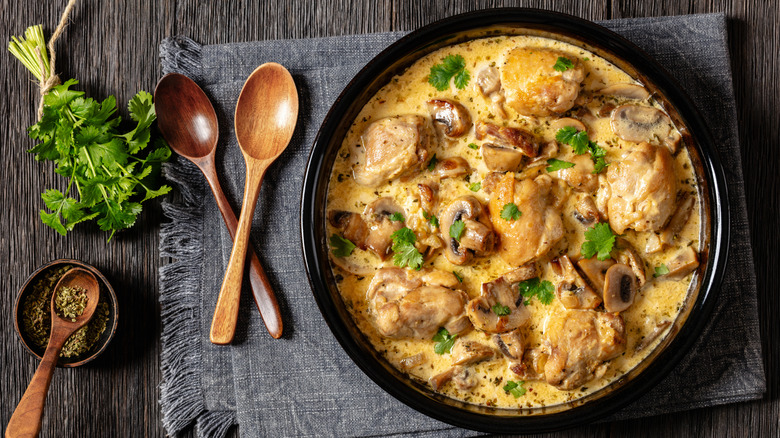
In order for a slow cooker to work its magic, the meat you put in it needs to contain fat, connective tissue, and collagen in order develop flavor and maintain a good texture. Chicken breast has none of those things. Once you accept that it's simply not one of the cuts of meat built for braising and that you'll need to start considering others that are, things start tasting better. Chicken thighs, for example, thrive in the slow cooker for the same reasons that chicken breast falters.
Chicken thighs are made up largely of slow-twitch muscle fibers, which contain more of the good stuff — fat and connective tissue — which respond well to the low and slow cooking of the slow cooker. As the thighs cook, their collagen gradually converts to gelatin improving texture and increasing perceived moisture. The fat they contain helps buffer against moisture loss, and the gelatin that draws out gives the meat and sauce a richer, more cohesive texture.
You can use boneless or skinless thighs, or bone-in with skin, depending on how much fiddling you're willing to put up with. No matter, they'll absorb and build flavor beautifully in the slow cooker — so don't miss the opportunity to bathe them in a flavorful braising liquid. Chicken is a pretty neutral base that can accommodate a lot of flavor profiles, from harissa honey-garlic to coconut curry. If you want tender, slow-cooker chicken, thighs are simply the cut designed for the job.