

Black Vs Pinto Beans: Which Packs The Most Protein?
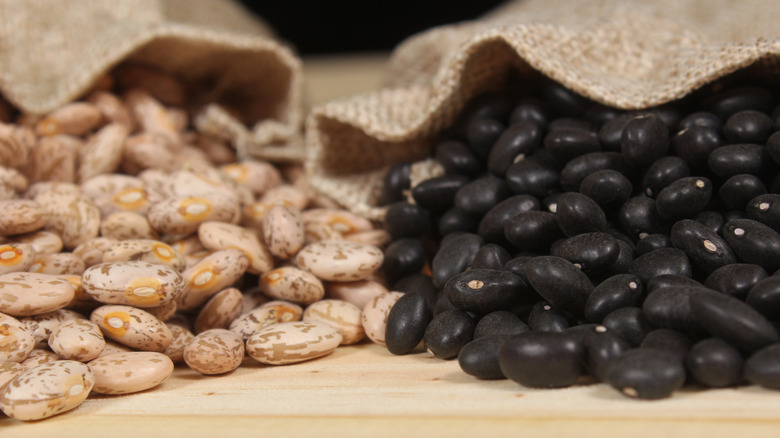
Few places in the grocery store are primed for hard decisions quite like the bean aisle. There are different colors and shapes, textures and sizes, along with a million and one ways to prepare, season, and serve them. But even if you narrow it down to the most popular bean types, you're probably still looking at a pinto versus black showdown. So if you need a tiebreaker and protein is what you're searching for, place your bets on black beans because we have a winner.
Black beans are among the most nutritious beans out there, with 1 cup [240 grams] of canned black beans providing 14.5 grams of protein. Meanwhile, the same amount of canned pinto beans contains 11 grams. Protein helps our bodies with everything from metabolism to repairing and building tissue. And the recommended daily amount is best calculated by body weight — about .8 grams per kilogram of body weight, which commonly works out to around 46 grams for women and 56 grams for men, though individual needs differ.
However, there's more to these beans than protein. When it comes to fiber, 1 cup of black beans has 16.6 grams compared to pinto beans' 11 grams, which is important if you're focused on digestive health. Black beans also have more iron and potassium, though pinto beans have plenty of those nutrients and more calcium. Plus, pinto beans were linked to both lower total cholesterol and LDL cholesterol in a 2007 study, meaning they're great if you're prioritizing heart health, though black beans are also known to lower LDL cholesterol levels. Either way, you can't really go wrong.
How do black beans or pinto beans fit into your meal?
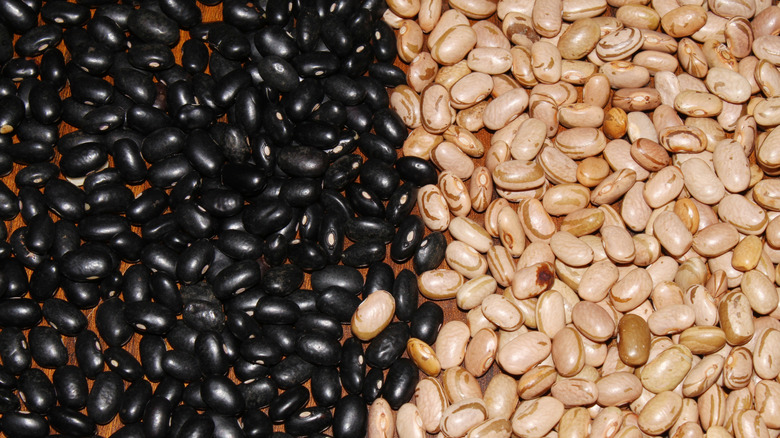
Black beans and pinto beans may both be nutritional powerhouses, but there are some taste and textural differences worth taking into account when you're cooking. Black beans are sweet and slightly earthy, meaning they pair nicely with aromatic spices and ingredients, such as cumin and garlic. Their deeper flavor also allows them to work well with bright, acidic ingredients like lime juice and tomatoes, as well as smokier elements like chipotles and smoked paprika. And since they retain their shape after cooking and have a little chew, they're great in dishes where you want the beans to have presence, whether that be within a burrito, grain bowl, or slow-cooked chili.
Pinto beans are subtler with a nuttier profile that complements many other flavors. Their more neutral taste means they pair well with richer ingredients like cheese or avocado, while being versatile enough to work alongside mild seasonings without overpowering them. And with their soft, creamy texture, pinto beans can show up in anything from soups to salads to desserts, like pinto bean pie, which takes advantage of their velvety consistency.
Even though black beans may have more protein and fiber, your choice may depend on what you're looking to cook and the flavors you're after. But at the end of the day, both beans are budget-friendly, easy to work with, and undeniably tasty. So if you're ready to eat, check out our lists of pinto bean and black bean recipes to figure out how to put them to good use.