

5 Tips For Making Restaurant-Quality Frozen Drinks At Home, According To A Master Mixologist
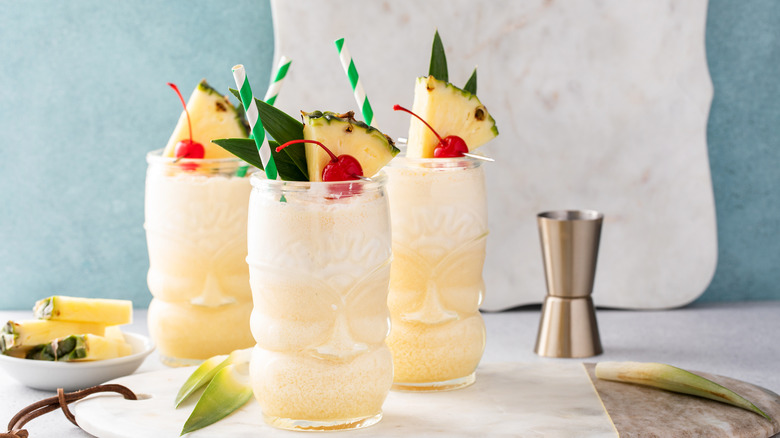
Nothing screams summer quite like a frozen cocktail, and when you're deep in the throes of winter that little bit of proverbial sunshine can be sorely needed. But making a good frozen drink isn't as simple as throwing your ingredients together with some ice in a blender. That's why we tapped into the expertise of master mixologist Justin Lavenue.
Lavenue is an experienced mixologist and co-owner of The Roosevelt Room in addition to being the owner and operator of The Eleanor and RoadHaus Mobile Cocktails. Before building his decorated career in mixology, Lavenue got his start working as a busser. One day he was asked to jump behind the bar to cover for a bartender who didn't show up for their shift, and the rest is history. He's since grown to be at the helm of several different businesses and has mastered the art of the perfectly-blended frozen cocktail. We gathered his five essential tips for making restaurant-quality frozen drinks right in your own kitchen. In no time you'll be whipping up perfect frozen drinks like the refreshing frozen daiquiri, a rich frozen Irish coffee, or our top-ranked out of 26 popular frozen cocktails: the ever-iconic piña colada.
Remember that ice will dilute your cocktail
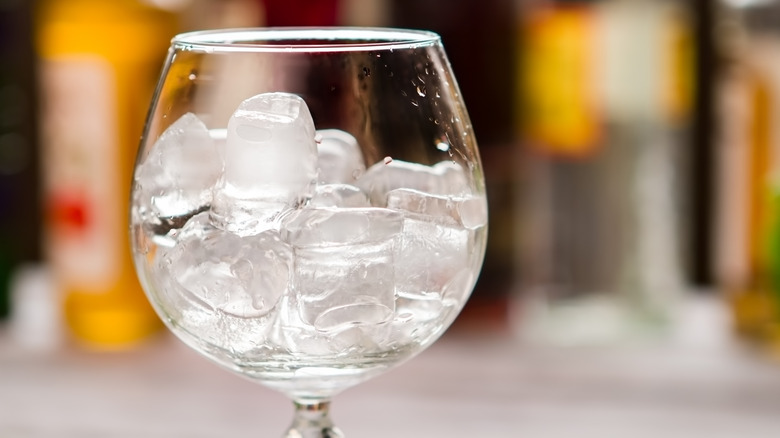
First and foremost, Lavenue wants at-home mixologists to remember that ice is water and is playing a much different role in a frozen drink compared to a traditional cocktail."Ice is not a neutral ingredient," he explains, "it aggressively dilutes flavor, and without enough sugar to act as a bridge, the drink will taste flat, watery, and disappointing." Sugar is going to be your best friend when it comes to avoiding a watery frozen drink — more on that later.
To maintain the integrity of your frozen cocktail's flavor, Lavenue says to consider what range your drink falls into on the Brix scale. The Brix scale was designed to measure the sugar content of wine, but it is also used to gauge the sweetness of other liquids, too. For frozen cocktails, Lavenue recommends you go for, "...a finished drink in the 13-16 Brix range (that is with a 13%-16% sugar content) which is the sweet spot where flavors stay vibrant without tipping into the sweet slushie territory." The correct balance of flavors will be key in making a frozen beverage that's worth getting a brain freeze for.
Blending speed matters more than you may think
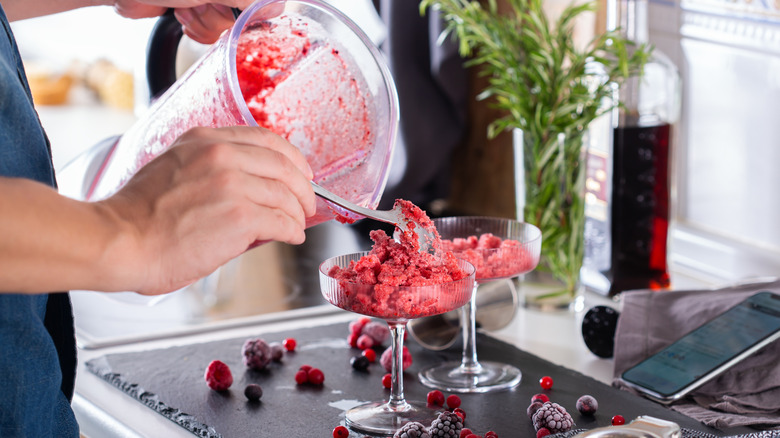
Now that the water content of your drink has been perfected, it's time to focus on the proper equipment and blending technique. Putting your ingredients in a blender and hitting the "smoothie" button isn't going to cut it. "You want to pulverize the ice quickly so the frozen interior of the cube gets fully incorporated before excess melting occurs," Lavenue says. "Think less 'gently blending' and more 'rapid pulverization.'" So, go in with a confident hand and try not to over blend to the point that the ice starts to melt.
Not only does the correct blending technique ensure that ideal creamy-yet-light slushie texture, but it can actually affect the distribution of the overall flavor and even the temperature. "The faster you break down the ice, the colder, brighter, and more cohesive the drink will taste," he notes. If you've got the ingredients down pat but the cocktails don't turn out quite like they do at the bar, then that might mean it's time to upgrade your blender.
Don't skimp out on the sugar
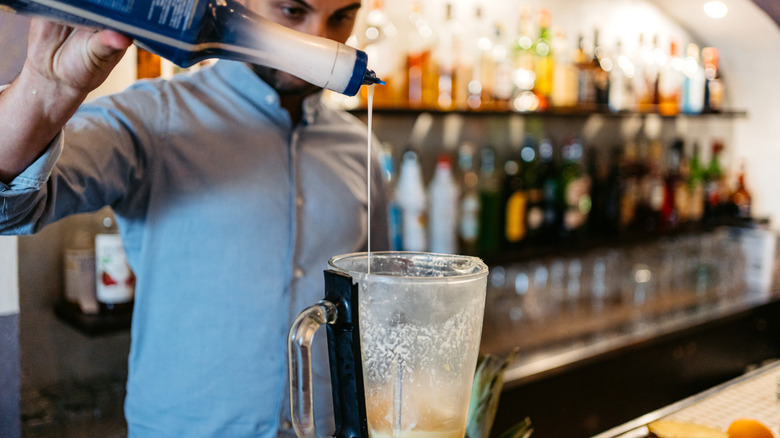
We already touched on the importance of adequate sugar content in your frozen cocktails, but Lavenue helped us dive deeper into that. "Remember that frozen cocktails should intently be slightly sweeter before blending," he says. "If it tastes perfectly balanced before the ice goes in and you blend it, it will almost certainly taste watered down once it's been blended." This is thanks to the first tip he shared, which is that the ice will naturally water down your cocktail and can greatly dilute the flavor.
"If you want to take a classic sour, punch, or tiki cocktail recipe," he advises, "I always add another ¼-ounce to ½-ounce total of the sweetening ingredient(s) in that recipe before blending, knowing that it needs the added sugar to come out tasting perfect on the other side." Just like any good mixologist or culinary professional, tasting your cocktail at each step can help ensure the desired results. Make sure to give your mix a taste test before blending and don't be alarmed if it's a touch too sweet at this stage — that just means you're doing it right.
A powerful blender is an absolute must
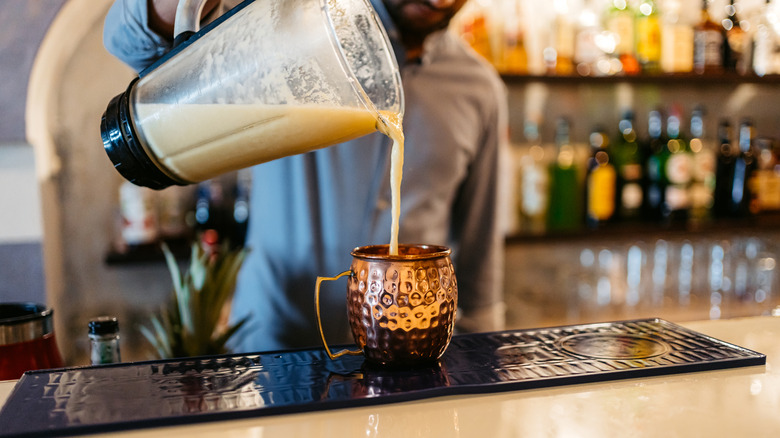
Lavenue emphasized that the strength and speed of your blender is critical to the quality of your frozen cocktail, so investing in a high-quality blender can make all the difference when mixing up your best frozen cocktail recipe. "A high-powered blender is non-negotiable," he says "The goal is to fracture ice cubes rapidly enough that their frozen core — the soul of the cube, if you will — gets injected and homogenized into the liquid."
Knowing what blender to buy can be hard to discern if you're not a professional chef or mixologist, but Lavenue suggested a few of his favorite choices. "For single or double servings, something like a NutriBullet works well," he recommends. "If you're making larger batches, a Vitamix or Blendtec is worth every penny." If investing in a new blender isn't quite in the cards for yourself, a Vitamix is an appliance you should consider buying secondhand. They're durable and can last for years, so finding one that's been pre-loved for a fraction of that brand new price can be a great way to save money and still get the equipment needed for yummy frozen cocktails.
Not just any kind of ice will do
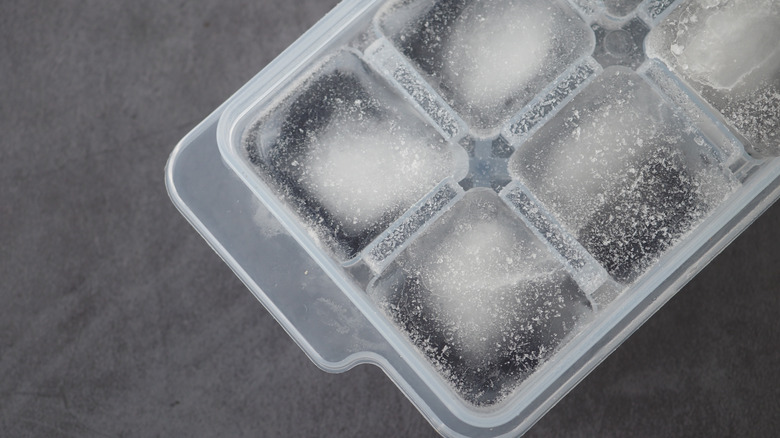
Last, but certainly not least, is the importance of ice. Arguably the most important part of a frozen cocktail (besides the booze, obviously), using the right kind of ice can make or break your concoction. Lavenue explained this further, "Ice matters more than most people think. Always use standard-sized ice cubes straight from the freezer. If ice sits out, even briefly, the outer layer melts and you're essentially adding plain water to your drink before you even start blending." There's all kinds of different types of ice, but your favorite kind to crunch on or throw in an iced latte might not be the same kind of ice you should be using in your frozen cocktail.
Thankfully, Lavenue said the best kind of ice to use for a frozen drink is just your run of the mill ice cube from the standard-sized ice cube trays. He shared, "Large-format ice doesn't break down efficiently, and crushed ice exposees too much surface area to room-temperature liquid, which leads to premature dilution (and we all hate that, don't we). Regular cubes hit that Goldilocks zone." Thanks to Lavenue's expert tips, you should now be ready to mix the best frozen cocktails right in your home bar or kitchen, and that is certainly worth cheering to.