

You'll See This Croissant Look-Alike In Argentinean Bakeries — But It's Actually A Signature Specialty
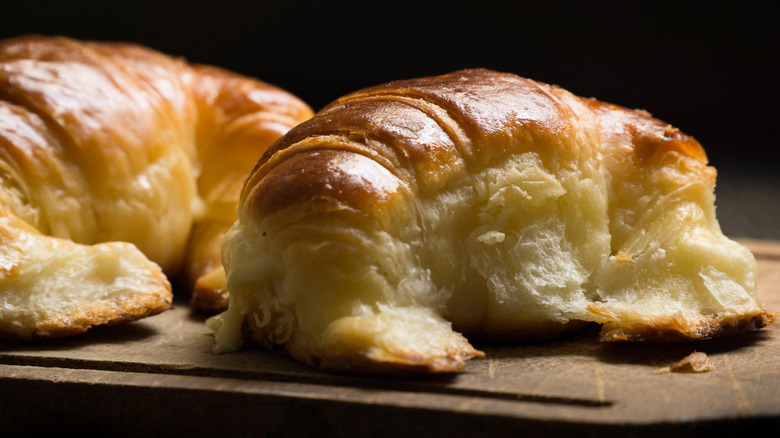
If you've never been to an Argentine bakery, let this be your sign to go and discover the abundance of sweet treats the South American country is famous for. Walking down the streets of cities like Buenos Aires, or visiting your own neighborhood Argentinean bakeshop, you'll quickly notice one particular pastry that looks strikingly similar to a croissant at first glance: a medialuna. While medialunas (which translates to half moons) are also made from laminated dough (sheets of dough folded and layered with butter), rolled and baked in the shape of a crescent, and eaten as part of a traditional Argentinean breakfast with coffee, these signature Argentinean pastries are actually quite different than French croissants.
Medialunas are actually perhaps more similar to Italian cornettos (which makes sense due to the large influence of Italian immigration on the country's cuisine), which, like sweet medialunas, contain eggs in the dough. Whereas croissant dough is typically eggless. Though both are yeast-based doughs and the base of each pastry-laminated dough has similarities, croissants contain lots of butter — usually more than sweet medialunas — giving them their crunch and flaky layers. In comparison, medialunas are typically smaller in size, softer, and more breadlike. The layers pull apart satisfyingly, more like a crescent roll than a flaky croissant. And unlike croissants, which are typically not very sweet, medialunas can be made with either sweet or savory dough varieties.
Eating customs and varieties on the staple pastry
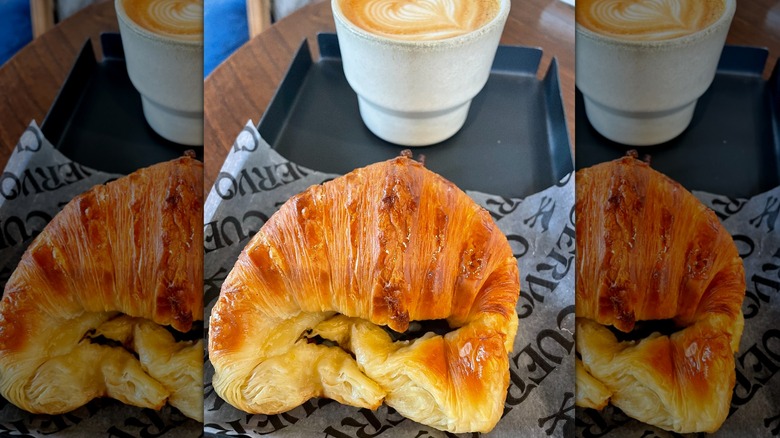
As a professional baker living in Buenos Aires who's even taken a pastry class here, I can tell you that whether you like sweet medialunas de manteca (made with butter) or savory medialunas de grasa (made with animal fat) is something you should probably form an opinion on. And the best way to find out which crescent-like pastry you like (I like all of them) is to try the pastries for yourself. For the sweet ones, the egg, honey, vanilla in the dough, and a sweet finishing glaze (almíbar) give them a sweetness similar to brioche — but with a taste that's distinctly signature Argentinean. Savory medialunas look like a thinner, elongated version of the pastry and are typically more filling and crunchy due to the lard.
When eating like a local in Buenos Aires, or trying out an Argentinean bakery (panadería) close to home, you'll have your pick between sweet and savory medialunas, as well as a variety of facturas (a whole host of pastries, including medialunas, many of which are made with sweet medialuna dough and filled with ingredients like dulce de leche or dulce de membrillo (quince jam)).
Medialunas and other facturas are typically enjoyed for breakfast or merienda (a light afternoon meal). At many bakeries, coffee shops, and restaurants, you'll also find sweet medialunas sandwiched with ham and cheese, which makes for an absolutely perfect complement of savory-sweet tastes all in one bite. Buen provecho.