

The Clever Way Nabisco Marketed Graham Crackers During The Great Depression
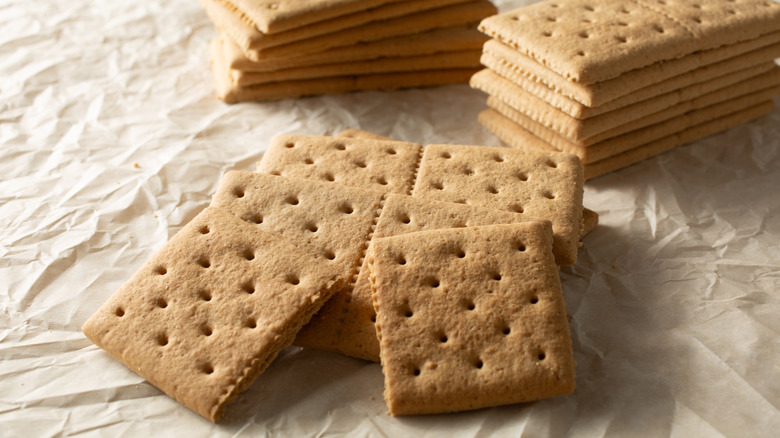
It may surprise you how many of the dishes we eat today originally became popular not just because the ingredients taste good together, but because the companies that make those ingredients created recipes to sell more products. Even the classic graham cracker crust you love for your pies is the result of a purposeful marketing strategy.
During the Great Depression, the National Biscuit Company (known these days as Nabisco) wanted to encourage people to keep buying graham crackers as household budgets shrank, and grocery purchases had to become more selective. To do this, the company developed a concept called "cracker cookery," running newspaper ads to spread the word on the versatility of graham crackers. These ads were essentially editorials, but they came across as almost "scientific" know-how to encourage folks to use the crackers, for example, as pie crust simply by pulverizing them.
This was a faster and easier crust-making method that meant home cooks could make pies without flour or sugar. With the single purchase of graham crackers, one could eat and prep them in different ways, presumably making them seem more essential. Nabisco also applied the same cracker cookery technique to its Ritz crackers. It printed a circa-1903 recipe for "mock apple pie," a pie that mimicked the taste of an apple pie without apples, on Ritz boxes for another Depression-era boost.
Graham cracker crusts started out as marketing, but were tasty enough to endure
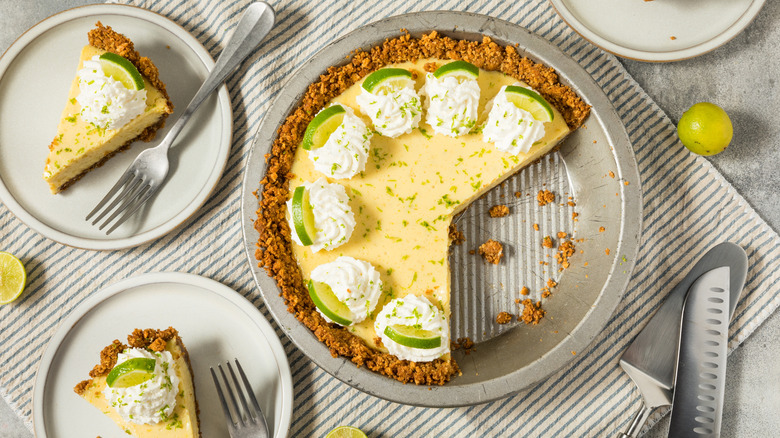
Even if the marketing campaign grew from mixed intentions, Nabisco wasn't wrong — making crusts is one of the tastiest ways to use graham crackers. We're less sold on the fake apple pie with Ritz crackers, but a good graham cracker crust can be the game-changing upgrade for a Key lime pie. Nabisco shrewdly found a way to inject its crackers into some of the most common things people ate during the Great Depression, and the good ideas they had fared better in the long run.
It's hard to say if Nabisco's "cracker cookery" marketing was exaggeration. Originally, graham crackers were built on health claims. Reverend Sylvester Graham developed graham crackers in the mid-19th century, telling his followers to grow their own whole wheat and then bake graham crackers from coarsely milled wheat and bran. Other bakers, like those working with Nabisco, started taking graham crackers in the direction of what we know today, made with commercial white flour and sugar.
By the time the Great Depression hit, the graham cracker recipe and resulting flavor profile was markedly different from Graham's pared-back creation; but it's hard to say how aware most people were of this. Was "cracker cookery" implying using graham crackers for pie crusts was healthier due to graham crackers' supposed health benefits? Or was the hack simply about cutting time and ingredients? Either way, we're not mad about having graham cracker crusts today.