

For Restaurant-Quality Chicken, Look For This Packaging At The Grocery Store
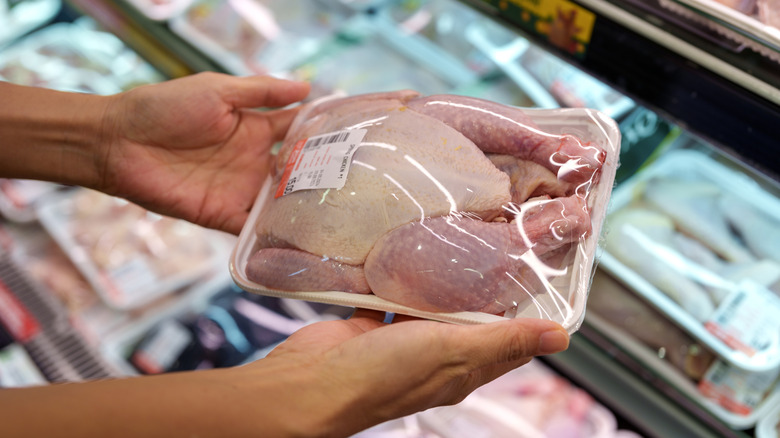
Here's an odd question: What's your chicken-buying strategy? For most, the strategy is to make a beeline for the poultry section, find the cut that you have in mind for dinner, maybe check the date, and throw it into the cart. No shaming here — that's how we did our shopping until a couple of experts revealed that for the best "restaurant-quality" chicken, there's another factor to take into consideration: the packaging.
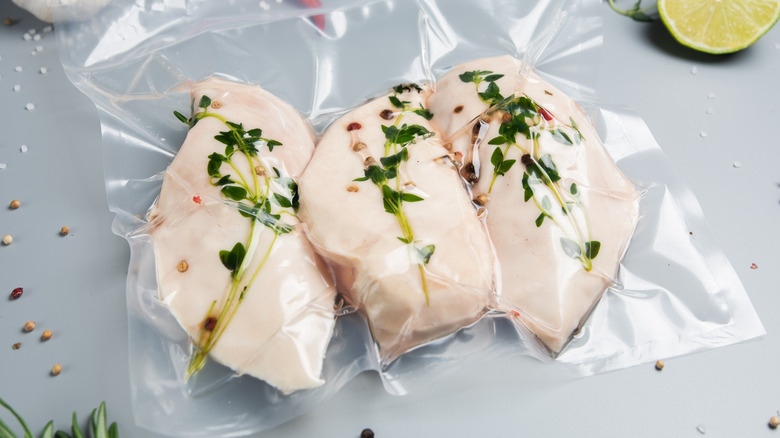
Experts say vacuum-packed poultry is the best because of its moisture control. The skin of vacuum-sealed chicken tends to be drier than that of its plastic-wrapped counterpart. And sure enough, in our interview with chef Lana Lagomarsini, a private chef in NYC, she mentioned that she always prefers vacuum-packed chicken for precisely this reason — the skin typically doesn't have the "wet" look. The benefits? Chef Tristen Epps-Long, founder of Houston-based consultancy Epps & Flows Culinary, pointed out that less water equates to firmer meat when cooked, and the skin browns more efficiently.
All that is in addition to a plethora of other advantages you'd get with vacuum packaging, like an easier time freezing (if you're planning to stock up on chicken for long-term use) and portioning out the meat, which is excellent for meal-prepping. It's a small detail to pay attention to, but if you do, you'll walk out with genuinely good chicken every time.
Other tips for buying chicken at the grocery store
Beyond packaging, there are other expert-approved tips to keep in mind. The ingredient list tells you more than the expiration date ever will. Look for chicken broth, retained water, or added moisture — dead giveaways that you're buying a plumped bird, which experts say to avoid.
Chef Tristen Epps-Long explains why: Processors pump chicken with extra liquid to inflate weight, meaning you're paying for water instead of meat and getting hit with unnecessary sodium. The flavor pays a price too. Seek out a local butcher or farmers market instead. Chef Aaron Cuschieri of Chicago's The Dearborn advocates this approach because it gives you transparency — you'll know exactly where the bird came from and how it was handled.
But if you're stuck at the supermarket, hunt for any package that says "air-chilled" or "organic," as these are rarely plumped. Epps-Long, in particular, spoke very highly of air-chilled chicken (basically, the chicken is cooled with purified, refrigerated air), you get drier chickens than those that have been dunked in a communal ice bath to chill (water-chilled). And since we've already established that drier chickens cook better, that's precisely the sort of chicken you need for your three-ingredient Teriyaki chicken to turn out like a dream.