

Toaster Oven Vs Countertop Oven: What's The Actual Difference?
We may receive a commission on purchases made from links.
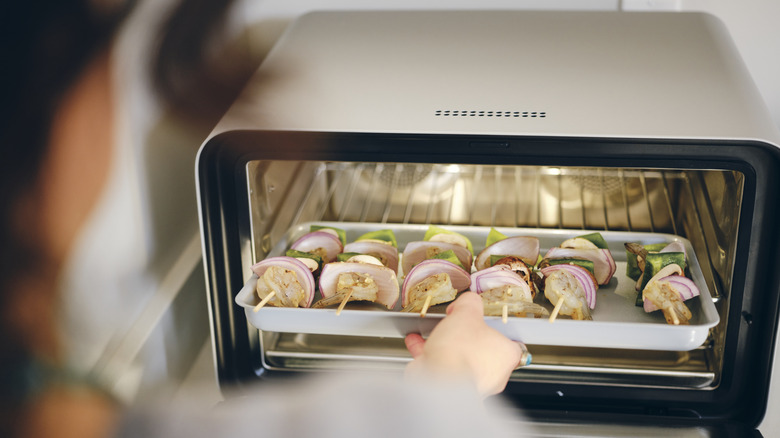
Even in the tiniest studio kitchen, you'd typically find an oven. This appliance just does so much — warming leftovers, toasting bread, cooking full meals — that a kitchen just doesn't feel complete without one. But with that said, not everybody has the real estate (or the budget) for a full-sized range or wall oven. Fortunately, there are compact models you can place on your countertop ... but you'll need to take your pick: Toaster oven, or countertop (convection) oven?
Marketing makes them sound interchangeable, but they're not. Toaster ovens started as compact, no-frills machines for heating pizza, roasting vegetables, and, well, toasting bread. Countertop ovens are different: They're miniature versions of full-size ovens, designed to handle what your main oven does, just on a smaller scale.
In the past, picking between these two was pretty straightforward. Problem is, these days, newer models in either category now come with features that not only overlap with one another, but used to be exclusive to larger, conventional ovens, too. Many buyers are stumped, and if you are, here's what you need to know about the real differences between them.
How toaster and countertop ovens actually work
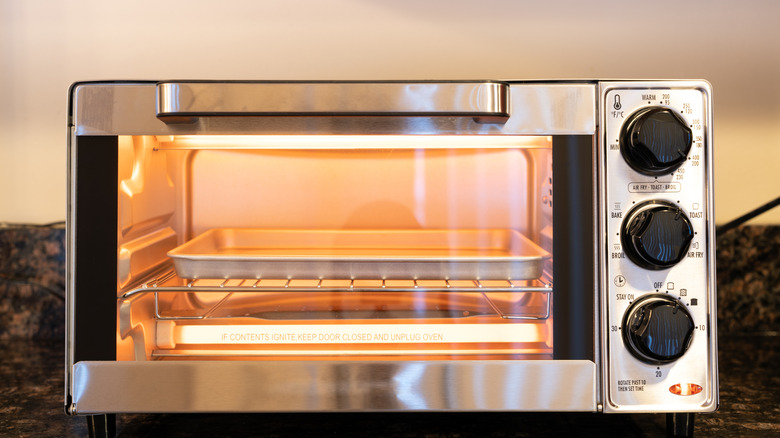
Ever look into a pop-up toaster and see how, when you power it on, there are glowing heating coils inside giving off heat? That's precisely how toaster ovens work — they have similar heating coils at the top and bottom to radiate heat directly onto your food. Fancier models like these Cuisinart Air Fryer Toaster Oven throw in a fan, too, to circulate the heat, which can help your food cook more evenly through convection. Most countertop ovens come with that fan built in from the start — similar to what your main oven does, just in a much smaller package.
Here's where they really differ: capacity. A toaster oven gives you about half a cubic foot — enough for six slices of toast or a small frozen pizza. Perfect for quick jobs like warming leftovers or baking a few cookies. Want to roast a whole chicken or bake sheet pan dinners? You'll need a countertop oven. These pack one to two cubic feet of space, so you can fit a 9x13-inch baking dish and actually have room to work.
A basic toaster oven, like this BLACK+DECKER TO1313SBD Toaster Oven, goes for less than $100. Step up to countertop ovens with all the bells and whistles — convection settings, digital displays, and temperature probes like this Breville BOV900BSS Smart Oven — and you're looking at $250 to $300-plus, possibly more. That extra capacity and features do add to the cost.
How to choose the right kind of oven for your kitchen
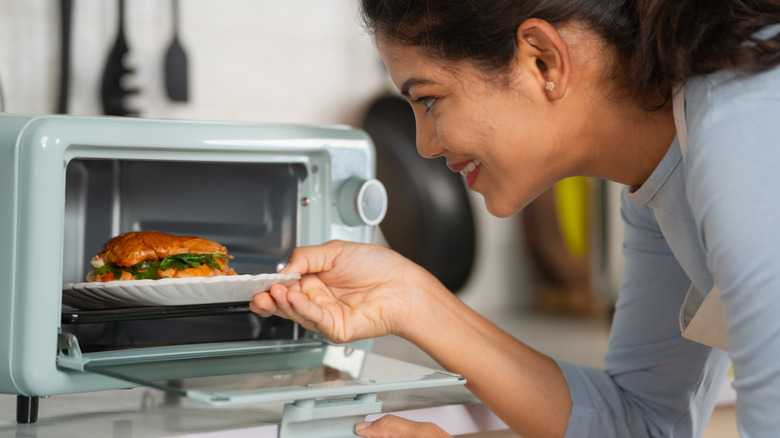
So you want a countertop oven? First, check if your kitchen actually has the space. Grab a tape measure and measure your counter — popular models like the Ninja Prestige Smart XL with Pro Cook System run between 18 to 20 inches wide. If you're short on space, a toaster oven is your friend. They only need about 15 to 16 inches (the Ninja Toaster Oven & Air Fryer SP151 is a solid option).
Portion size is really the deciding factor, though. Cooking for one or two? A toaster oven does everyday meals just fine, in addition to heating up faster and costing less to run. But if you're regularly cooking for three or more, a countertop oven will earn its keep by helping you bake sheet pan dinners and roast veggies for the whole family without taxing your main oven.
And here's our last tip: Don't just pick the cheapest option without thinking it through. Like we mentioned earlier, newer models come with a lot of cool features — many can even double as an air fryer. A solid "combo" oven might replace several gadgets and end up saving you money compared to buying a basic model. As such, read the description carefully before you buy!