

This Subtle Food Packaging Red Flag Is Easy To Overlook

At this point most savvy consumers have trained themselves to look for red flags with food, like long lists of unpronounceable ingredients, but some warnings are more subtle than that. The world of food labeling and marketing is often an impenetrable forest of terms, numbers, and nutritional facts that turns all of us into detectives and who just want to learn what the heck we're actually eating. But while ingredients and nutrition are important to look at, that data can at least usually be trusted to be accurate because of Federal regulations. Instead, you should also be questioning food marketing terms that contain vague promises with no legal definition.
The classic example of this is "natural." This term used to have no legal meaning, and food companies could slap it on anything they wanted to make sound healthy. That has been slightly addressed in recent years, as the Food & Drug Administration (FDA) issued a "guideline," in the late 2010s around what should be called "natural." But, by its own admission there is still no formal definition of the term when it comes to food. The guidelines simply state natural means no artificial or synthetic ingredients and no added colors. But it only applies to the finished product, not how it was grown or manufactured. So "natural" food could still be grown with synthetic pesticides, be ultra-processed, or use GMOs (if GMO food is a problem for you). And "natural" is actually more well-defined than many other food marketing terms.
Food labels can mean a lot less than you think
The biggest food labels to look out for are ones that are comparative or subjective, and therefore impossible to strictly define. The most common of these are terms like "low fat," and "low sugar," or "light." While government nutritional guidelines might suggest a healthy level of fat and sugar consumption, these comparative terms are meaningless because low isn't used in relation to any clearly defined benchmark. Some brands may claim that they have X% lower sugar than a competitor, which is better, but the less specific the label, the more of a red flag it should be. Even for some terms like, "low sodium," that do have a definition (it's less than 140 mg of sodium per serving), you never know how big that serving is. So be wary of any big comparative health claims, and always check the nutrition facts.
These vague labels unfortunately extend to environmental and ethical concerns as well. The worst offenders are terms like "green," and "sustainable," which again have no legal definition when it comes to food labeling. Even terms around the treatment of animals aren't tightly controlled. Labels like "free range chicken," and "pasture raised," may make you think of happy animals frolicking in the grass, but are only vaguely defined. Worse yet there is no real enforcement behind these terms, so even companies that might violate these already loose terms can pretty much use them without issue.
Be wary of food with too many vague labels and no certifications
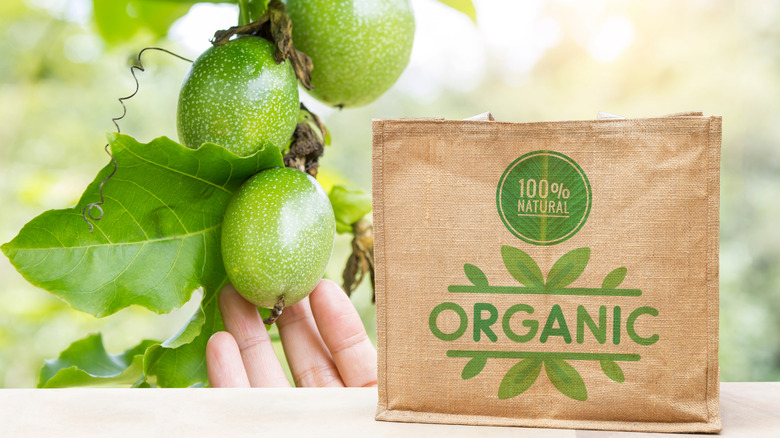
While the food world is full of vague labels, there are terms you can trust more to help you navigate the supermarket. While it's not perfect, the label "organic" is much more tightly regulated than "natural". Organic ingredients must use natural fertilizer, some sustainable farming practices, no GMOs, and no artificial growth hormones or antibiotics for animals, among other guidelines. Organic labeled food products must be made with a minimum of 95% organic ingredients, and food labeled "100% organic," must be exactly that.
If you're worried about the ethical side of food, independent certifications are the thing to look for. A familiar one is "Fair Trade Certified," which is given by Fair Trade USA to products that meet minimum standards for the treatment of farmers and workers. You can also look for "Animal Welfare Approved," and "Certified Humane," labels on animal products, which are also acquired through real certification programs that can be verified.
In the end, what you are looking for with these real or vague labels is trust. Does a company care enough to prove the claims it's making, or does it just want you to swallow what it's selling? If it's willing to make claims about being "green" or "light" with no evidence, what else is it not telling you? We unfortunately live in a world where consumers need to be proactive, so learning from a company's behavior is an important part of eating right.