

The Overlooked Legume That Handles Cold Soil Better Than Most Crops
There aren't too many food articles where you can use the sentence "As it happens, Dr Hannibal Lecter liked to pair these with a nice Chianti." For all you know, the fact that they were the preferred snack for Hollywood's most famous bad guy could explain why they're often overlooked (though it's more likely the price tag: A 16-ounce bag can cost over 10 times more than a can of red kidney beans). We're referring to fava beans, the OG legume that has a lot going for it, especially if you like growing what you eat: They're hardy, semi-ornamental, and can handle cold soil better than most crops.
While they aren't really a go-to in America, fava beans, or broad beans, are a staple in many countries and are especially popular in Mediterranean and South American cuisines. They have been around forever, too. Archaeologists have used carbon dating techniques to establish that these beans were first cultivated over 10,000 years ago!
You might be a thousand centuries late to the game, but there are several good reasons for you to grow fava beans. The fact that they prefer cold soil makes them good cover crops, protecting your patch through the winters, while keeping the bed nourished. They can also be consumed at different points in its life-cycle. Young, tender beans can be eaten whole. Fully grown ones can be shelled and cooked. Hate shelling the beans? Use this freezer trick that makes peeling fava beans so much easier. Fava beans can also be dried and preserved for the future. Also, the plant's white, purple-speckled flowers are really pretty! Still on the fence? Consider the fact that they're really easy to grow.
When and how to grow fava beans
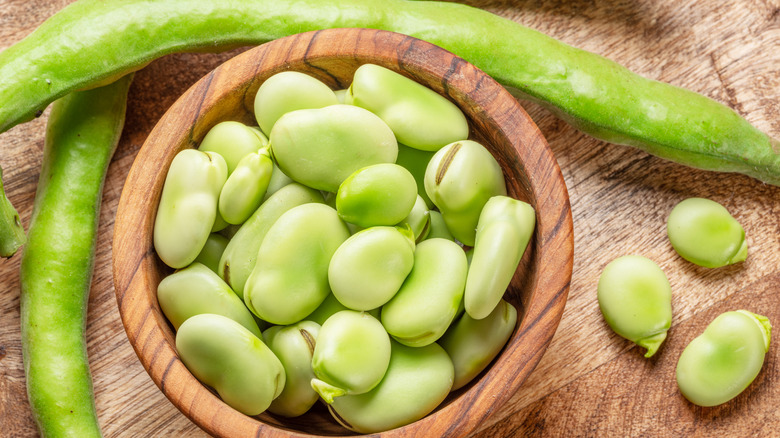
The ideal temperature for Fava beans to grow is around 60 degrees Fahrenheit, so depending on your local weather conditions, you could plant broad beans any time between from autumn to late spring. If you're up for planting several batches, you can enjoy a steady supply of this legume all through the summer. The soil temperature can be as low as 42 degrees Fahrenheit, but anything higher than 72 degrees Fahrenheit and the plant will struggle.
You can choose the right type of fava bean depending on the climate as well. Of the seven common varieties, Aguadulce, Diana, and Sweet Lorane can handle cold weather the best, and will survive in temperatures down to 10-15 degrees Fahrenheit. When planting, find a spot which gets some sunlight (at least 6 hours per day). Leave 6-9 inches between the germinated seeds and 18 inches between the rows. You might also want to plant stakes in the ground to support the plants as they grow. You can also plant peas, celery, cucumber and corn on the same patch as these make for great companion plants to fava beans. Companion plants are those which thrive next to each other — for example, basil and chives are among the 10 absolute best companion plants for tomatoes.
Fava beans are as versatile as they are delicious. You can use them to make a creamy fava bean hummus, use them as a chickpea alternative in falafels, or just grill up your next batch as a great side dish.