

This Is How Much More Baby Boomers Are Drinking Than Any Other Generation Right Now
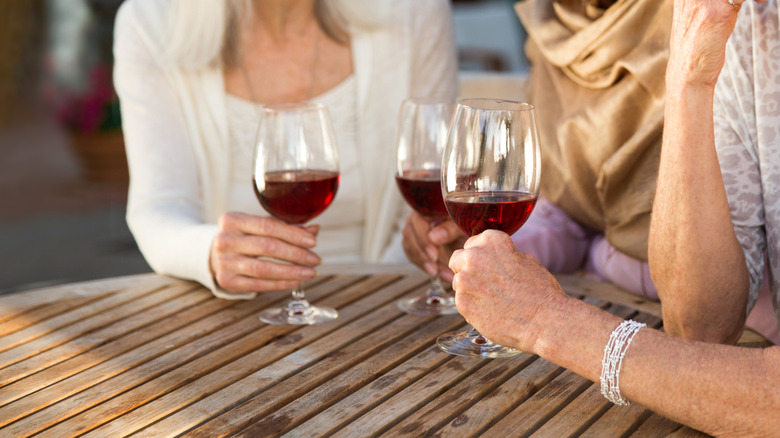
For decades, conventional wisdom around alcohol was that binge-drinking youngsters were the biggest consumers, but now baby boomers' drinking habits are completely reversing that thinking. Many people are familiar with the fact that younger generations are drinking less alcohol, with the number of 18 to 34-year-olds that imbibe falling from 72% in the early 2000s to barely above 50% in recent surveys from Gallup. That decline has also happened among underage drinkers, as a study by the University of Michigan finds that only 23% of 10th graders report having consumed alcohol in the past year, down from 63% in 2001. However what has been overlooked in recent news cycles is that as younger people have been mixing themselves mocktails, boomers have started drinking even more, and are now actually outdrinking everyone else.
The most recent surveys from Gallup on drinking habits in the U.S. shows that 56% of Americans that are over the age of 55 say they drink alcohol. While that is a slight decline from the height of the pandemic, it's an increase from the 31% reported in the early 2000s — that figure is also higher than the 50% of 18 to 34-year-olds who reported drinking, and tied with the number of those aged between 35 and 54. And it's not just about who drinks; it's also about how much alcohol is being consumed. Of the people who drink alcohol, individuals that are 55 and older currently consume the most on average, at 4 drinks per week. That's higher than the 3.6 drinks for younger Americans, and 3.8 drinks for those who are middle aged.
A wide range of factors are driving boomers to drink more as other generations drink less
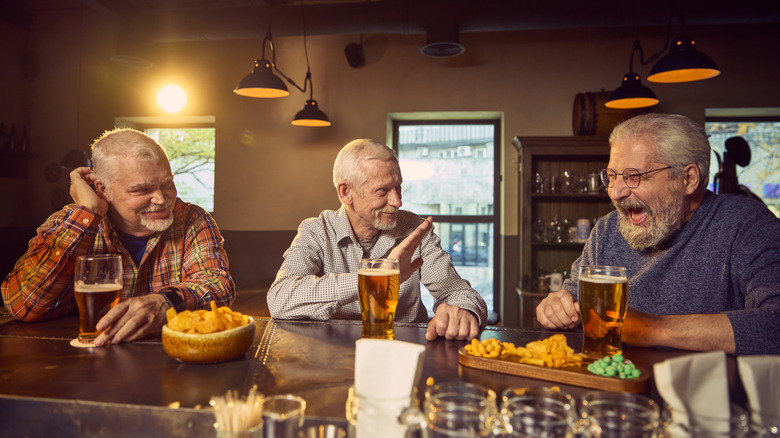
While part of baby boomers' drinking habits overtaking that of other generations has to do with younger people imbibing less, there has still been a meaningful uptake in their alcohol consumption, too. Part of this is just a continuation of habits that the boomer generation has always had. Per capita alcohol consumption in the U.S. peaked in the late 70s and early 80s, when boomers were in their 20s and 30s, and that generation has always been bigger drinkers than Americans who came before or after them. They also may have had less education around the negative health consequences of alcohol consumption compared to younger generations. As they age into retirement, they aren't drinking any less, so the stats for baby boomers are (naturally) rising.
Baby boomers also tend to have more disposable income than younger demographics. The wealthy boomer generation no longer has kids or mortgages to pay for, and plenty of time to kick back and relax. So while their kids and grandkids may struggle with student debt and rent, boomers can afford to imbibe on fancy bottles of wine.
One trend is also key: Drinking has increased substantially among older women. Heavy drinking used to be a "man's game," but as social taboos around women drinking have decreased — epitomized by "wine moms" — older women are now outdrinking their mothers. Consequently, boomer women are driving the increase in comparison to men.
It's hard to tell if the baby boomer drinking spike will last
Although the decline in drinking among younger Americans seems to have pushed well below baby boomers, there should always be caution when projecting these trends long term. There has been a lot of news around the percentage of Americans who drink hitting an all-time low, and the rising sales of non-alcoholic beer, but only a few years ago that number was near a record high. The pandemic obviously increased drinking habits, and the result we're seeing could be just as temporary. After all, a decade ago stats were showing that millennials were drinking less than previous generations, but they have started drinking more as they enter the middle age demographic.
Meanwhile, per capita sales of alcohol (which are easier to track than surveys about drinking habits) tell a slightly different story about Americans drinking less. The National Institute on Alcohol Abuse and Alcoholism has data showing that alcohol consumption was actually rising for two straight decades since the late 90s. So even though drinking has started to decrease recently, Americans are still imbibing more than they have in previous years.
In the end, the changes in alcohol consumption may have less to do with boomers themselves, and more to do with society-wide changes surrounding drinking. It's fewer youngsters drinking in parking lots, and more consumers with disposable incomes sipping fine wine and whiskey. So give it 30 years, and Gen Z could be drinking just as much as baby boomers are today.