

Why Marcella Hazan Always Cooked Her Onion And Garlic Starting With A Cold Pan
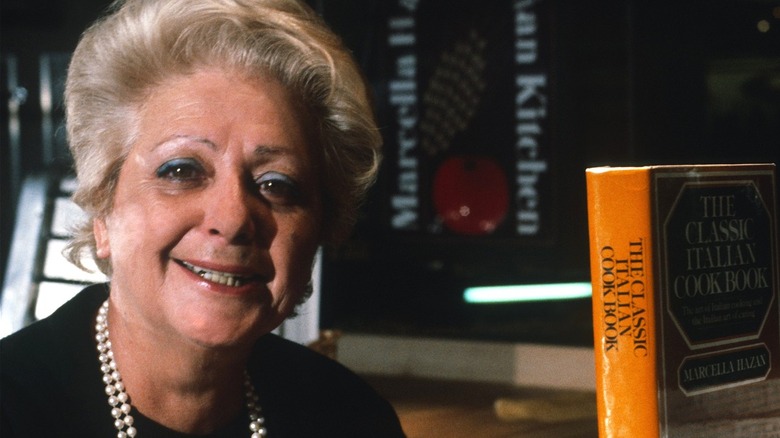
Italian cooking icon, Marcella Hazan, did more than give rise to popular Italian cooking ingredients, like introducing balsamic vinegar to Americans. The late chef and cookbook author, who passed in 2013, is widely accredited for bringing Italian recipes and cooking techniques to home cooks in the States. After moving to the U.S. in the 1950s, her career in food touched the hearts of many — and her culinary tips persist. One such technique was cooking onion and garlic in a cold pan. Despite the common method of sautéing alliums in sizzling hot oil or butter, Hazan preferred a cold pan for a gentler, slower cooking method.
In one of her famous books, "Marcella Says," she wrote that you don't want to brown your onions too fast. Add finely sliced onions to a cold pan with a generous drizzle of olive oil and salt before turning the heat on low and cooking them until tender. She described this as the way "to develop all the sweetness of which they are capable." By cooking them low and slow, onions won't burn on the outside before the inside becomes sweet and succulent. The same rule applies to garlic, especially due to its fine chop size, which may become burnt and astringently bitter if you add it to a pan of hot oil.
More chef-approved sautéing tips
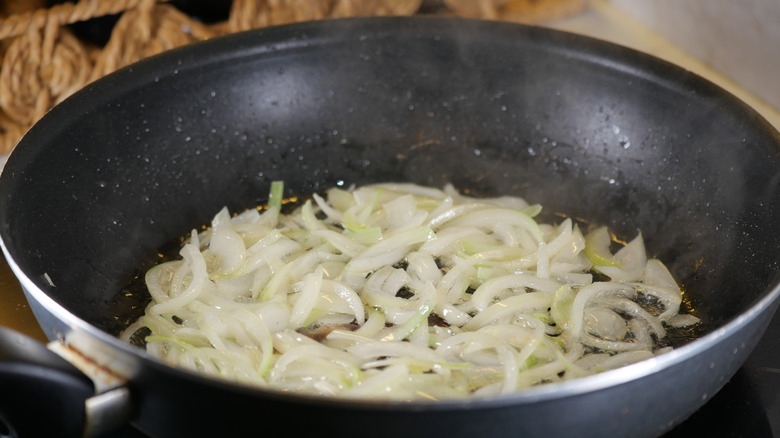
Do you walk away from your stove when food is cooking? What no one tells you about cooking garlic properly is you only need to sauté it for about 30 seconds on low to medium-low heat to accentuate its sweet, caramelized notes (though some cooks give it up to 60 seconds to a few minutes). By starting in a cold pan, the heating process is more gradual. Since garlic cooks quickly, you want to stir it as it cooks once the oil or butter has heated. Some chefs say starting with cold oil helps the garlic flavor infuse the dish, too.
If you're cooking both onion and garlic for a recipe, like Marcella Hazan's signature tomato sauce made with butter, give the onion a good head start, beginning with a cold pan and cooking gently on low. Then, add the garlic for the last bit of cooking right before you add other ingredients like tomatoes or tomato puree. Hazan also instructed using a lid to cover the onions as they sauté. This leads to sweet, caramelized onions perfect for sauce, topping a Rueben sandwich, or including in a baked sweet onion tart. In her book, Hazan noted adding salt also helps draw out the water so the onions can stew in the liquid. If you want more caramelization or a crisp finish to your onion or garlic, however, you can leave the lid off. This generates less steam and promotes more browning.