

This Expensive Roast Beef Cut Stays Beautifully Tender If You Follow One Key Rule
We may receive a commission on purchases made from links.
A trip to a high-end steakhouse is the perfect idea of a romantic evening — complete with a juicy cut, great wine, and good company. But the good news is that you don't have to shell out steakhouse-level prices, or even travel to a fancy-schmancy restaurant, to make a romantic dinner at home. You just have to have a connection to a great butcher and some insider knowledge about great cuts and how to work with them.
One high-end roast beef cut that's worth preparing at home (provided you have a little know-how) is chateaubriand. This cut, sourced from the center of the tenderloin and resembling a very large and very succulent filet mignon, will add a little French sophistication to your steak dinner — so long as you cook it correctly. To get tips in this department, Tasting Table consulted Clare Andrews, author of "The Ultimate Air Fryer Cookbook."
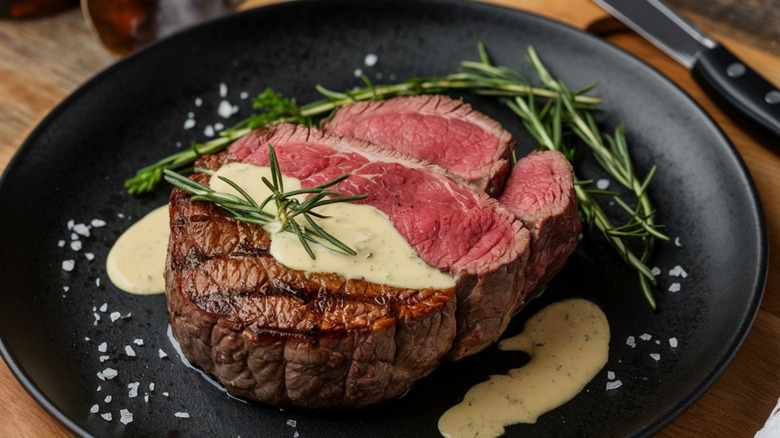
"When cooked gently, chateaubriand delivers a buttery texture with a clean, delicate beef flavor that doesn't need aggressive cooking methods at all to shine," she said. To preserve the tenderness and juiciness of this cut, she recommends only cooking it medium-rare — meaning the inside is still pink, soft, and flavorful.
When it comes to cooking chateaubriand, temperature matters
The reason why this cut needs to be cooked to medium-rare is due to its location on the cow. "Medium-rare is essential because tenderloin has very little fat or collagen to protect it from drying out," Clare Andrews explained. "Once you push past medium, moisture loss accelerates and the meat quickly becomes firm." A bone-dry and chewy steak is the last thing that you want this pricey cut to become, so make sure to be mindful of the temperature.
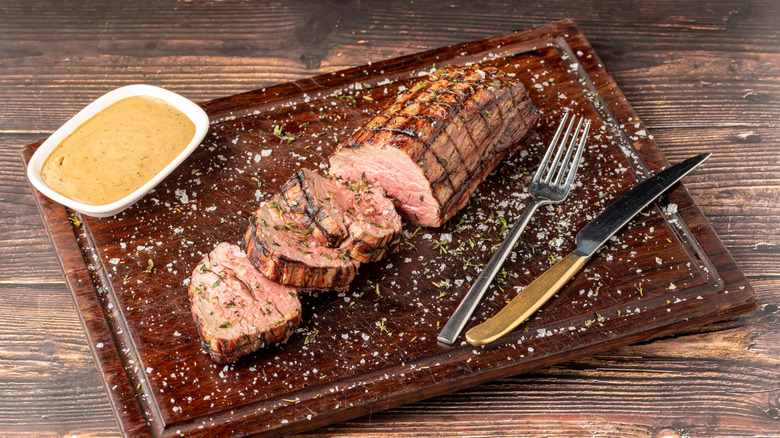
Andrews walked us through her recommended steps for preparing this cut. First, she recommends bringing it up to room temperature (presumably for even cooking), seasoning it simply, then cranking up the heat to help develop a crust on the exterior of the meat. From there, the meat can be finished on low heat until its internal temperature reads between 125 degrees Fahrenheit and 130 degrees Fahrenheit; be sure to keep your meat thermometer handy to read this.
As with many other cuts, you'll want to give your chateaubriand ample time to rest before slicing into it — following the one easy rule of thumb when you do. "Resting is non-negotiable, it allows juices to redistribute so every slice stays succulent and juicy," said Andrews.