

For Your Safety, Do Not Cold-Smoke Meats Until You've Done This
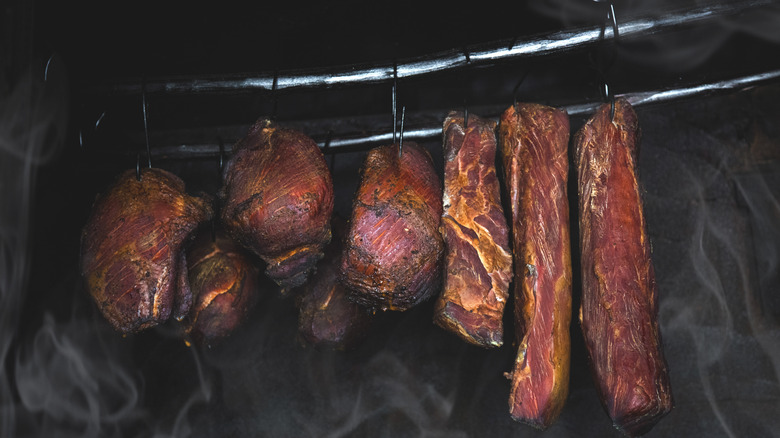
If you could make your own bacon, smoked salmon, and smoked cheese at home — stuff that normally costs a fortune at specialty shops — by spending just a few hours setting up a cold-smoking apparatus at home (you can DIY this with a grill), why wouldn't you? With the genuine smoke flavor that stays for months, even without a fridge, whatever you make's going to taste superior to the store-bought stuff, too. But here's a safety note for novice meat cold-smokers: if you jump straight to smoking without curing first, you're asking for trouble.
It, as expected, comes down to safety. Cold smoking occurs at very low temperatures (59 to 77 degrees Fahrenheit) — low enough to keep the meat raw, unlike hot smoking, where the heat cooks it. To keep dangerous bacteria like botulinum from growing, according to the Minnesota Department of Agriculture, we have to cure the meat with salt first. Salt draws water out of meat, creating a dry, salty environment where bacteria can't survive. This is the step that will keep your cold-smoked meat safe for consumption.
Get faster, better results with these curing tips
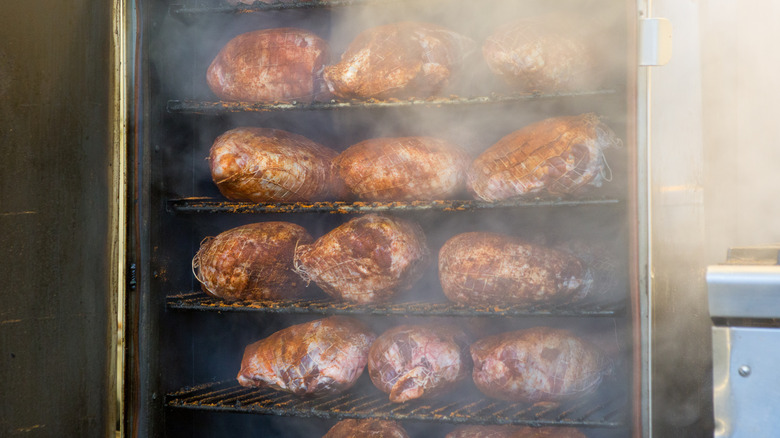
You've got two basic ways to cure meat — dry and wet curing. Dry curing means rubbing salt all over the meat and letting it sit in your fridge — about one day per half pound. For wet curing, mix 1 cup of salt for every gallon of water, dump your meat in, and wait up to seven days in the fridge with the meat completely covered. Either approach works fine, just pick whichever fits your life better. After curing, you'll notice a pellicle has formed. It's just a thin, slightly sticky layer that develops on the meat's surface, where the smoke collects.
If you feel like the standard method of dumping the meat into a ton of salt or brine is overkill, consider exploring equilibrium (EQ) curing. Weigh your meat, calculate 2% of that weight in salt, rub it on, put it in a resealable plastic bag (vacuum-seal if possible), and refrigerate. You'll use less salt and, generally speaking, get better results because the salt amount has been pre-calculated (so there's no risk of the cut becoming overly salty). After curing, hang the meat uncovered in a cool spot overnight — this step will make a huge difference when you throw the meat into the smoker.
When it's time to smoke, keep the temperature between 41 and 70 degrees Fahrenheit and aim for 60% to 70% humidity. Check on your setup every couple of hours to make sure smoke is still happening, all while resisting the common beginner's urge to pile on heavy smoke — it'll make the meat bitter. Once it's out of the smoker, refrigerate for a few days to let the flavor develop. It gets richer and smoother as it rests. And honestly? After all that time curing and smoking, waiting a bit longer is worth it for the payoff.