

What Pink Spots On Your Cheese Really Mean (And If It's Safe To Eat)
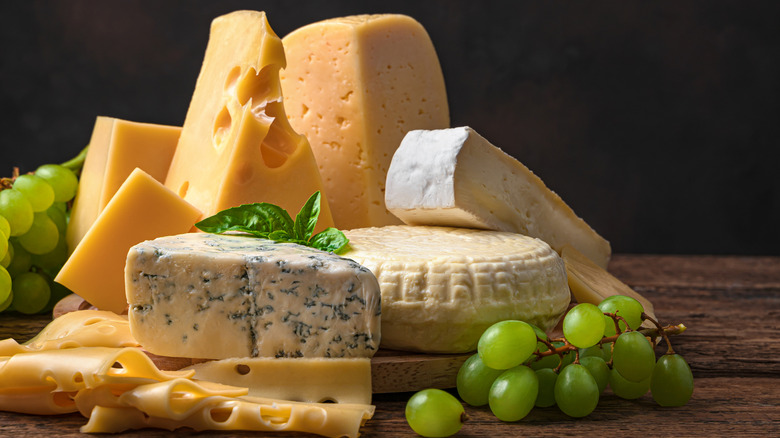
If you have any doubt about how much people love cheese, let the good people at the Cheese Reporter put your mind at ease. In 2023, the average American ate just over 40.5 pounds of cheese. As popular as cheese is, it's not without its potential hazards. Like any food, you need to store it properly and be on the alert for spoilage or other issues. The problem with cheese is that signs of spoilage can sometimes be confusing. For instance, what happens if pink spots develop on your cheese?
Tasting Table took this question to an expert. We asked Josh Windsor, Associate Director of Murray's Cheese Caves, what could cause pink spots and whether the cheese is still safe to eat. "Assuming that the cheese was kept properly refrigerated, nothing that can be seen on the surface of a cheese is specifically harmful," he told us. "The microbes responsible for food poisoning are invisible to the naked eye. This does not mean that the cheese will be tasty."
While it's good to know that it may not be harmful, no one wants to eat cheese if it's not tasty. Can you just cut the spots off? Windsor advises a bit of caution. "As a general rule of thumb, the less moisture in the cheese, the less impact the spot will have, and the easier it will be to cut around," he says. "So for your firmer cheeses like cheddar, cut away. If the cheese is soft like a Brie, it is usually better to just discard."
Why do you think the cheese is pink?
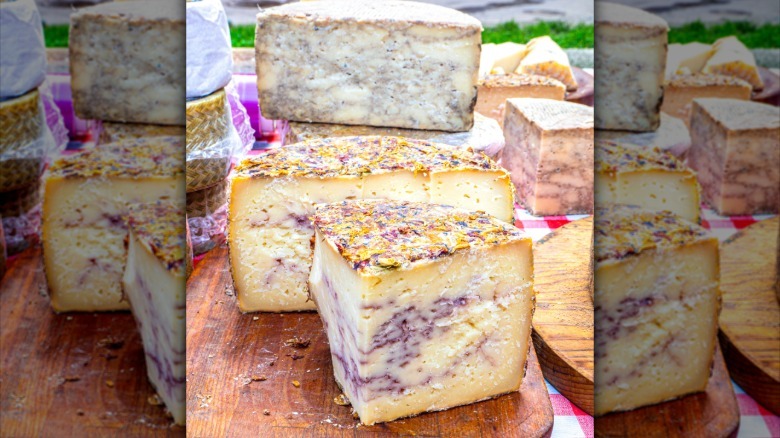
Whether or not the pink spots are safe is one thing, but why is the cheese pink at all? "Pink, blue, green — from seafoam to coral — cheese can host a world of colorful microbes. The question is were these intended or encouraged by the cheesemaker or affineur, or have they shown up from over aging or improper storage?" Windsor says. There are some molds or bacteria which could cause pink discoloration in cheese, like Thermus thermophilus, an unwanted bacterium that thrives in warm environments. Other contaminants, exposure to moisture, and improper storage can lead to pink discoloration, too.
Some cheeses are pink on purpose, so it matters what cheese you're looking at. "Many artisan cheeses have variegated rinds that are desirable and add not only to their visual beauty, but also their flavor and texture," Windsor says. "Your block of cheddar, however, probably wasn't meant to be anything but uniformly orange or white." Remember, even though mold is what gives blue cheese its signature flavor, not every cheese is meant to be eaten with mold on it.
If your cheese didn't start out pink, it's a safe bet it shouldn't have turned pink. If you are still unsure and wondering whether there are other signs of dangerous bacteria to look for, Windsor's answer is clear. "Unfortunately not," he says. Make sure to avoid the common cheese storing mistakes whenever you can. If you're worried about the safety of the cheese, don't bother risking your health and simply toss it out.