

Are Hot Dogs Really Getting Smaller? Here's What To Know
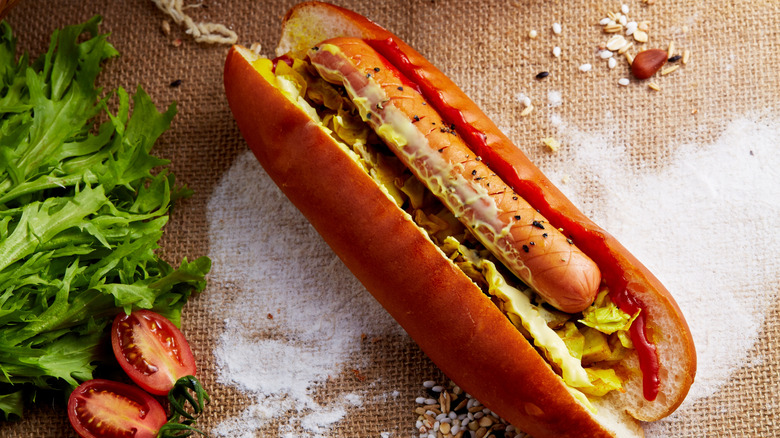
If you've not been feeling as full as you used to after wolfing down a hot dog, it's not you — it's the dog. For at least a couple of years, people online have been questioning whether their appetites were getting bigger or whether store-bought hot dogs are actually getting smaller. And the answer is quite clear: your hot dogs have been hit by shrinkflation.
Shrinkflation is the practice of easing the pressure of inflation by quietly reducing how much you get for the same price. The tactic always feels a bit underhanded. For example, cereal companies try to trick customers by making the box bigger and the servings smaller. Now, a comparison between old and new product details on at least two hot dog brands shows that the total weight of a pack of eight frankfurters has come down by between 6% and 15%. A pack of eight Nathan's Beef Franks, which used to weigh 14 ounces, now weighs 12 ounces. An eight-pack of Ballpark Beef Franks that used to weigh 16 ounces now weighs 15 ounces.
While these numbers might seem marginal, the size-reduction has not gone unnoticed. "The regular hot dogs are so thin now that I need to put 2 on a bun," one Redditor commented on the r/shrinkflation subreddit. Another responded with screenshots as evidence of shrinkflation. "The old listings are still on Walmart's website. Both used to be 14 oz, now both are 12 oz. The shrink is even worse when you consider the fact that the standard size for a pack of 8 hot dogs was 16 oz for decades," they wrote.
Shrinkflation hits across the board
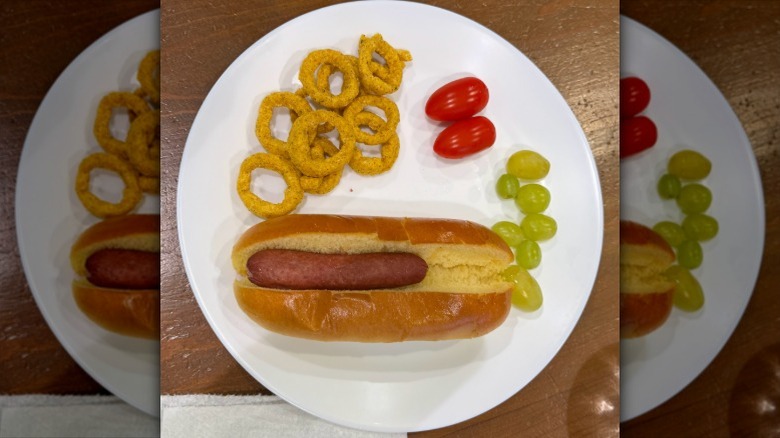
Nathan's and Ballpark aren't the only brands facing the heat. "Hot Dogs from Trader Joe's used to fit perfectly. Now it looks ridiculous," one user wrote alongside an image of a frankfurter that was clearly too small for the bun. The photograph proved to be triggering, with the post garnering over a thousand upvotes. Another user mentioned how the hot dogs from Hebrew National have started looking like "beef jerky sticks".
The shrinkflation phenomenon is not restricted to either store-bought products, nor is this just about hot dogs. From a long list of grocery stores to Costco's newest cookies, shrinkflation is all around us. Food businesses get hit hard by inflation because, while costs go up across the supply chain, they can't keep increasing prices on the menu. According to a Franchise Wire report, both Burger King and Domino's have recently cut down on portion sizes to keep up with what one fast food executive described as "the worst inflation in more than a decade". Meanwhile, The Sun reported that McDonald's uses tricks like slicing the cheese thinner and adding more fillers in their nuggets, to shrink portion sizes without customers noticing.
Food prices in the United States were 3.10 percent higher in December 2025 than they were a year earlier, and are expected to keep rising at least until the end of the first quarter of 2026, which probably means that the hot dog buns are going to get smaller as well.