

Your Sangria Will Lack Its Punch Unless You Follow This One Step
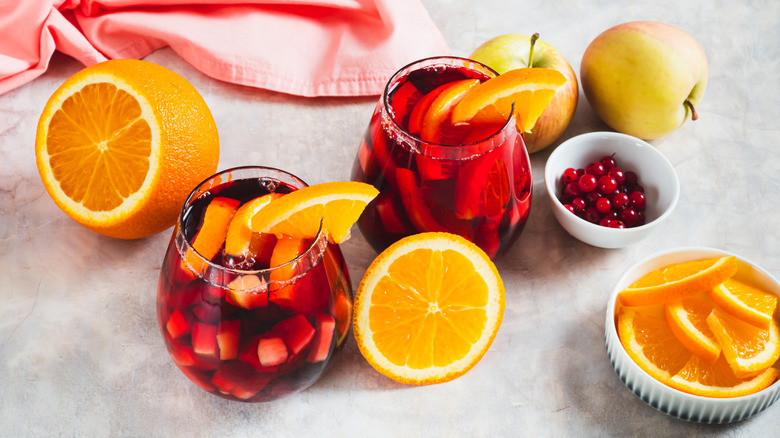
Jerry Jeff Walker once sang, "Man, it's nice to make up some sangria wine," and we have to agree with that simple statement. The Spanish have been making it for centuries, and it eventually spread across Europe and then the world. At its heart, it's just wine, usually red, but any kind can be used, mixed with fruit, sweeteners, and sometimes other spirits. There are plenty of ways to mix up a batch, but if you want it to fire on all cylinders, you need to let it rest overnight.
Tasting Table talked to Justin Lavenue, master mixologist and co-owner of The Roosevelt Room, as well as the owner/operator of The Eleanor, and RoadHaus Mobile Cocktails, about making the perfect sangria. We wanted to know why letting it rest overnight, or even up to 24 hours, is crucial for developing its full flavor.
"When you let sangria rest overnight, the fruit, wine, and any added spirits have time to exchange flavors in a way they simply can't on the clock," Lavenue said. "The acidity from citrus softens, the sweetness from fruit seeps deeper into the wine, and aromatics bloom — all of which elevates the overall balance."
Lavenue went on to get into the science of sangria making. "In scientific terms, maceration allows the water-soluble and alcohol-soluble flavor compounds in the fruit to fully extract into the liquid," he told us. "Letting it chill gives a richer, rounder, more harmonious profile that feels far more sophisticated than the sum of its parts."
Speedy sangria secrets
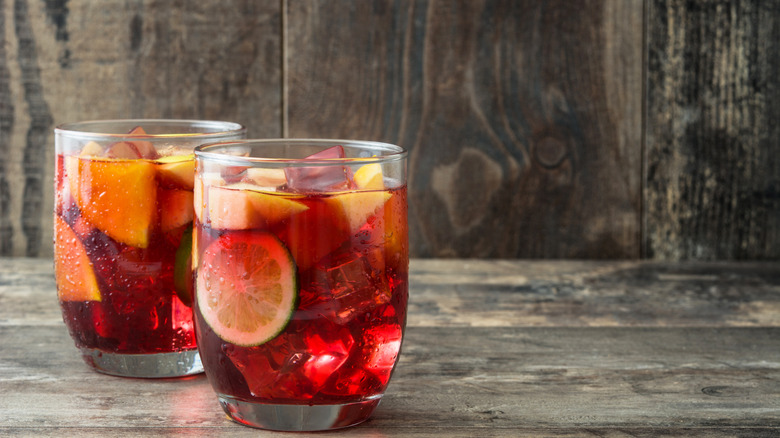
Serving it too early is one of the classic mistakes of sangria. But what happens if you don't have 24 hours to wait? Maybe you're hosting an impromptu party or simply forgot to get it ready in time. If you need sangria fast and don't have time to let the flavors develop, Lavenue had some tips to create a tasty punch on a shorter timeline.
"One of the simplest techniques is gently muddling citrus slices or citrus supremes directly in the pitcher," Lavenue said. "Citrus oils are highly aromatic, and a few light presses help release bold flavor instantly." It doesn't just have to be citrus, either. Berries or stone fruit can also be used.
There are a few more techniques you can try to speed up the process, like chopping fruit into small pieces, which provides more surface area for flavor transfer. You could even macerate the fruit with sugar before mixing it with the wine.
Another method is an oleo saccharum, a classic cocktail sweetener made from macerating citrus peels and sugar. "By tossing citrus peels with sugar, you extract concentrated citrus oils that deliver intense aroma and depth in minutes rather than hours. Stirring that oleo into your sangria gives you the complexity and brightness of an overnight infusion," Lavenue says.
With all of our expert's tips in mind, you can follow our refreshing red sangria recipe for the perfect punch. The same works for a white sangria recipe, too.