

The Best Wine Pairings For 10 Popular Types Of Pasta Sauce
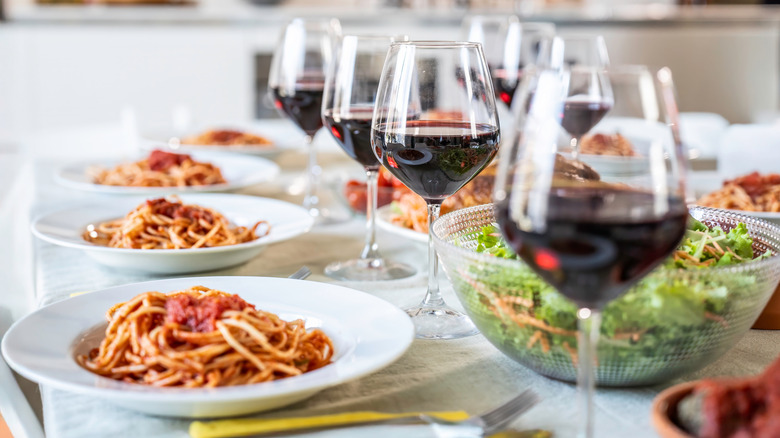
For many people, it doesn't get much more comforting than a hearty bowl of pasta. Pair it with a glass of wine, and it's pretty much as close to traveling to Italy as you'll be without getting on a plane. Of course, pasta is incredibly versatile and can be transformed into dishes showcasing an endless array of flavors. So when you're looking to pair your pasta meal with a glass of wine, it's important to consider what type of sauce you'll be using to ensure the ingredients work well with the wine. While some pasta sauces are more flexible to pair with, others require a bit more care to ensure the flavors aren't overwhelmed, muted, or negatively impacted.
As a Certified Specialist of Wine, I've studied the ins and outs of food and wine pairings and put them to the test over and over. To guide your wine selection on your next pasta night, I've put together a list of the best wine pairings for popular pasta sauces. Once you've landed on a sauce and wine combo, make sure to check out which type of pasta you should be using for your specific dish. Just like wine and pasta sauces have natural matches, certain pasta sauces and pasta shapes are meant to be together.
Pomodoro/Marinara with Sangiovese
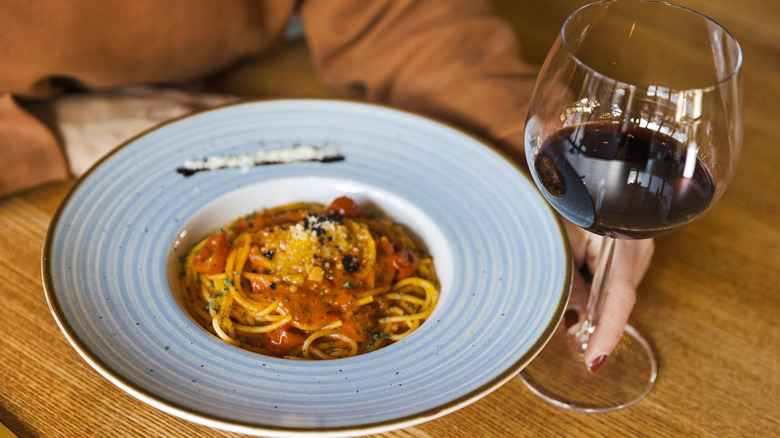
One of the key factors when selecting a food and wine pairing is to check how the different tastes complement or contrast one another. When it comes to acidic ingredients, it's important to serve them with a wine that is equally or more acidic, to prevent the wine from tasting flat in comparison. Pomodoro and marinara sauces are naturally high in acid, considering there aren't too many other ingredients to balance out the tomatoes. To ensure the dish and wine both taste fresh and vibrant, look for a bottle of sangiovese.
The high-acid Tuscan grape is most easily found in Chianti wines, as well as other regional appellations, like Rosso di Montalcino or Brunello di Montalcino, and Super Tuscans. In Chianti, the wines feature notes of red cherry, raspberry, plum, and tomato, as well as more complex aromas with maturation or oak influence, such as leather and tobacco. If you're having a casual pasta dinner, your best bet is a bottle of Chianti Classico, which offers depth and structure while maintaining a fruit-forward quality.
Specifically, you can try San Felice's Chianti Classico Borgo, which is brimming with fresh, fruity, and floral aromas.
Ragu Bolognese with Lambrusco
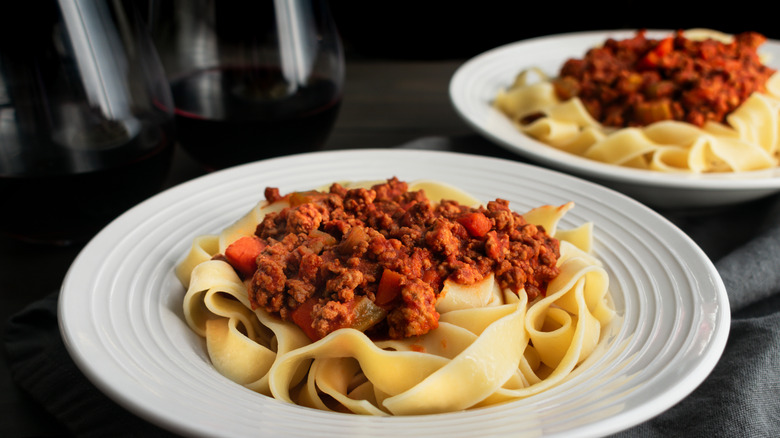
A classic ragu Bolognese hits all the comfort food notes, with its hearty, meaty sauce coating the pasta. The recipe typically includes pork and beef, as well as finely chopped vegetables like celery, carrots, and even mushrooms. Gently seasoned and filled out with tomato paste or puree, it's got everything you would want in a meal. Some recipes go bolder on the tomato while others keep it subtler, so the need for a high-acid wine isn't as strong here. Nevertheless, choosing a bright wine to contrast the weighty meat sauce helps bring levity to the pairing.
The next time you're putting on a pot of ragu to simmer, pair it with a bottle of Lambrusco. This sparkling red wine comes from Emilia-Romagna, the same region that's home to ragu Bolognese. Made in a range of styles from sweet to dry, Lambrusco boasts plenty of red and dark fruit aromas, hints of spice, and flowers. Some variations are also heavier on the tannins, offering an excellent structure to pair with meatier dishes.
Medici Ermete's Concerto Lambrusco Reggiano is a great option to pair with your Bolognese pasta, with its bold red fruit aromas, balanced tannins, and fresh acidity.
Alfredo with Chardonnay
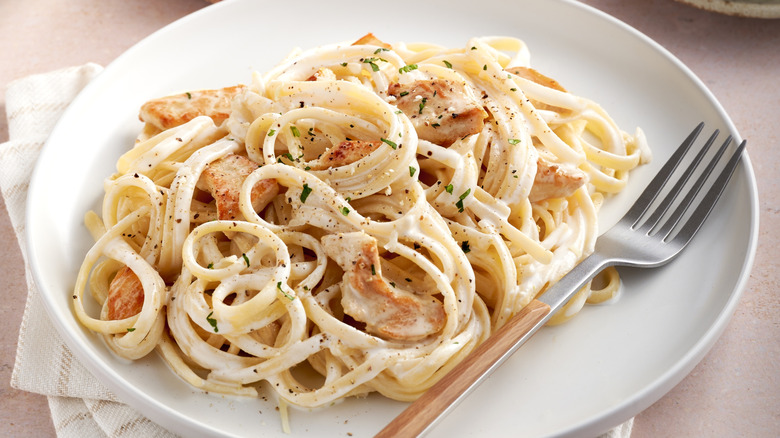
Although the ingredients used to make Alfredo vary depending on who's in the kitchen, with American recipes typically incorporating heavy cream, whereas Italian recipes stick to butter and parmesan, one thing is for sure either way: The dish has a certain level of decadence. The sauce comes together with a few dairy ingredients to make a velvety sauce that coats every strand of fettuccine (the go-to pasta type pairing). When choosing a wine to serve with this creamy dish, you can opt to lean into the richness or contrast it.
Either way, chardonnay is a solid choice to pair with your pasta with Alfredo sauce. The grape itself displays relatively subtle aromas, with hints of green apple and lemon. If it's fermented or aged in oak barrels, the wood imparts flavors like vanilla, caramel, butterscotch, and spice. If you're looking to maximize the richness of the dish, then lean toward a fuller-bodied oaked chardonnay. On the other hand, if you want a wine that cuts through the creaminess of the Alfredo sauce, then a crisp, unoaked chardonnay will do the trick.
Long Island's Suhru & Lieb Estate Chardonnay offers richness while remaining bright on the palate. Meanwhile, hailing from the mountainous region of Alto Adige in Italy, Elena Walch's Chardonnay boasts refreshing apple aromas and a crisp edge.
Pesto with Sauvignon blanc
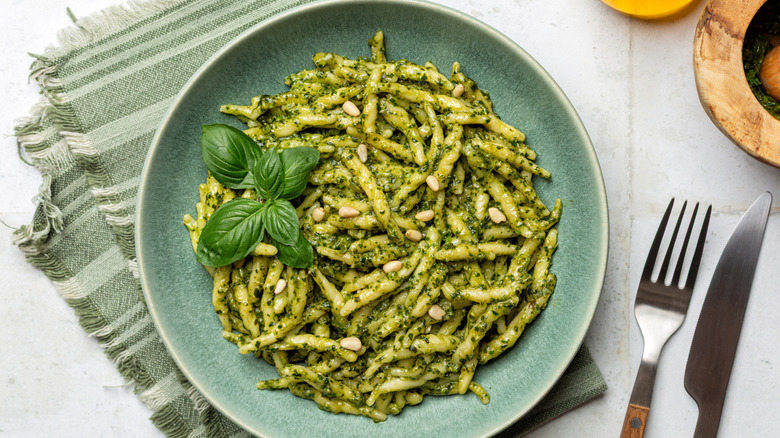
An herb-packed pesto sauce is a delicious way to dress up your pasta, whether you're going for classic flavors or something more experimental. Most people think of basil pesto (aka pesto Genovese) when they think of the green sauce, but there are numerous traditional and less traditional alternatives to try out. Herbs, nuts or seeds, garlic, and Parmesan are typically common, with variations including almonds, sundried tomatoes, mint, arugula, carrot greens, and more. No matter what type of pesto you're pairing with your pasta, you'll want a wine that can match its bold flavors.
Sauvignon blanc is packed with punchy aromas, often featuring notes of tropical fruits, herbs, grass, and grapefruit. Plus, it's naturally high in acid, which makes it a pleasant palate cleanser when served with a bold sauce. Pesto can also lean toward saltier flavors, so serving it with a crisp, refreshing white wine keeps your mouth watering for more. The grape is grown around the world, but if you want a bottle that showcases prominent aromas, look to one from New Zealand.
Pick up a bottle of Giesen Uncharted Sauvignon Blanc to pair with your next bowl of pesto pasta.
Puttanesca with Nero d'Avola
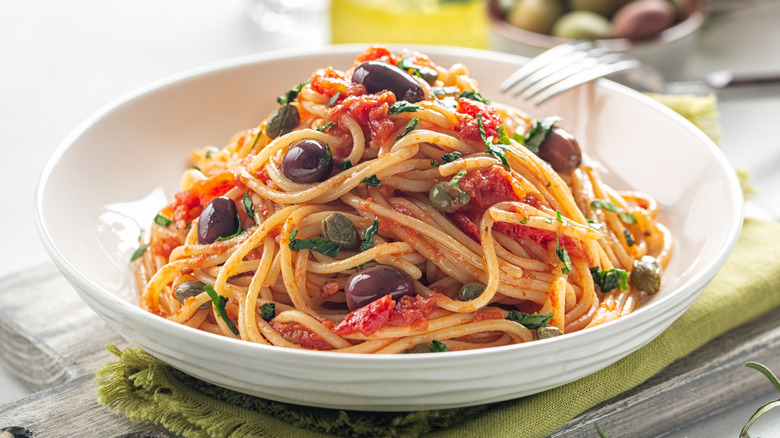
Puttanesca sauce is known for its bold and briny flavor, featuring a combination of tomato sauce, black olives, anchovies, capers, garlic, chili flakes, and herbs. There's a lot of umami in a bowl of this popular pasta dish, especially if you choose to go all out by doubling the anchovies. This sauce is heavy on salty, acidic ingredients, and there's nothing subtle about it. To ensure your wine can stand up to such a potent mix, you'll want to choose something with similarly vibrant flavors, as well as sufficient acidity to avoid being drowned out by the sauce. Reach for a red wine from Southern Italy, where tomatoes and briny ingredients are part of the culinary fabric. It's also believed to be the home of puttanesca, though its origin story is sometimes questioned.
Nevertheless, you can't go wrong with a bottle of Nero d'Avola from Sicily. As the island's most grown red grape variety, there are countless styles on the market, ranging from lighter rosé options to heartier reds aged in oak. It typically features dark fruit notes, like black cherry and plum, baking spices, tobacco, and licorice. For the purpose of pairing with this zingy pasta dish, you'll want something vibrant, as noted above, but not too much; oak will detract from the sauce's abundant flavors, and a high alcohol content may make the chili heat less tolerable.
Tasca d'Almerita's Tenuta de Regaleali Nero d'Avola is an affordable and easy-to-drink option that pairs seamlessly with your dish.
Vodka with Pinot noir
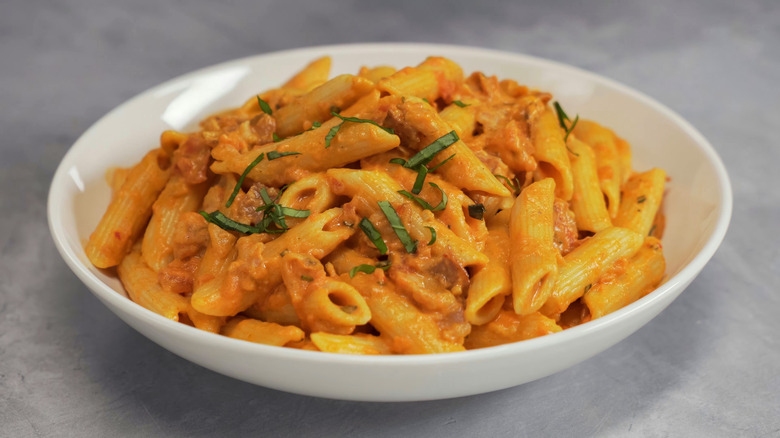
While you might be tempted to make a vodka cocktail with the bottle of vodka you used for the recipe, this pasta sauce makes an excellent match for wine. The classic recipe (typically served with penne) consists of crushed tomatoes, heavy cream, alliums, seasoning, and, of course, vodka. The spirit helps emulsify the cream and tomato sauce while adding depth, creating a velvety texture that effortlessly coats each piece of pasta.
Since vodka sauce expertly combines tangy tomato aromas with rich creaminess, it's best to go with a wine pairing that doesn't overwhelm this nuance. Pinot noir is an excellent choice (especially unoaked styles), as it displays an elegant palate with red fruit, spice, and earthy aromas. It offers some acidity to hold up to the tomato element in the sauce, without being too zesty. Finally, its medium body and low tannin structure keep it smooth and silky on the palate, just like your vodka sauce.
For a delicate yet structured bottle to pair with your vodka sauce, try Cantina Andrian's Pinot Noir.
Carbonara with Pinot Grigio
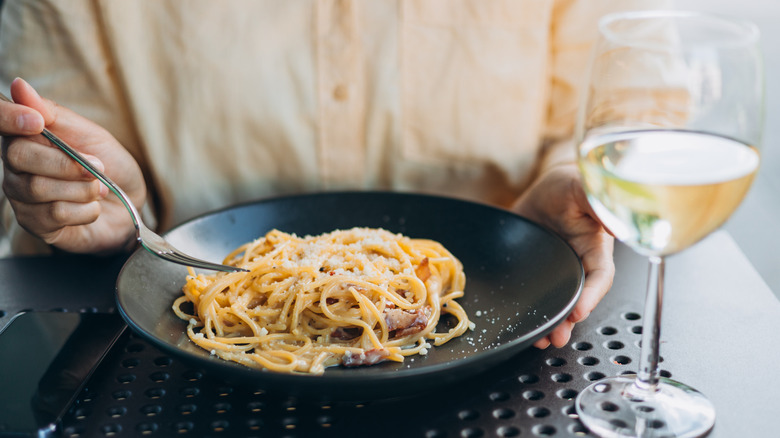
Aside from the debate on the dish's origin, carbonara recipes also differ depending on which country you're dining in. Similar to Alfredo, U.S. versions of carbonara feature a hearty dose of heavy cream, and often add-ins like veggies and a range of meats (bacon typically makes an appearance). On the other hand, Italian carbonara calls for eggs, pecorino, guanciale (Italian cured and seasoned pork jowl), and black pepper, served with spaghetti.
Simplicity is the key in Italian carbonara, so it's essential to choose a wine with subtle flavors that won't overwhelm the dish. Even though there's no cream in a traditional recipe, carbonara still has a rich flavor and velvety consistency, which begs for some acidity to cut through. Pair it with a bottle of chilled pinot grigio, which features delicate notes of green apple, peach, and lemon. While Italy makes large amounts of pinot grigio, consider a bottle from Oregon, where the variety is rapidly gaining traction.
Try Archery Summit's Vireton Pinot Gris for a juicy, stone-fruit-forward wine to pair with your carbonara.
Cacio e pepe with Prosecco
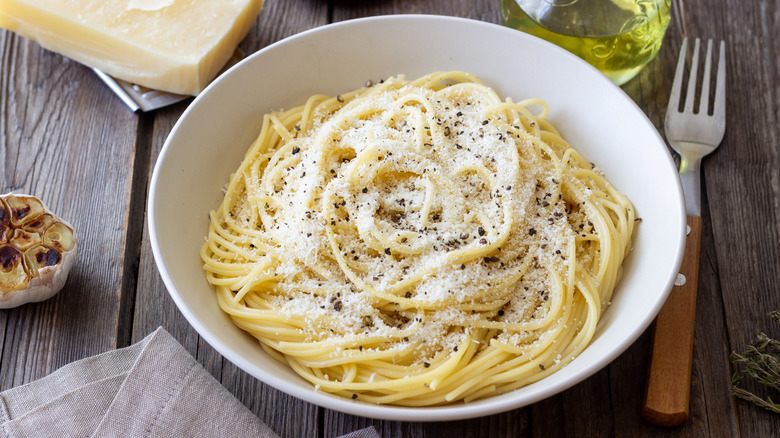
Fans of velvety pasta sauces love cacio e pepe, the simple Roman dish featuring Pecorino Romano, Parmigiano Reggiano, and black pepper. The cheesy sauce is emulsified with starchy pasta water, leaving it to coat every strand of pasta with goodness. The black pepper is the only seasoning here, and its pungent aroma offers a sharp contrast to the rich, salty cheeses. Considering this classic dish focuses on highlighting very few ingredients, it's important to avoid a wine pairing that's too loud, or you might as well just be eating pasta with a jarred cheese sauce.
Prosecco is the perfect pairing for cacio e pepe pasta, because it leans on delicate, fruity, and floral aromas that don't overpower the palate. Additionally, the effervescence is an excellent complement to the cheesy sauce, cutting through the fat to prepare you for every next bite. More complex sparkling wines have deeper aromas that may detract from the cheese and pepper sauce.
Try a bottle of Bisol Jeio Prosecco Brut, which features citrusy, saline aromas with hints of apple.
Arrabiata with Zinfandel
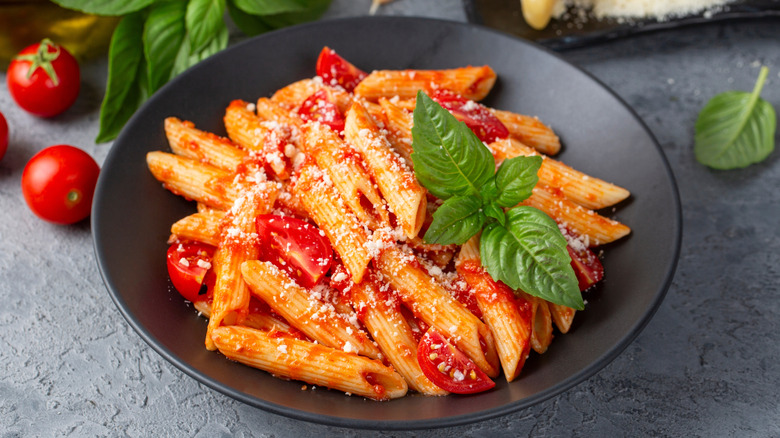
Pasta lovers looking for a bit of heat can turn to arrabiata sauce for the kick they desire. Once again, simplicity reigns, with a handful of carefully selected ingredients that combine to form more than the sum of their parts. Canned tomatoes, onion, garlic, fresh basil, and crushed red pepper flakes make up a spicy arrabiata recipe, which is usually served with penne pasta to cling to the sauce. The acidity of the tomatoes needs to be considered when choosing a wine pairing, but in this case, the spice factor is also important.
Zinfandel boasts natural acidity that can match the intensity of what you'll get in the tomato sauce. It also displays bold aromas, with notes of red and black berries, and spices, so it won't get lost behind this potent sauce. Meanwhile, the presence of spices on the palate makes this a good accompaniment to spicy arrabiata sauce. The most important consideration will be to avoid a bottle that's high in alcohol, which may clash with the heat and make it unpleasant.
Neyers Vineyards makes a vibrant zinfandel that's brimming with fresh, juicy fruit aromas and hints of spice.
Amatriciana with bold rosé
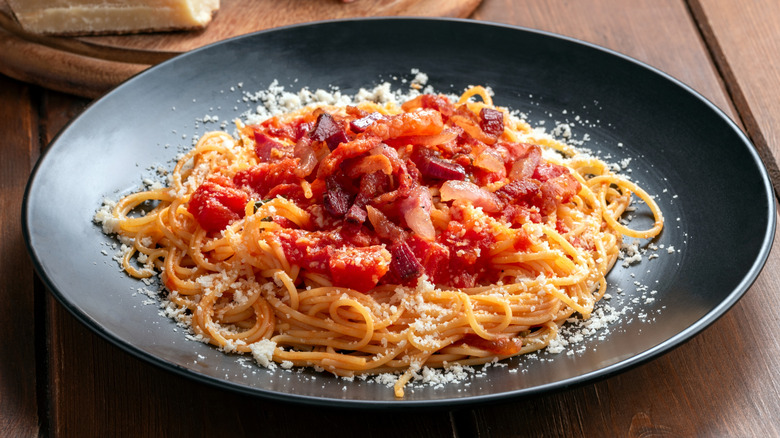
Amatriciana is another iconic Roman pasta sauce featuring plump San Marzano tomatoes, Pecorino Romano, guanciale, and Calabrian chiles. The result is rich and savory, with salty flavors from the meat, fresh acidity and sweetness from the tomatoes, depth from the cheese, and heat from the chiles. It's decidedly bold and flavor-forward, providing the perfect combination of ingredients in a bowl. Amatriciana has an unapologetic presence to it, which requires careful balance when selecting a wine pairing. Choose something too bold, and it'll wash out the sauce. Go too light, and it'll be completely obliterated by the dish.
A bold rosé is an excellent match for amatriciana, balancing the best of both worlds. You can find bottles from numerous countries made from different grapes with various techniques. For example, the "saignée" method entails "bleeding" off a portion of juice when making red wine, and fermenting it without skins or seeds, resulting in a slightly subtler red wine, still packed with flavors yet with a lighter take. Meanwhile, Tavel in Southern France is known for its bold rosé, made with local grape varieties like grenache and syrah.
Château Trinquevedel Tavel Rosé displays fresh acidity with bold red fruit notes and a complex palate.