

The Cooking Method That Makes Fresh Polish Sausage Shine
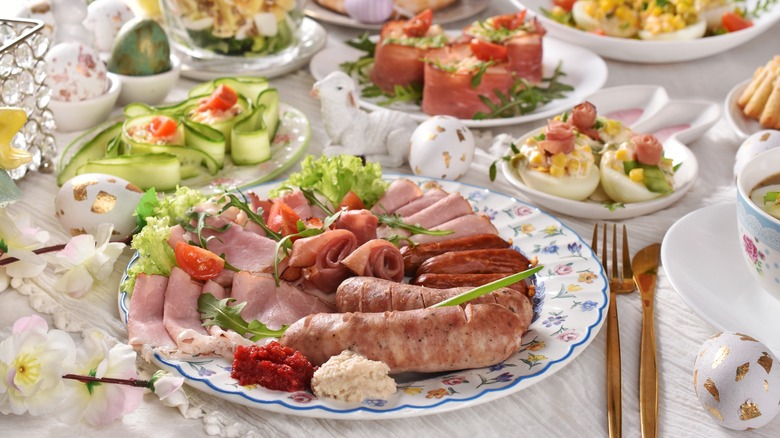
Fresh Polish sausage is often sold as kiełbasa. Kielbasa is different than bratwurst. Fresh polish sausages are made of raw, semi-finely ground pork, sometimes beef or veal, and they are usually seasoned simply, with garlic, marjoram, and pepper. The key factor in considering the optimal cooking method for your kiełbasa is the "raw" part. Throwing fresh Polish sausage straight onto a hot grill is a way to get it to be cooked through to edibility, but it can cause quality-affecting problems, like burst casings or an uneven, charred exterior wrapped around a still-raw center.
The trick is to poach, or parboil, the sausage first. This method is also sometimes called braising. It gently brings the meat up to temperature without shocking the casing or forcing the fat out too quickly. Instead of languishing under aggressive heat, the sausage will cook evenly in the bath of hot liquid, which keeps the interior juicy and cohesive. When it gets to a grill or a dry pan, the sausage is already cooked through, but just barely. You're using the high-heat method as a finishing step, instead of the whole start-to-finish technique. This approach also respects the nature of the sausage. Fresh sausage doesn't need to be aggressively crisped or dried out, and it really eats better when it stays plump and tender, with an evenly cooked interior. Poaching gives you control over that outcome, setting the sausage up for success before you introduce flame.
Slow roll, then sizzle
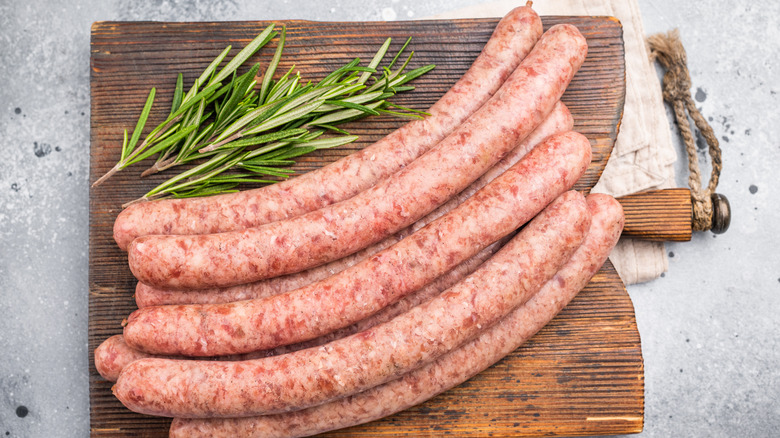
Poaching a sausage is actually a lot easier than it sounds, and it's certainly way simpler than poaching an egg, which can get pretty fiddly. To try this sausage cooking technique, place the links in a wide pan and cover them with water, broth, or a mix of water and beer. Aromatics like garlic, bay leaf, onion, or peppercorns can be added, but they're not crucial. Bring the liquid to a gentle simmer, then lower the heat and poach until the sausages are cooked through and firm to the touch. You're aiming for hot liquid, not a rolling boil. Boiling can toughen the casing and encourage fat loss, and the fat can help adjust your flavor like a pro, so you don't want to squander it. Let them go for about 10 minutes,
Then, the hot grill does exactly what it should, which is browning the casing and encircling the meat with smokiness, which builds flavor through caramelization. Because the sausages are already fully cooked, you can focus on color and texture. And if you're not grilling, just pour off the liquid from your cooking pan, turn up the heat, and let the surface that's in contact with the pan sear up. This two-step method produces moist, snapping sausages. The interior will be juicy and evenly cooked, with all the benefits that high heat supplies. The same technique can work for other fresh sausages, from Italian to breakfast.