

How Yeast Can Actually Be Beneficial For Gardening
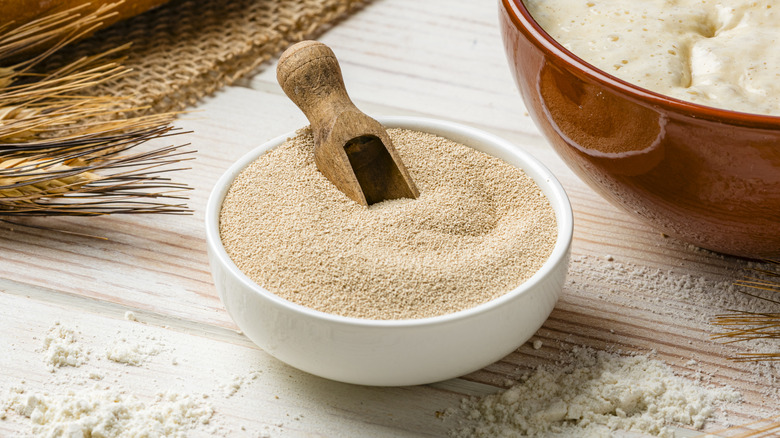
A major challenge when growing a vegetable garden on a budget is that the best fertilizers — organic or chemical — command high prices to match their effectiveness. But, even if you do cough up the dough for a powerful chemical growth aid, you might pay even more in terms of environmental impact and personal safety. That's why many home gardeners turn to affordable, natural alternatives like baker's yeast, which may provide benefits for your fruits, veggies, and flowers.
Yeast isn't nearly as potent as commercial fertilizers, but that's part of the appeal. Over-spraying chemical solutions can harm your plants as well as nature and animals around you, not to mention these products are often toxic when handled without protective gear. Some sources propose yeast as a cheap, gentle alternative because it contains three essential macronutrients found in commercial fertilizers: nitrogen, phosphorus, and potassium. Nitrogen boosts plant growth; phosphorus aids in flower and fruit production; and potassium makes crops more resilient and promotes root health.
Much like using honey as a natural fertilizer, yeast needs to be diluted with water before use, which also activates it so it can work properly. Most recipes mix 1 tablespoon of active dry yeast with an equal amount of sugar and 1 liter of warm water (the correct temperature to activate yeast is 105 to 115 degrees Fahrenheit). Let the mixture sit for 24 to 48 hours, stirring occasionally until it starts to ferment. From there, you can water your plants with the mixture biweekly.
How well does yeast fertilizer actually work?
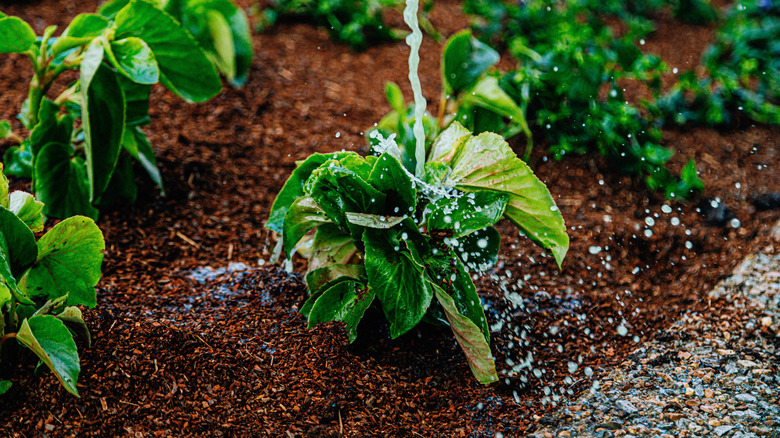
While DIY yeast fertilizer is unlikely to harm your garden, not much scientific research has been done on the method, making its degree of effectiveness inconclusive. However, one 2021 study published in the U.S. National Library of Medicine posited that yeasts can be a useful component in natural alternatives to synthetic fertilizers and pesticides. This is due to their abilities to provide easily-accessible nutrients to crops; act as biocontrol agents, or organisms that deter harmful fungi, insects, and weeds, and activate a plant's defense mechanisms against environmental stressors.
Even so, it has not been formally proven that a simple baker's yeast solution can replicate these effects when used alone. Advocates for yeast fertilizer point out that microorganisms are essential to soil health, and since yeast is a microbe, adding it directly to your garden could be beneficial. However, yeasts are already naturally found in the soil of most ecosystems, so most gardeners don't have to supply extra microbes to their planting soil. Feeding existing microbes with organic matter like compost can be better for your garden than adding baker's yeast.
Most types of baking yeasts have much lower concentrations of phosphorus and potassium compared to nitrogen, so it's less likely to aid your plants' flower or fruit production or help them withstand disease, harsh weather, and other stressors. Even yeast's nitrogen supply is far lower than that of commercial fertilizers. In conclusion, yeast could be a decent supplemental aid, but it's far from a powerful fertilizer that will take care of all your garden's needs.