

The Origin Behind The Most Common Note In Your Bourbon
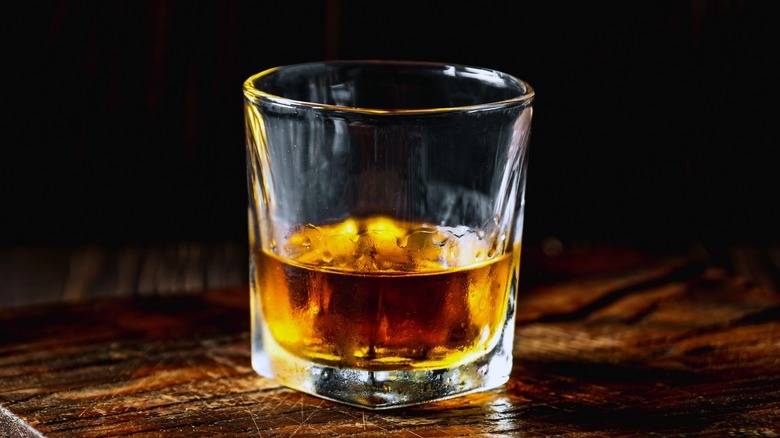
Tasting notes on a bottle of bourbon can seem like a bit of a mystery to the uninitiated. It's hard to believe that a fermentation of grains, yeast, and water can end up tasting of honey, spices, or most commonly, vanilla. But this isn't a marketing ploy; it all comes down to science.
Those vanilla notes are developed during the aging process as the bourbon sits in oak barrels. Oak contains a compound called lignin, which is a natural source of the phenol vanillin. This phenol is what gives vanilla beans their signature flavor and aroma, but it's present in smaller amounts in a range of other plants including coffee, cacao, and oak. Additional vanillin phenol can be produced from other naturally occurring compounds under certain circumstances, such as roasting coffee beans or the fermentation of liquor.
Barrel aging contributes to the complex tastes of bourbon in other ways too. Notes of caramel, smoke, or even coconut can be developed from contact with the oak. This is in contrast with herbal notes, which are thanks to the yeast, or biscuity and spicy flavors that come from the mix of grains in the mash.
Does all bourbon taste like vanilla?

The fact that the vanilla flavor is so prominent in bourbon is in part due to the production standards. For liquor to be sold as bourbon as opposed to any other whiskey, it has to meet certain requirements. One of these is being aged in new charred oak barrels. The first distillation will impart the highest concentration of flavor compounds, including vanillin, which is what gives bourbon its signature sweet taste. Every batch of bourbon requires brand new barrels, with the old ones often used to age other whiskeys.
The charring, which entails sending a burst of flames into the empty barrels, also plays a key part in the end flavor. The heating process creates additional vanillin phenols, but it also opens up the pores in the wood to allow more contact with the fermenting liquor.
The time that bourbon is aged will have an influence on the prominence of vanilla notes too. The most vanillin is released from the wood in the first six months, and while bourbons aged beyond this will extract more of the phenol, it's only to a point. Upwards of 10-15 years, the bourbon can start to take on more woody or tannic flavors that can overpower the vanilla.
So, while all bourbons contain vanillin phenols in some amounts, it's the job of the master distiller to decide which flavors to enhance or mute for a distillery's signature recipe. Playing down the vanilla flavors in a bourbon can be done by using varieties of oak with tighter pores that releases fewer flavor compounds, or amping up competing flavors through the choice of grain.