

When To Plant Peppers For The Biggest Harvest: It Depends On Your Zip Code
Growing your own food from a tiny seedling to a ripe fruit or vegetable can be a rewarding experience, but also a stressful one. It may seem that no matter how many seeds you plant, or how much water and attention you give the tiny green sprouts, your "black thumb" plagues the garden yet again, and you never see anything more than a plot of dirt. The problem may not be you — it may be your timing, especially if you're working with sensitive plants like peppers.
The U.S. Department of Agriculture published the Plant Hardiness Zone Map, which breaks the country into 13 zones that help determine the best time of year to get started on various fruits and vegetables, such as peppers. Each zone varies by 10 degrees, and each subzone varies by five degrees, even if a single state can technically be broken into several zones. The warmest zones, such as Florida and Hawaii in Zones 10 through 13, can plant their pepper seeds outdoors at any point, since they typically don't have to worry about frost. Zones 7 through 9, in states like Georgia or Texas, can start planting pepper seeds indoors as early as late December through the end of February. Finally, in Zones 3 through 6, which include states such as Montana, South Dakota, and Kentucky, are recommended to plant pepper seeds indoors between March and April.
How hardiness zones shape pepper plants' success
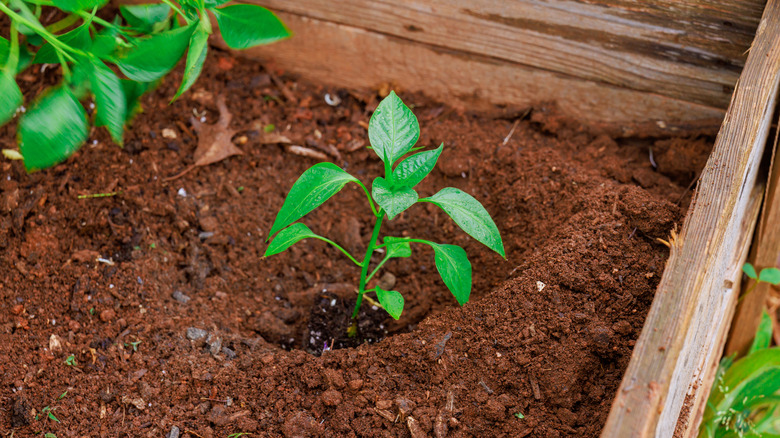
Since pepper plants aren't huge fans of the cold, the key to planting according to your specific hardiness zone is to minimize the plant's risk of freezing. Most gardeners recommend locating the average date of your area's last freeze and planting your seeds indoors about 8 to 10 weeks before this date, well before you plan on putting them in the ground (keep in mind the link between a pepper's spice and how long it takes to grow). Once you've got the seedlings going inside, you'll want to plant them outdoors when nighttime temperatures are consistently above 55 degrees Fahrenheit. If it's finally the right time, depending on your hardiness zone, don't forget to moisten the soil, be gentle as you transport the growing plant, and follow our 10 absolute best gardening tips for beginners.
Choosing the right kind of peppers for your specific zip code can also play a big role in your plant's bountifulness. Certain pepper varieties, such as jalapeno, serrano, and poblano, might do better in colder hardiness zones, where the ripening period is short. Other varieties, such as bell peppers and banana peppers, are better suited for sweltering temperatures.
If you're at your wits' end with pepper plants, don't throw in the towel before adjusting your planting routine, and don't give up if the pests start to tear up the garden, either — just plant green onions next to the peppers in your garden to keep bugs away.