

The Easiest Way To Clean Greasy Stove Grates Without Harsh Cleaners
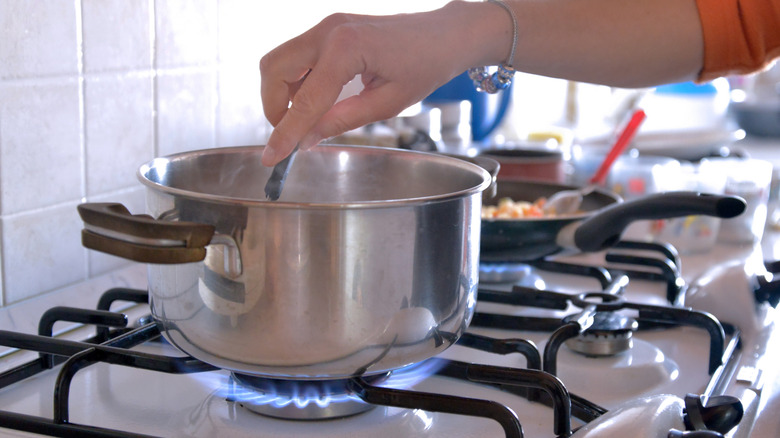
Few parts of your kitchen are more frustrating to clean than the stove grates. Often, if something splashes on them, it happens when they're hot so you can't wipe it up right away. Maybe you get distracted and forget to do it later, and the mess bakes right on. Sometimes it's just an accumulation of grease that resists a simple wipe with paper towels. When you need to be more thorough, you could use designated grease-fighting cleaners from the store, or you could try lemons.
In terms of natural cleaning solutions, vinegar is what's most often used. Like vinegar, lemon juice is acidic. It's that property that makes it ideal for cleaning by dissolving minerals and soap scum and breaking down fat molecules. Depending on the type of stain you're cleaning, the charge in the acid can transfer to the stain and help it pull away with water. The oil in the rind, called limonene, is also great at cutting through grease by acting as an organic solvent. As a bonus, lemon juice also has some mild antiseptic and antibacterial properties.
You can use either fresh lemons or bottled lemon juice to clean. Having a bottle of lemon juice may be more convenient, but if you use fresh ones, you can use both the juice and the rinds. You want to do a preliminary clean of your stove grates. Wipe off any chunks of food or easy to remove spots, then clean with soap and water. Soak the grate in lemon juice for at least 15 to 30 minutes, or longer for stubborn stains. To do this, either rub a section of sliced lemon thoroughly over the grate or soak the grate in a shallow container. Then gently scrub and rinse it clean.
Lemons are no duds
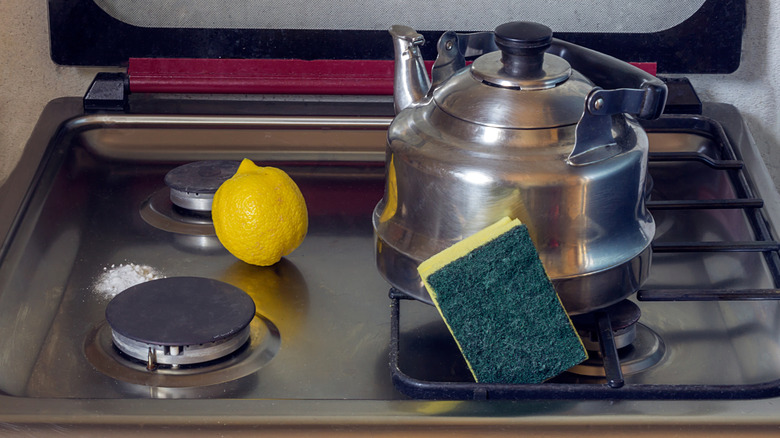
Grates are one of the worst things to clean in the kitchen, so having an edge is always welcome. Lemon juice works best in conjunction with soap because it's not a surfactant, meaning it can't rinse grease away after loosening it. It will loosen a lot of grime and let you wipe it away so the grate may look cleaner than normal, but using both together gives the most thorough clean. For serious, stuck-on stains, you can make a paste with lemon juice and baking soda, apply it to the grate, and let it sit overnight in a plastic bag so it can loosen the gunk. Then scrub with a gentle brush the next day.
While you can clean a lot of things with lemon, it's not a miracle cleaner. It won't remove all grease and baked-on residue in seconds. You need patience for this to work. Sometimes a full overnight soak in the lemon juice is what's required. If that's the case, make sure your grates are thoroughly covered and store them in a sealed plastic bag so the lemon doesn't evaporate. You want to keep the grates wet so the acid can do its work.
Lemon can't replace all of your household cleaners, but it can cut back on your use of some of them and works well for tasks like cleaning cutting boards. As long as you set aside the time to soak your stove grates, you won't have to rely on harsh or potentially dangerous chemicals, and you can save a few dollars on something that works just as well and smells better too.