

Rust In Your Microwave: When It's Dangerous And When It's Not
We may receive a commission on purchases made from links.
The average microwave should last around seven to 10 years, assuming that you look after it well. But during this time, you might notice patches of rust appear inside or on the outer casing of the appliance. If the rest of the microwave is in good working order, you might be wondering if these rust spots are reason to throw it out.
It all depends on where the rust is and how deep it goes. If the rust has caused any holes to appear in the internal walls or door, the microwave needs to be thrown away. At best, this will prevent the microwave from functioning correctly, but there is also the chance of radiation leakage. You might want to consider ditching your microwave if rust has formed in or around the electrical workings, as it poses a serious electrical safety risk.
If rust has formed on the ceiling of the microwave, even if it's only superficial, it can be dangerous for a different reason. Flakes of rust can fall into uncovered food as it cooks, which is just one more reason to cover your food in the microwave. This doesn't warrant buying a new microwave, but it will need to be repaired.
Surface-level rust that's on the outside of the appliance or under the turntable won't affect the safety or functionality of the microwave. You can continue to use the appliance without concern, but treating the rust before it spreads will ensure that your microwave will last as long as possible.
How to prevent and treat rust in your microwave
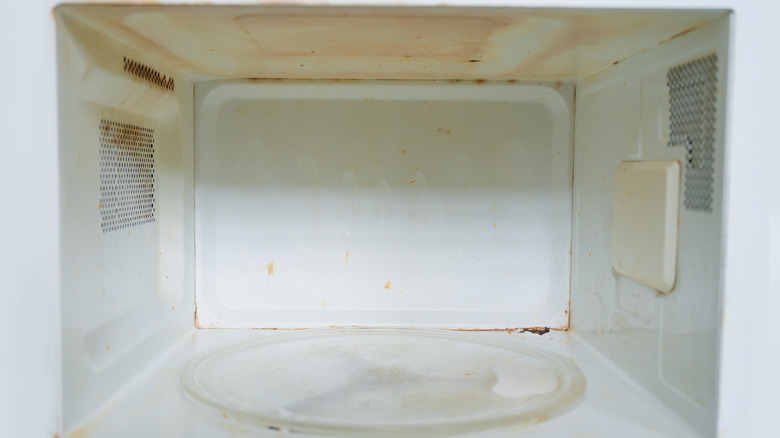
The best way to prevent rust from developing in a microwave is to keep it clean and dry. One of the most common ways that rust develops is from food splatter. As it sits, the moisture or acidity from the food can break down the protective paint and leave the metal exposed.
Food residue on air vents will prevent steam from escaping, further contributing to the risk of rust. You can probably predict that the key is to clean your microwave more often and wipe up any spills as they happen. Yes, immediately. And consider leaving the door open for a few minutes to allow steam to clear after cooking.
Deep cleaning should be thorough but gentle, as harsh chemicals or tools can damage the surface. The best way to clean a microwave is to set a bowl of water and vinegar inside and microwave on high for 3-4 minutes. This will steam off any food residue that can easily be wiped away with a soft cloth.
Even if you look after your microwave well, you might find that rust appears over time, in which case it should be dealt with swiftly. For rust on the exterior, it can be sanded back, then treated with regular appliance touch-up paint, such as Senven Appliance Enamel. For the interior, however, it's important that you use paint specifically labeled as safe for the inside of the appliance, like this ERP Microwave Cavity Touch Up Paint.