

Brown Spots On Baked Potatoes Aren't Necessarily Unsafe
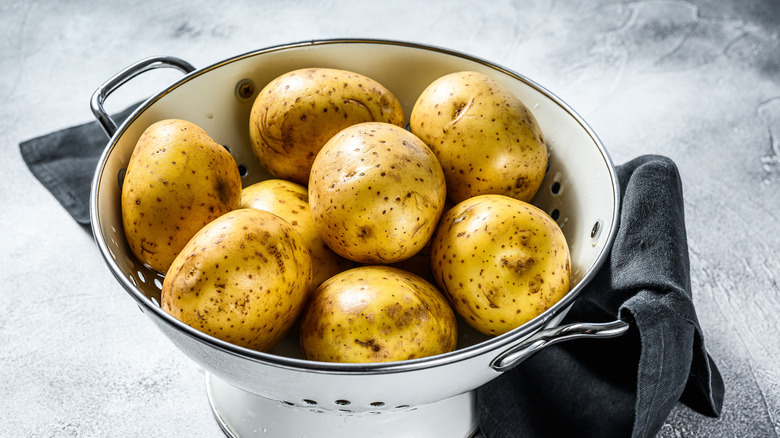
When all else fails in the kitchen, there is always the humble baked potato to fall back on. You really don't need much to make a delicious baked potato – some oil, a little salt, and an oven rack — and the opportunity to make it into a meal is endless. But at the crux of it all, of course, is the potato itself. Even a delicious baking potato can have flaws, and if you notice that yours has some brown spots, there's usually no need to worry.
It's common to find black or brown spots underneath the skins of potatoes, and they are typically harmless. Different from the freckle-like dots on a potato, which are the plant's lenticels, or "breathing holes", this phenomenon is known as Black Spot Bruising or Internal Black Discoloration and it can occur for a number of reasons. The first is that the potatoes were stored at a temperature of below 40 degrees Fahrenheit.
When potatoes are placed in a cold place like the refrigerator, the starches inside begin to convert to sugar, which causes discoloration. This is completely safe, but it might make the potatoes taste a tad bit sweeter when cooked. To avoid it, just store your potatoes in a cool, well-ventilated space like a pantry. The other reason is much more simple: the bag may have simply been dropped at some point after the potatoes were harvested, whether that was at the farm, during transit, or at the store.
What to do if your potatoes have brown spots
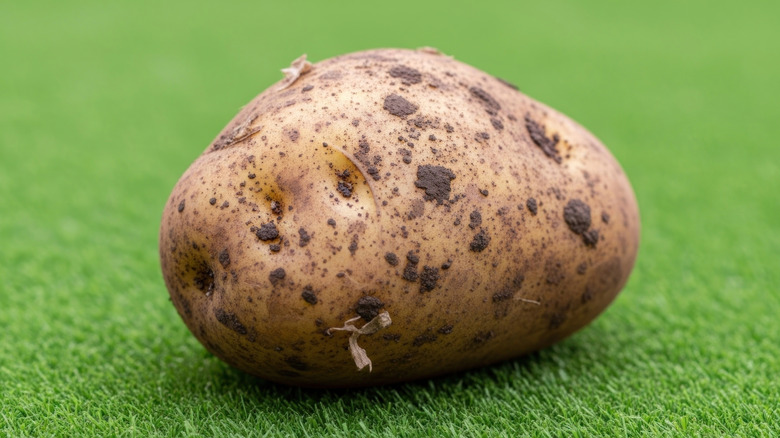
The potatoes may also have been stored too close together for a long period of time, or the problem may lie in the amount of calcium they contained during growth (this particular issue is known as Internal Brown Spot). If the browning was caused by any of these factors, you can think of the spots a bit like human bruises — it's just a little discoloration and tenderness. All you need to do is cut the spots off either before or after cooking.
However, if there is a lot of discoloration, or fusarium, as it's known, then the potatoes may taste slightly off. This has to do with those starches again. Like when potatoes are stored in the refrigerator, the bruises that show up because of damage or growth conditions are the result of a high concentration of sugar in one spot. This can make them taste oddly sweet. It's not harmful, but it may be noticeable if you're not adding too many baked potato toppings.
The one thing to really look out for is if the potato smells bad. If it does, then it might be rotten — it's best to toss it. Another telltale sign of a bad potato is the feel. It should be firm rather than mushy. If there are some very soft spots, just discard it. If you're trying to buy the best potatoes at the store, check the skin for any bumps or bruises, and keep an eye out for a smooth skin. You can't always tell if there will be brown spots on the inside, but at least you can be vigilant of any bruising from the outside.