

9 Mistakes Everyone Makes With Plastic Wrap

There are some basic disposable kitchen tools that everyone should know how to use. Aluminum foil and parchment paper, for instance, can come in handy for a wide variety of uses; learning how to use them correctly is essential for anyone spending a decent amount of time in the kitchen, and plastic wrap is no exception. Plastic wrap can be used for so many different purposes, such as contexts where other types of kitchen wraps — like aluminum foil — just doesn't work.
But even if you use plastic wrap on the regular, there's a good chance you're making at least a few mistakes with it. We've outlined some of the most common plastic wrap mistakes we see home cooks make, so you can learn how to avoid them. You may just find that plastic wrap becomes a lot more useful once you figure out how to avoid these common pitfalls. Then, check out our best tips for using plastic wrap.
Using plastic wrap with high heat
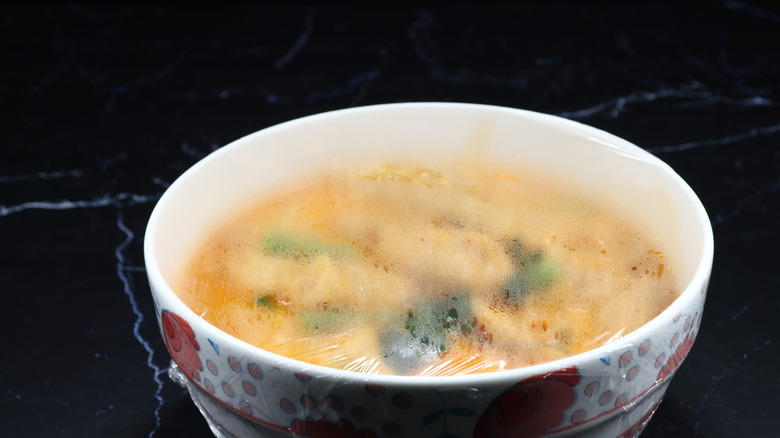
You probably already know that it's generally not a good idea to expose plastic — like food storage containers, for instance — to high temperatures. After all, it can cause chemicals in the plastic to leach into your food. It probably shouldn't come as a huge surprise, then, that it's also a bad idea to use plastic wrap under very high heat. This is because plastic wrap melts very easily when exposed to high temps, which could ruin whatever food you're heating up, not to mention making a big mess in the process.
Therefore, if you are going to use plastic wrap when heating something, you should stick to the microwave only. That means that you need to keep plastic wrap far away from the stove, oven, air fryer, grill, and any other heated cooking appliance. If you're going to use plastic wrap in the microwave, check the packaging to make sure that it's microwave safe, since not all plastic wrap is.
Not using the serrated edge of the box to tear
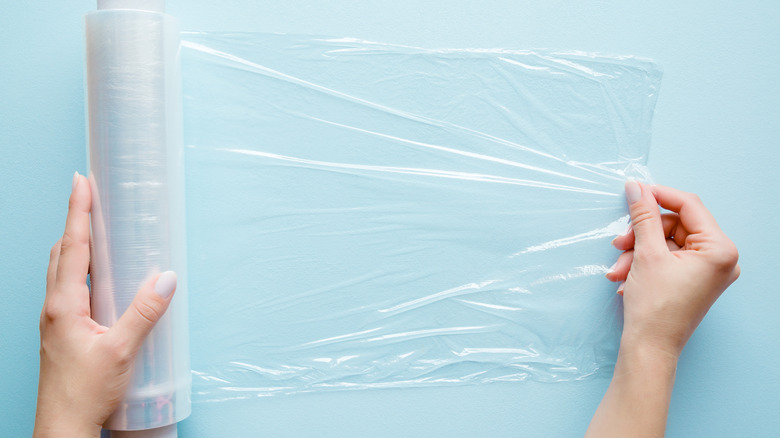
If you've worked with plastic wrap much in the past, then you know how easily it can stick to itself, which can be tricky to get unstuck. This can be an especially big problem if you're trying to cut the plastic wrap with scissors — or even worse, tear it apart with your hands. Before you know it, you could be left with a completely stuck-together clump of plastic wrap that's not good for much at all. Consequently, you should always use the serrated edge of the box to tear your plastic wrap.
This allows you to pull the plastic wrap out of the box cleanly, with no need to go fishing for scissors to ensure that you can rip off the desired amount. That serrated edge is there for your convenience, so you should definitely use it instead of struggling to cut the wrap with a different method.
Neglecting to wet down flat surfaces before using plastic wrap
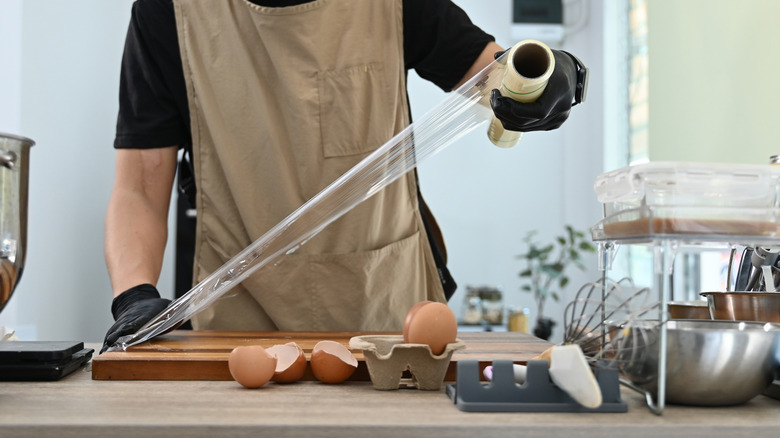
If you take a look at the directions on most boxes of plastic wrap, you'll see that the wrap should be applied to dry surfaces for maximum sticking potential. Therefore, it makes sense to ensure that the edges of bowls, plates, and other dishes are dry before trying to seal them with plastic wrap. But there may be times when you're trying to use plastic wrap on flat surfaces, like on a cutting board. Although you may assume that these surfaces should also be dry for maximum stickiness, that's not actually the case.
In reality, it pays to wet down those flat surfaces to get the plastic wrap to stick properly. All you need to do to get this method to work is to dampen the surface you're trying to wrap in plastic. You don't need to soak it in water — just a little bit of extra moisture will do. You may just be surprised at how much better your plastic wrap begins to function on flat surfaces once you stop making this common mistake.
Forgetting to ensure you've got an airtight seal
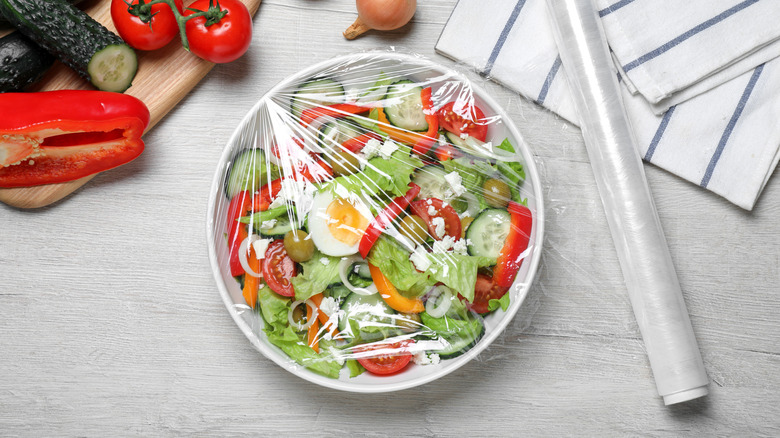
One of the main appeals of using plastic wrap in place of similar products, like aluminum foil or parchment paper, is the fact that it can create an airtight seal. This can protect your food from going bad as quickly as it otherwise might, since it won't be exposed to moisture or air, which can cause quicker spoilage. It also reduces the likelihood for spills or other messes, which allows you to use plastic wrap in place of storage containers in some contexts.
Not achieving this airtight seal with your plastic wrap, then, is a big mistake, since it essentially negates the purpose of using it in the first place. If you neglect to create that seal, you might find that your food goes bad or gets stale quicker than you wanted it to, or you might notice that other smells in your fridge seep in the food stored in the plastic wrap. Make sure to stretch the plastic wrap tight over whatever it is that you're wrapping, and apply some pressure to the edges of the dish or bowl you're using to ensure that the wrap is sticking enough to create that important, airtight seal.
Not storing your plastic wrap in the freezer
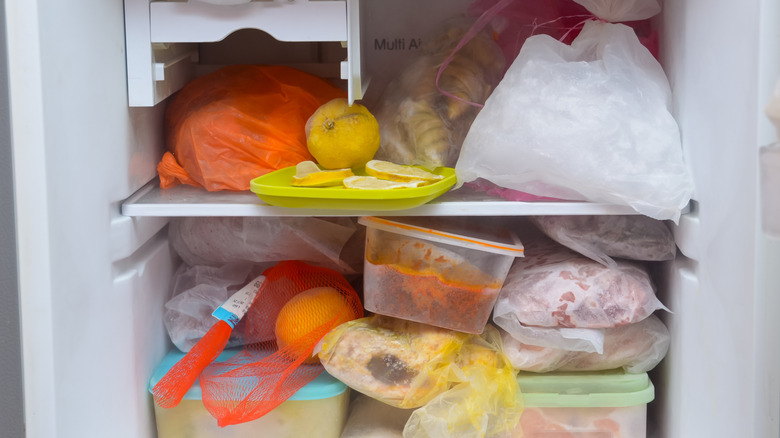
If you ask most people where they store their plastic wrap, they'll direct you to a drawer in their kitchen, or perhaps to their pantry. In reality, though, these aren't the best places to store your plastic wrap (even if they are the most common). Although it's not a huge problem to store plastic wrap in these spots, you may actually find that storing plastic wrap in the freezer makes more sense.
Hear us out: Many people find that plastic wrap can be too sticky, making it difficult to work with, especially when you're using larger pieces of it. But cold temperatures make plastic wrap less sticky and therefore easier to work with. This is because those cooler temperatures affect the molecules in the plastic, resulting in less stickiness. If you struggle with this issue like so many home cooks do, it's a mistake not to keep your plastic wrap in the freezer. Don't have room to keep it there permanently? You can also just pop it into the freezer for about 15 minutes before you're ready to use it. The fridge works too, in a pinch.
Only using plastic wrap for long-term freezer storage
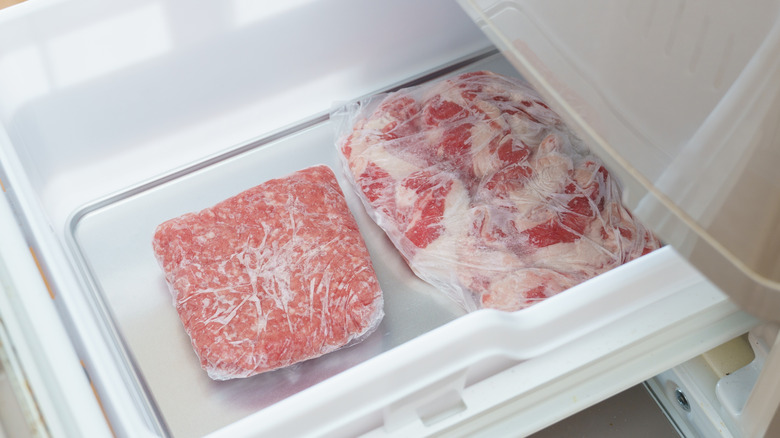
Plastic wrap is great for storing many different types of food. But while you may assume that plastic wrap is all you need to keep food fresh in the freezer, you're making a big mistake. Although you can certainly use plastic wrap for long-term freezer storage, it's a mistake to only use plastic wrap. Because plastic wrap is so thin, it may not protect your food from freezer burn like you'd want it to. That's why you should always use another type of wrap along with plastic wrap when you're storing food for a longer period of time in the freezer.
Luckily, you probably already have what you need to double up on freezer storage methods. Before wrapping your food in plastic wrap, cover it with aluminum foil or parchment paper. Having that extra layer of protection means that your food will be a lot less prone to freezer burn while still providing airtight storage. Of course, if you're only storing plastic-wrapped food in the fridge for a few hours or days, you may not need that extra layer.
Storing cheese in plastic wrap
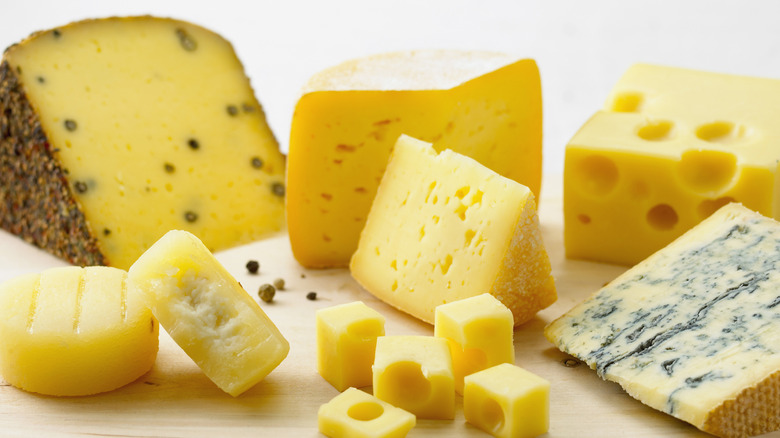
You've probably seen lots of cheese wrapped in plastic at your local grocery store. This seems like a common enough practice, so it may not occur to you that it's actually a mistake to wrap your cheese in plastic wrap. But if you're trying to maintain the quality of your cheese, it's actually not a good idea to use plastic wrap at all.
This is because cheese releases ammonia the longer it sits in your fridge. When it's wrapped in plastic, though, all that ammonia gets trapped, and the cheese can't breathe. This may also cause a buildup of liquid within the plastic wrapping, which can affect the rind.
So how should you store your cheese instead? You're better off using parchment paper for this purpose. Sure, plastic wrap is very versatile, but it shouldn't be used for everything — and cheese storage is definitely one arena in which plastic wrap just doesn't work well.
Not creating a vent when reheating food covered in plastic wrap
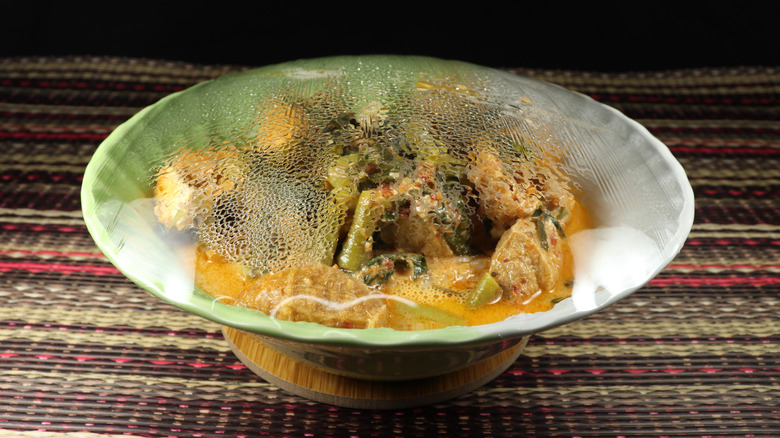
We've already covered the fact that you can, in fact, use plastic wrap in the microwave, provided you're using a variety that specifically says that it's microwave-safe on the box. However, that doesn't mean that you can't have mishaps with plastic wrap in the microwave. One of the biggest mistakes people make when reheating food covered in plastic wrap is forgetting to create a vent to allow steam to escape.
Without allowing that steam to escape, you can run into a few problems. First of all, you could end up steaming food that's not meat to be steamed — this is particularly a problem when it comes to fried foods or dishes that should have some crunch to them.
An even bigger issue that may occur from neglecting to create that vent is the plastic wrap melting into your food. In extreme cases, it could even cause an explosion in your microwave, which nobody wants to clean up. Therefore, before you pop that plastic wrap-covered dish into your microwave, be sure to pull back some of the plastic to allow that steam to escape.
Neglecting to cover the entire dish with plastic wrap instead of just the top
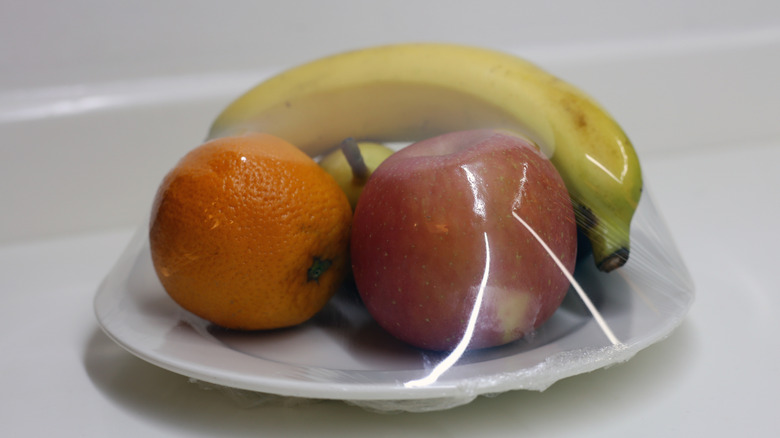
A lot of the time when people use plastic wrap, they simply tear off a small piece and attach it to the top of the dish where they're storing their food. You may do this with a salad bowl with greens you'll want to finish tomorrow, or a plate of cookies you're hoping to keep fresh. But only covering the top of the dish is a rookie plastic wrap mistake that doesn't always work, since it's so easy for that wrap to become unsealed from the bowl, plate, or other dish you're using.
Instead, it makes more sense to cover the entire dish with plastic wrap instead of just covering the top. This method is known as the hotel wrap, and it works because plastic wrap sticks to itself better than it sticks to other types of containers. By wrapping a dish completely, you can ensure that it is, in fact, airtight, keeping your food fresher for longer.