

10 Of The Biggest Refrigerator Recalls Of All Time

We may receive a commission on purchases made from links.
It can be hard to imagine today, but there was a time when people couldn't rely on refrigerators to keep their food and drinks cold. They often had to gather their own ice, when possible, or resort to storing their food in cold lakes or rivers. Thankfully, in 1748, William Cullen demonstrated artificial refrigeration for the first time. Of course, it took time for refrigeration to reach the masses, and most people were still using insulated ice boxes throughout much of the 1800s. However, by the late 1920s, refrigerators were starting to become a common feature in American homes.
But while refrigerators were a game-changing invention, even today's models are far from perfect. Things can — and do — go wrong with these handy appliances, sometimes with serious consequences. Even in recent years, faulty refrigerators have caused fractured bones, house fires, and emitted poisonous gases.
Fortunately, compared to the sheer number of refrigerators in modern homes and businesses, these incidents are very rare. When they do happen, companies are usually quick to issue product recalls, pulling potentially dangerous appliances from the market and offering repairs, replacements, and refunds. Below, we've listed some of the biggest refrigerator recalls of all time.
Frigidaire minifridges caused $700,000 in property damage
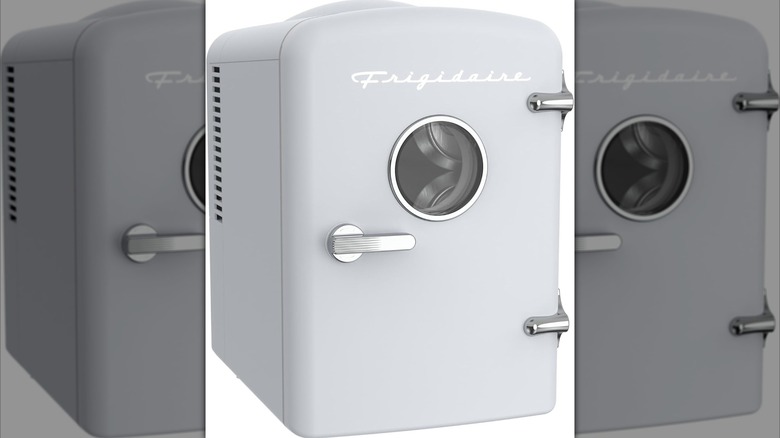
We've mentioned that refrigerators pose a fire risk, but it's important to underscore just how dangerous these appliances can be when things go wrong. In the U.S. alone, refrigerators and freezers caused more than 1,700 fires between 2006 and 2010. Nearly 20 people were injured as a result, and two people died. These fires also caused around $23 million in property damage, according to Consumer Reports.
That's why Curtis International, a distributor of Frigidaire's minifridges, had to recall more than 630,000 models from Walmart stores in July 2025. The issue was that internal electrical components in the minifridge were at risk of short circuiting, meaning the electricity doesn't follow the intended circuit, instead choosing a shorter path. This can cause a power surge, leading to increased temperatures, which may be hot enough to start a fire.
The company received reports from 26 people that their Frigidaire minifridge had either been smoking, sparking, or melting. In some instances, the fridges — which were produced by ShangYu North Electron Manufacture Co. Ltd. in China — had actually caught on fire. Two people suffered from smoke inhalation, and they also filed property damages worth more than $700,000. Anyone who had any of the potentially faulty models in their home was instructed not only to unplug them, but also to cut the power cord before disposing of them.
AstroAI minifridges posed a fire risk
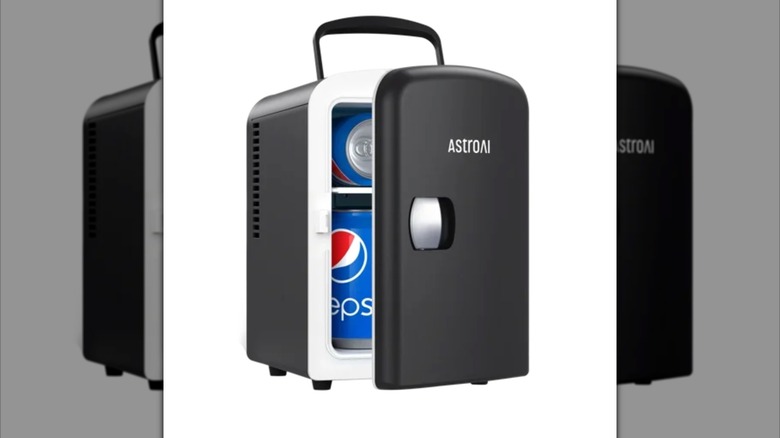
Curtis International isn't the only refrigerator company that has been forced to recall products because they pose a fire risk. Just one month before the Frigidaire recall, AstroAI also had to pull nearly 250,000 of its 4-liter minifridges from the market. Some of the fridges had been sold through Amazon, while others were purchased directly from the brand's website. Like the Frigidaire models, the minifridges had been manufactured by ShangYu North Electron Manufacture Co. Ltd.
As with Frigidaire, the AstroAI refrigerators also contained components that were at risk of short circuiting. This time, faulty electrical switches were identified as the cause. The units had already started causing problems before the recall, with around 70 people reporting that their minifridges were smoking, melting, or had caught on fire. The appliance was also the source of two house fires, which led to more than $360,000 in damage. To protect consumers, AstroAI instructed anyone who owned one of the impacted models to dispose of it and apply for a free replacement.
Frigidaire side-by-side refrigerators were a choking hazard
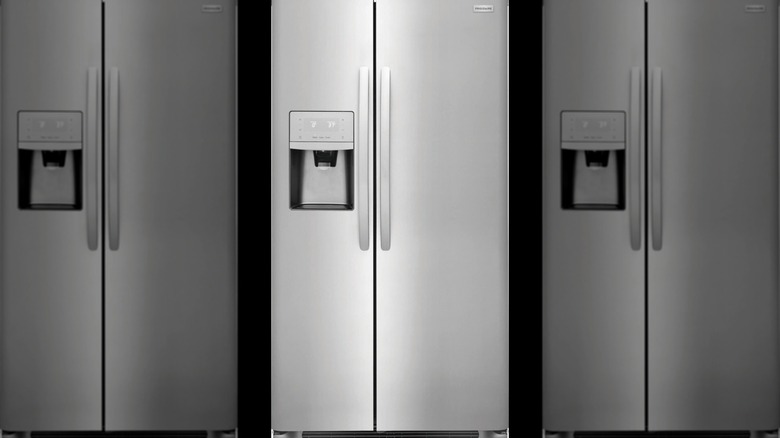
Fire risk isn't the only reason that refrigerators have been pulled from the market. In February 2024, Electrolux Group (which owns the Frigidaire brand) recalled more than 383,000 refrigerators because they posed a serious choking hazard. You're probably wondering, "How can someone choke on a refrigerator?" Well, pretty easily if a small piece breaks off into your drink.
This time, it wasn't the brand's minifridges that were the problem, but some of its side-by-side models. This style of refrigerator has two tall compartments situated next to each other — one is the fridge, and the other is the freezer. The layout offers easy access to everything inside, and many models feature a built-in ice dispenser, which is where the issue with these Frigidaire refrigerators originated. The ice buckets were easily fractured, allowing pieces of plastic to break off and land in the ice, posing a significant choking hazard for the unsuspecting user.
By the time the recall was issued, the company had already received more than 340 reports concerning broken ice containers, and two people had suffered lacerations and ingestion injuries. In response, Electrolux instructed customers to immediately stop using the affected appliances and offered to replace the ice buckets for free.
Hisense USA refrigerators were recalled due to dangerous doors
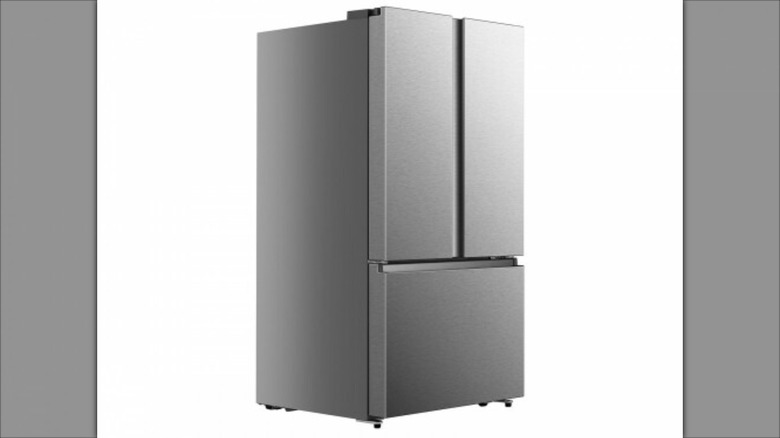
Nothing spoils your day like a refrigerator door landing on your foot, and for a handful of unfortunate individuals who purchased a Hisense USA refrigerator from Lowe's, that's exactly what happened. This led to the company recalling more than 55,000 of its stainless steel French door refrigerators in June 2022.
At the time of the recall, Hisense USA had received nearly 140 reports from customers stating that the door on their refrigerator had either become loose or detached completely. Needless to say, this was considered a pretty big issue. While refrigerators can still function without their doors fully closed, they have to work a lot harder to keep food cold, leading to a more expensive energy bill for the consumer. Additionally, it also poses a food safety risk when food isn't chilled down to safe preservation temperatures.
However, higher bills and food poisoning weren't the only things consumers had to worry about. Five people reported that they had been injured by the faulty doors, experiencing bruising or lacerations on their feet. In response to the reports, Hisense USA asked anyone who had already purchased one of the affected refrigerators to stop using them immediately if there appeared to be issues with the build quality. The company also promised to replace the doors on any of the recalled models for free.
Viking refrigerators have been recalled multiple times

Hisense USA wasn't the first brand forced to pull its refrigerators from the market because their doors were injuring people. Nearly a decade prior, in July 2013, Viking had to recall roughly 31,000 of its 36-inch wide refrigerators because the doors were at risk of falling off.
As with Hisense, injuries were being reported before Viking managed to issue a recall, and the company had received a dozen reports from customers who had suffered fractures, bruises, cuts, and strains as a result of the door falling off of their refrigerator. Viking asked those who owned one of the models to be on the lookout for doors sagging or failing to close correctly, and urged customers to get in touch to arrange a free repair.
Viking had experienced this issue before. In 2009, the company issued a similar recall after receiving reports concerning faulty doors, including instances of customers suffering broken fingers and toes. Unfortunately, 2013 wasn't the end of Viking's problems, either. In November 2014, it also had to recall around 750 of its side-by-side fridge-freezers after receiving reports of electrical shorts and fires; fortunately, nobody was injured.
Haier refrigerators were recalled over fire risk
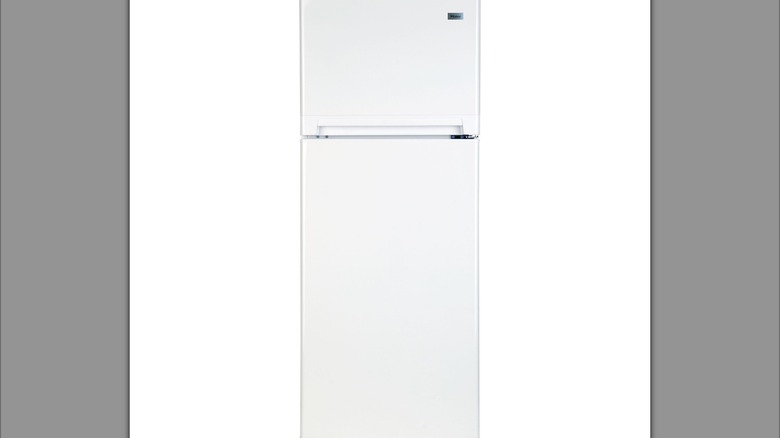
Fire risk was the cause of another refrigerator recall in 2018. This time, Haier — one of the biggest appliance brands in the world — had to pull nearly 140,000 models of its top-mount refrigerators from Lowe's stores across the United States after three customers reported that their appliance had produced smoke or caught alight. Fortunately, nobody was hurt, but the refrigerator-related fires did result in property damage, the exact amount of which remains unknown.
Just like in later cases with Curtis International and AstroAI, the issue was traced back to one of the refrigerator's electrical components, which was at risk of short circuiting. After receiving the incident reports, Haier asked anyone who had purchased the affected model to unplug it straight away. The company also offered a free repair service to anyone affected by the recall, or $150 off the purchase of a new Haier refrigerator.
GE French door refrigerators were causing fall injuries
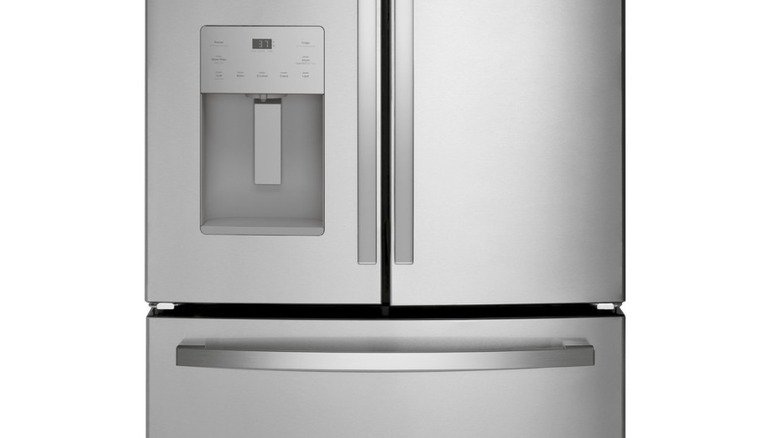
Now owned by the Chinese company Haier, GE Appliances is one of the leading refrigerator brands in the United States, but that doesn't mean it's immune to making mistakes. In April 2022, just a few months before Hisense USA pulled its refrigerators from the market due to faulty doors, GE had to recall around 155,000 of its French door refrigerators because the freezer handles were detaching. The problematic models had been sold at major retailers, including The Home Depot, Lowe's, and Best Buy.
On the surface, a freezer handle coming away from the door sounds extremely inconvenient, but not necessarily dangerous. In reality, nearly 40 people were injured as a result of the malfunction, three of them seriously. This was likely because the force of pulling on the handle caused customers to fall over once it broke away. To ensure nobody else was hurt, GE Appliances promised to directly contact anyone who had purchased one of the affected models to arrange a free replacement.
More than 1.6 million Maytag refrigerators recalled over fire risk
One of the biggest refrigerator recalls in history happened back in 2009. Maytag received more than 40 reports of refrigerator relay ignition in March 2009, forcing it to pull around 1.6 million units from the market. The relay in a refrigerator is an electrical component that helps jump-start the compressor (the motorized mechanism that compresses refrigerant fluid and pumps it around the refrigerator to keep it cold). Along with faulty electrical components, worn-out relay switches and compressors are two of the main causes of refrigerator fires.
At the time of the recall, around 16 people had reported damage to their homes as a result of the faulty relay switches. After the initial announcement, Maytag expanded the recall in August 2009 upon receiving an additional 23 reports of issues related to the relay switch. To remedy the issue, Maytag offered free repairs to anyone who owned one of the impacted models.
Maytag, Whirlpool, and Wood's refrigerators were recalled due to electric shock fears
We've had foot injuries, falls, and fires — now we've got electrocution. In 2005, W.C. Wood Company Inc. — which supplied refrigerators under brand names like Amana, Maytag, Whirlpool, and Wood's – recalled around 112,000 single-door refrigerators and upright freezers because it was concerned consumers were at risk of electric shock.
The company had received 45 reports of the defrost heater coil (a component that prevents ice buildup in a fridge or freezer) becoming exposed inside some units, occasionally resulting in electrical shorts and melted plastic liners. While no injuries were reported, if touched, the exposed coil could give the unwitting victim a nasty electric shock. To prevent potential catastrophe, W.C. Wood Company Inc issued a recall, urging anyone with an affected model to stop using it immediately and contact them to arrange a free repair.
Servel gas refrigerators caused more than 80 deaths
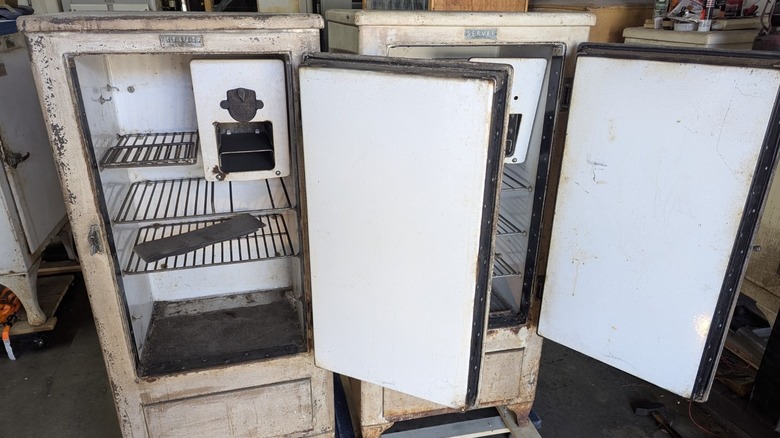
While there have been multiple refrigerator recalls in the 21st century, fortunately, none of them appear to have been linked to any deaths — at least not in the United States. However, the same cannot be said for the previous century. In the 1990s, a recall was issued for Servel refrigerators, which had been linked to more than 55 injuries globally and 80 deaths across Canada and the U.S. due to carbon monoxide poisoning.
Servel first started selling gas-powered refrigerators to the American public in the 1920s. In 1942, the company's entire manufacturing capacity was reassigned to produce military hardware, but it returned to selling commercial appliances at the end of World War II. Due to the high demand for more modern, electric appliances, Serval eventually went out of business in 1957.
By the 1990s, Servel refrigerators could still be found in homes across North America, but many were no longer being properly serviced or maintained. As a result, some of the old kitchen appliances had begun leaking carbon monoxide, a toxic gas that can lead to serious illness or death. In 1998, the United States Consumer Product Safety Commission decided it was time to act, issuing a recall for gas-powered Servel refrigerators with one simple instruction: If you own one, get rid of it. Unfortunately, despite the warning, people are still buying and selling vintage fridges today.