

This High-Fat Tip Turns Basic Cabbage Into A Showstopper
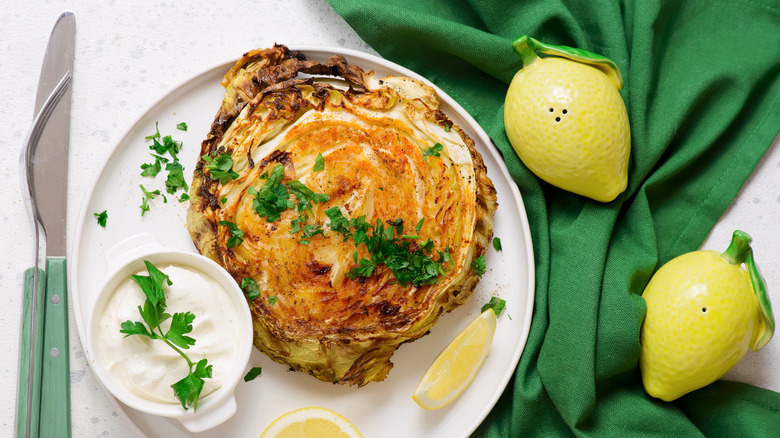
Cabbage may not be found at the top of many people's lists of favorite vegetables, but with the right preparation, this hardy workhorse of a brassica can be turned from a decent side dish to the centerpiece of your dinner table. That preparation, which turns humble cabbage into the kind of dish everyone at the table will be jockeying for a second serving of, starts with adding an ample quantity of fat to your cook.
You see, cabbage, like all brassicas — a genus which includes broccoli, kale, cauliflower, and Brussels sprouts, among others — is at its best when caramelized. Cabbage is often relegated to soups, stews, and boiled dinners, but the flavor of cabbage wakes up when browned. This caramelization of brassicas happens due to the Maillard reaction, a complex interplay of amino acids and sugars. To accomplish this task without drying it out too much, however, cabbage needs plenty of fat in the mix.
The problem with the Maillard reaction is that it only occurs at relatively high temperatures, with the best effects taking place upwards of 280 degrees Fahrenheit. This might not seem high in terms of typical cooking temperatures, but it is for foods with significant water content, like cabbage. Water boils at 212 degrees Fahrenheit, which disperses heat. Naked, cabbage will slowly steam off its water, leading to a pale, dry final product. Adding a layer of oil seals in the moisture of the cabbage while also allowing the necessary high-temperature heat transfer to create those beautiful browned edges.
How to implement this new cabbage trick
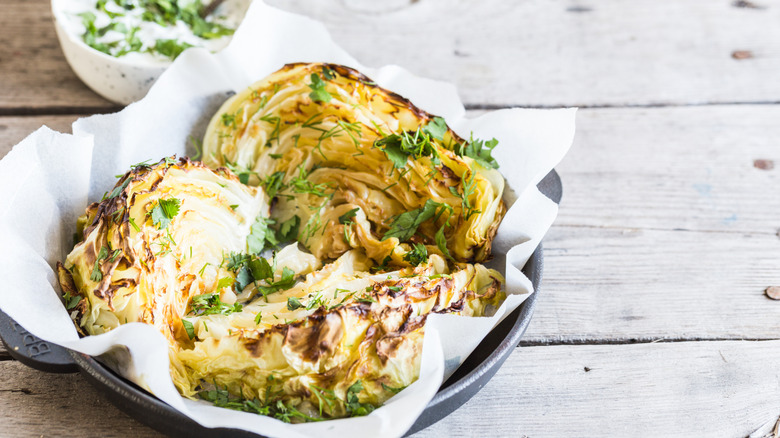
Brushed with olive oil or slathered in butter, the stage is set for slices of cabbage to beautifully brown, even in dry-heat environments like the grill or oven. You can simply roast cabbage in the oven for an easy side dish, or add another element to the mix and upgrade your roast cabbage with bacon fat. This technique can and should be applied to many tasty cabbage recipes — anything that isn't boiled or steamed, really.
The Maillard reaction doesn't really occur in boiled and steamed foods because the temperature can't hit the required heights. But the same trick applies to the skillet and the grill as well. It is a dry heat environment, with the obvious difference being that underneath the grill is a powerful source of direct heat. So, plenty of oil will keep the steaks moist while allowing you to cover them with a light char and stunning grill marks.
The environment in the skillet is slightly different, but plenty of oil is still an important part of getting a good brown on sauteed cabbage. Without oil, cabbage will dry and char in the skillet. Follow this Southern fried cabbage recipe, however — adding both butter and bacon to the mix — and you end up with cabbage that is tender, caramelized, and downright delicious.