

10 Ways To Use Hydrogen Peroxide To Keep Your Kitchen Spotless
If you were a child of the '70s or '80s, you may remember the bubbling sound of hydrogen peroxide fizzing on an open wound. Back then, it was the go-to for parents who were looking to disinfect the cuts and scrapes that their kids would come home with. Since then, science has shown that it's actually not all that great for a wound, but there's no need to throw out that bottle if you do find one. While it may not be a good option for cuts, it's a great one for keeping your kitchen spotless.
Hydrogen peroxide, two parts hydrogen and two parts oxygen (H₂O₂), is a strong oxidizing agent. As soon as it makes contact with certain organic and reactive substances, it helps to destroy bacteria. It's both affordable and effective, which is why many of the big brands include it as an ingredient in some of the cleaning products that you trust for your home.
The thing is, if it's the power of hydrogen peroxide you are after, you don't need to splash out on expensive cleaning products and brand names — just head to your local pharmacy or grocery store and grab a bottle of hydrogen peroxide. And if you ever wondered what to do with it, here's how you can use hydrogen peroxide around your kitchen including everything from using it as a general disinfectant to removing stains from marble countertops.
Create a general disinfectant spray
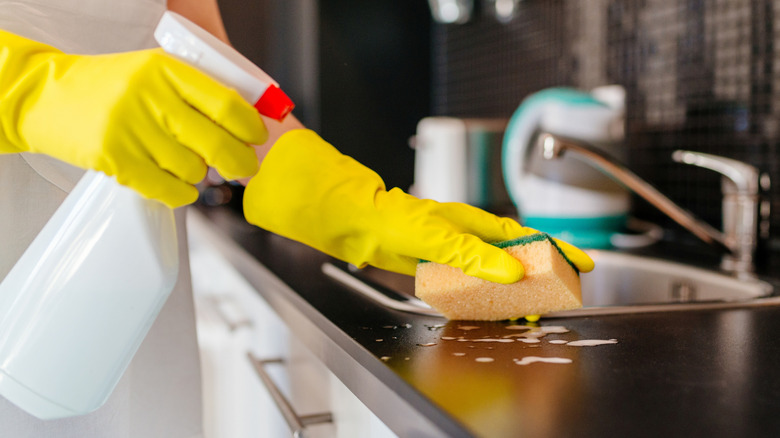
Hydrogen peroxide doesn't just kill bacteria — it's also anti-fungal and anti-viral. The great news is that it does more damage to mold and mildew than Joyce Byers ultimately did to Vecna. It's jam-packed with enough power to be a weapon of micro destruction to all the germs that find their way into your kitchen. So, if you're looking for a general disinfectant spray, hydrogen peroxide is an effective ingredient and should become a kitchen cleaning staple. It's simple to make, store, and use. It's also fairly cheap.
To create your own spray, get a spray bottle and mix equal parts water and hydrogen peroxide — use 3% solution. Make sure that the spray bottle is clean and that it didn't house any toxic chemicals before. Once you're ready, use the spray bottle as a general disinfectant on countertops, sinks, cutting boards, doorknobs, or wherever it's needed. Spray the area and then let it sit for about five minutes as the hydrogen peroxide works its magic. Be careful that you don't spray it on any furniture, as it may bleach the material.
Just remember, with great power comes great responsibility, so be careful not to get any of the spray into your eyes, and try to avoid it spraying onto your skin. A pair of kitchen gloves will do the job.
Kitchen garbage can cleaner
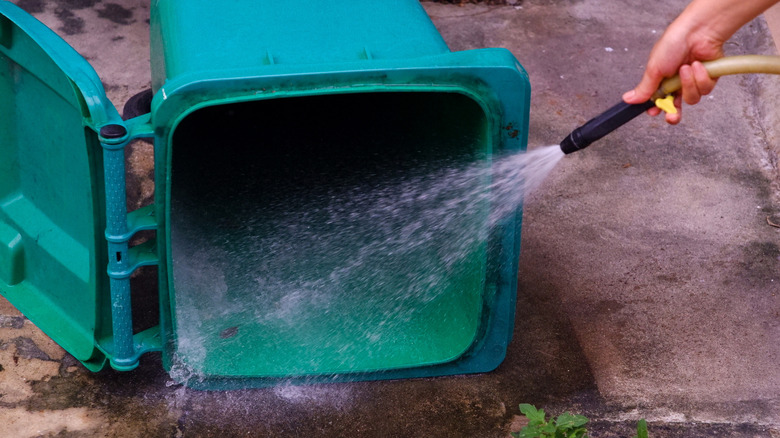
For your smelly garbage can, hydrogen peroxide gives you a combo of benefits. As it's a great disinfectant, it can kill any unwanted germs or bacteria that may be lingering after you've put all sorts of organic material into the garbage can. It's also effective at getting rid of unpleasant odors that all garbage cans come with, something that general cleaning products often don't measure up to.
As hydrogen eradicates all sorts of viruses and bacteria, using it to clean your garbage can is far more effective than relying on soap alone. Start by purchasing a 3% hydrogen peroxide solution and pour it into a spray bottle. Then, spray the inside and outside of your garbage can once you've washed it with soap and water. Let it sit for about 15 minutes for the oxidizing process to set in and kill the germs. While it may be tempting to go for a stronger solution than the recommended 3%, it's best to avoid this, as the fumes that could be harmful.
This method also deodorizes your garbage can at the same time, and in a far more eco-friendly way than using one of the many harmful products you'll find on grocery store shelves. The hydrogen peroxide breaks down the organic compounds that cause the nasty smells that emanate from your garbage can. A two-in-one combo!
Remove organic kitchen cloth stains

Another benefit of hydrogen peroxide is that it works like a gentle bleach, making it a great option if you're looking for an eco-friendly product to lift organic stains from your light kitchen cloths. As you use these cloths around the kitchen, whether it's lifting a roast or cleaning a dirty countertop, they are often left with smears and spots, even after a standard cycle in the washing machine. If you've gone for the fresher white look with your kitchen towels — enter the H₂O₂ superstar.
The reason hydrogen peroxide is so good at tackling kitchen cloth stains is the same reason that it's a great disinfectant. It rips into micro organic material, acting as an oxidizing agent, and breaks down the chemical bonds that cause the stain's color. Just pour a bit of 3% H₂O₂ on the stain, let it sit for about ten minutes, and then put it through the washing machine.
It's particularly effective at removing red wine and coffee stains, so if your dinner party has gotten a little out of hand and you're left with these stains on your kitchen towels and table cloths, you can whip up an oxygen-packed cleaner. Simply mix ¼ soap and ¾ hydrogen peroxide and then apply it to the stain. After about an hour, dab off the mixture and then put it into your washing machine for a standard cycle. For both methods, avoid using them on colored material — it may bleach it.
Clean ceramic cookware safely
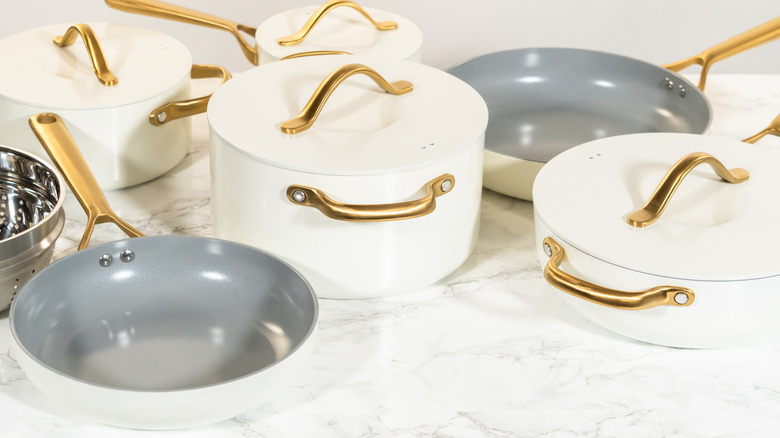
Whipping up meals with ceramic cookware comes with a few benefits. The non-reactive surface doesn't interact with acidic ingredients, meaning that the cookware won't change the food's flavor, and the nonstick properties make it ideal for searing food at high temperatures. There is, however, one downside — cleaning it without damaging the surface that gives you all the benefits we've just mentioned. What do you do when your ceramic pots and pans start to discolor, or if you've gone a bit over the top with the temp for the feast you've been preparing? As you can't go for robust cleaning methods you may use with stainless steel or cast iron, hydrogen peroxide is a great go-to for getting your ceramic cookware looking as good as new.
Here, you'll want to get the 3% hydrogen peroxide again. Then, simply pour some of it into the ceramic cookware and wait for it to bubble away for half an hour. It may not bubble the whole time, but wait it out as the oxidation process does its job. Once it has soaked, rinse with warm water and wash with a soft sponge and mild dish soap.
Hydrogen peroxide's bleach qualities will help the ceramic pots or pans back to their original glory. However, always make sure that the cookware has cooled before you pour in the hydrogen peroxide to avoid giving it a thermal shock, which these pots and pans are susceptible to.
Keep your fruits and vegetables spotless
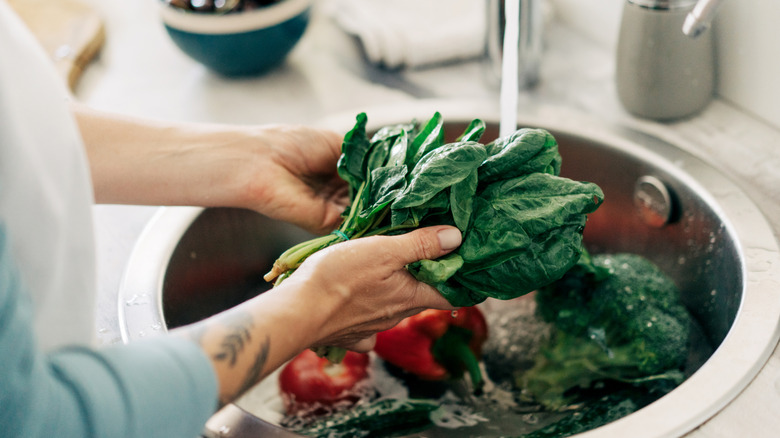
While hydrogen peroxide is an effective general cleaning ingredient for your kitchen, the same applies to your fruits and vegetables. As your fresh produce often takes quite a journey to get from the farm to the plate, it can pick up a variety of germs along the way. Using water to clean them before cooking or eating can help, but hydrogen peroxide is a great option if you're looking for a safe and natural bacteria buster that will really get the job done.
It might seem like an unnecessary and lengthy step to add into the cooking prep process, but if you look into the science behind it, you may change your mind. It's also FDA approved as antimicrobial, so there's no need to worry about that either. As long as you stick to the 3% food-grade hydrogen peroxide, you're good to go.
To get your fresh produce germ buster up and running, all you need is a kitchen sink, 3% H₂O₂, and water. Fill up the sink with water and add in a ¼ cup of hydrogen peroxide. Then, add fruit and vegetables. Let them soak for 20 minutes and then drain and rinse everything with clean water. Just remember that peroxide wash is a complement, and not a replacement for basic good handling practices.
Add sparkle to your glassware
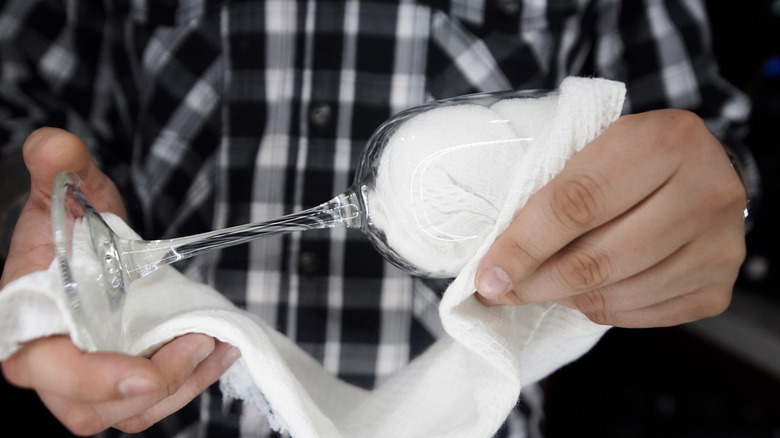
Struggling with cloudy glassware? As your glassware gets used, washed, and placed on the kitchen shelf or in the cabinet, they lose their original brilliance because of mineral buildup, hard water, and even dishwasher haze. Getting your drinking glasses back to their original sparkle can be difficult sometimes, especially if you're looking for an affordable and natural glass cleaning product. Once again, hydrogen peroxide ticks both those boxes.
Here, you'll need one additional ingredient — distilled white vinegar. While both hydrogen peroxide and vinegar are great cleaning products on their own, when they come together, they really pack a punch. The acidic nature of vinegar will break down the mineral build up, while the hydrogen peroxide will act as an oxidizer to remove any staining on the glasses.
To create this DIY glass cleaning solution, get your hands on a bottle of 3% H₂O₂ and a bottle of distilled white vinegar. Then, warm the vinegar and pour it into a large bowl. Place the glassware into the bowl and let it soak for about 20 minutes. Rinse off the glasses with clean water, and then, using a soft sponge or cloth dipped in hydrogen peroxide, give the glasses a light scrub. Give the glassware a final wash in soapy water, rinse, and dry. If you're blaming your reading glasses for your poor cooking skills, unfortunately this method won't help with that.
Clean grout around the kitchen
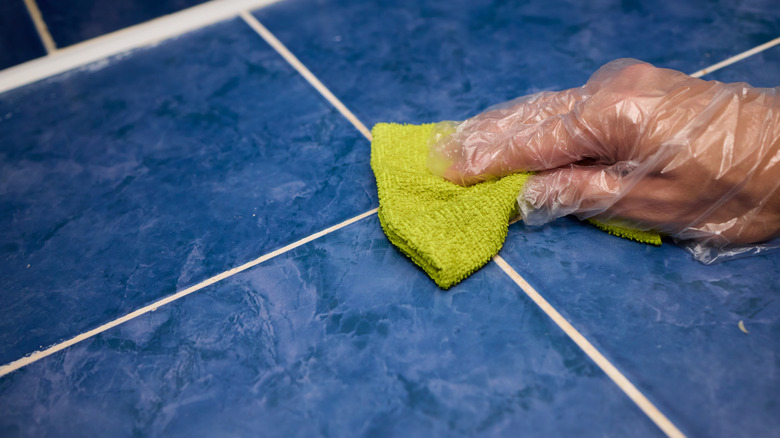
Whether it's the backsplash behind your kitchen sink, the thoughtfully selected terracotta tiles on the floor, or the island countertop, dirty grout around your tiles can completely ruin the look and feel of your kitchen. It's not only what you see that you should be thinking about — within the tired-looking grout you'll find germs that have built up over time as you cooked and socialized. This is where hydrogen peroxide shines once again.
To tackle the dirt, mildew, and germs that have taken up residence in your kitchen grout, grab a bottle of 3% hydrogen peroxide. With its natural cleaning power, H₂O₂ will bring your kitchen grout back to its original color without causing damage or leaving a strong lingering chemical odor. Simply pour a bit of 3% hydrogen peroxide directly onto the grout lines and stand back to watch it work. For a less messy approach, use a spray bottle to apply the oxidizing agent to the grout. In both cases, let the hydrogen peroxide sit for 10 to 15 minutes. If you're dealing with persistent dirt, using a soft toothbrush can help. Just be careful not to scrub hard.
To add an extra punch, you can also mix hydrogen and baking soda to create a grout cleaning paste. Go for two parts baking powder and one part hydrogen peroxide and follow the same method as you would using hydrogen peroxide alone.
Remove burnt food from pots and pans
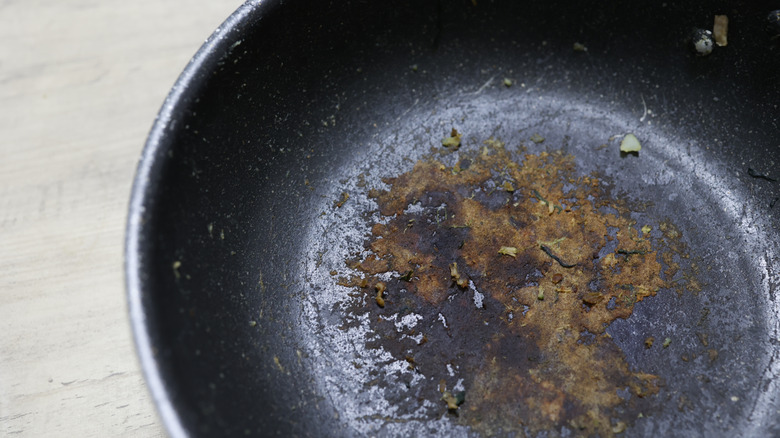
Whether it's scorched rice or a pasta bake that you completely forgot about, the residue left after overcooking can leave even the highest quality pots and pans in a dire state. If your pots and pans are left with a stubborn layer of burnt-on food that not even Dwayne The Rock Johnson could muscle clean out, don't worry. First up, there's nothing to be ashamed of — even Gordon Ramsay burns his food from time to time. Secondly, don't grab aggressive scourers and star a frenzied hard clean as it's ineffective and you might end up damaging your prized cookware. As one of the primary reasons why food sticks to your cookware is due to a chemical reaction, a little bit of chemistry can undo it. It's time to grab the hydrogen peroxide again.
Here, you'll simply need 3% H₂O₂, baking powder, and dish soap. For simpler burn marks, add the hydrogen peroxide into the burn pot or pan as well as a few drops of good old dish soap. Mix it together and then fire up the stovetop. Bring to the boil and then let rest for about ten minutes. You could also try the hydrogen peroxide and baking powder paste for a more powerful remover. Combine the two ingredients together and soak the mix in the cookware for about six hours. After that, clean it with a soft sponge and then rinse.
Remove stains from marble countertops
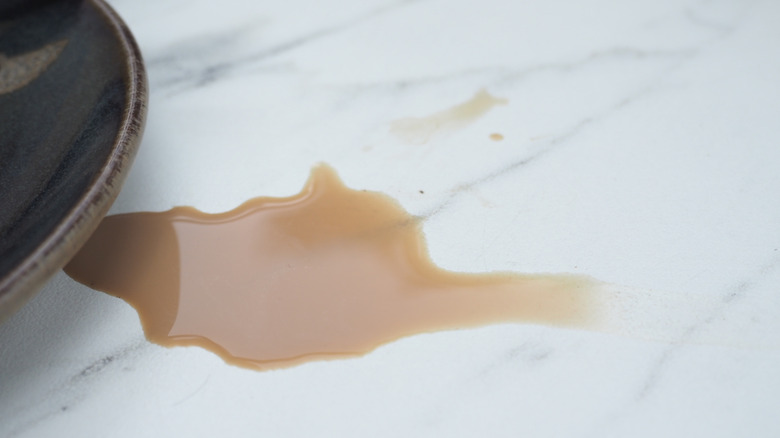
For many homeowners across the U.S., a marble countertop forms the centerpiece of their kitchen. While they are hardy when it comes to preparing food and handling hot cookware, marble is porous and susceptible to stains from things like red wine, coffee, acidic juices, and foods like tomato. Those with kids may also have experienced the dreaded ink or paint stain. If you do come across a stain like this on your marble countertop, there's no need to panic.
For organic stains like wine and coffee, 3% hydrogen peroxide will work wonders. You will also need baking soda. Take a cloth and dab it in the H₂O₂, and then sprinkle some baking soda on top. Press the cloth with the baking soda side down to the stain and leave it for a few minutes. Check the stain, and if it has faded but persists, repeat the process. Another method is to use hydrogen peroxide on its own. Dampen a clean cloth with H₂O₂ and place it on the stain overnight. For both methods, once you're done, make sure you use clean water to clean the area.
Be careful if you are working with darker marble, as the hydrogen peroxide may bleach it. This method is best for white or light marble countertops. If you aren't sure, it's best to first test it in an inconspicuous area. So, if you find yourself with stains on your marble countertops, there is a solution that doesn't involve a kitchen refurb.
Revitalize kitchen plants
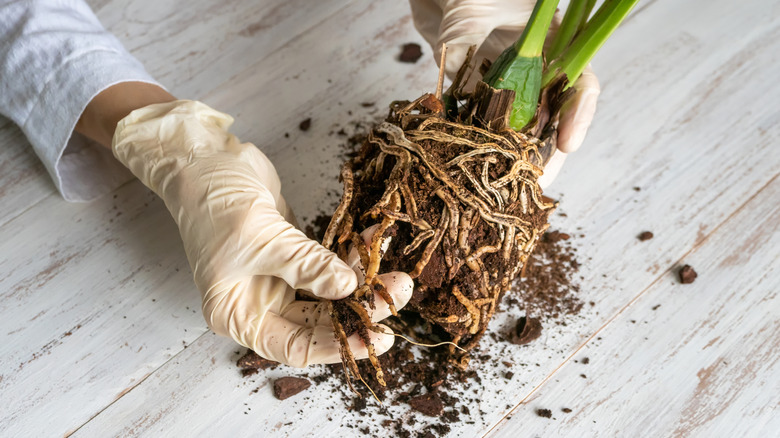
Sometimes there is more to a spotless kitchen than cleaning alone. If you're the type that likes a bit of greenery in the space, unhealthy and wilting plants can give even the cleanest kitchen a drab look. While hydrogen peroxide is best known for disinfecting around the kitchen, it can also give your indoor plants a healthy boost.
If you're wondering how, remember that hydrogen peroxide is anti-fungal. A common issue with indoor plants is root rot, and one major culprit of this is fungi. As fungi thrive in damp conditions, a leading cause of fungal infection is overwatering, which leads to excessively moist soil. Hydrogen peroxide will eliminate any fungus that has begun to grow on your indoor plants that will, in time, give them a worse-for-wear look. It will also help to sterilize the soil, giving your plants a far healthier environment in which to thrive. Potentially, the addition of hydrogen peroxide to the soil could boost the oxygen levels to improve drainage.
Here, you'll want to use 3% H₂O₂ again. For root rot, add one part hydrogen peroxide and two parts water into a bowl. Taking the plant out of the soil, cut the dead roots off and soak the plant's roots that are left in the solution for a maximum of 10 minutes. Repot and enjoy the resurrection.