

Why Foil Isn't The Best Choice For Baking Sweet Potatoes
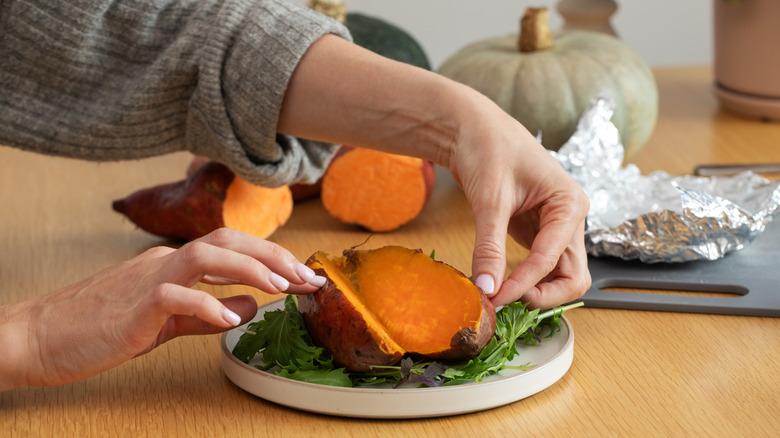
Baked sweet potatoes are an excellent side dish. You can dress them up sweet or savory with toppings like butter, brown sugar, sour cream, or chili, and their starchy, hearty texture makes them the perfect pairing for meaty entrees, plant-based fare, and everything in between. But in order to get a tasty baked sweet potato with all those fixins' on your plate, you have to figure out the best way to cook it. One of the methods you should avoid? Wrapping a whole sweet potato in foil and baking it.
Although baking sweet potatoes in foil has been a longstanding method, it's one of the biggest mistakes that you can make with the tuber. You should never bake a potato in foil (sweet or regular) because the material will just steam the spud, meaning you won't get the perfectly crispy skin. Instead, you'll get skin that's slimy, which not only tastes bad but is difficult to remove. Plus, there's no evidence to support the idea that baking a potato in foil expedites its cook time.
Foil alternatives worth trying
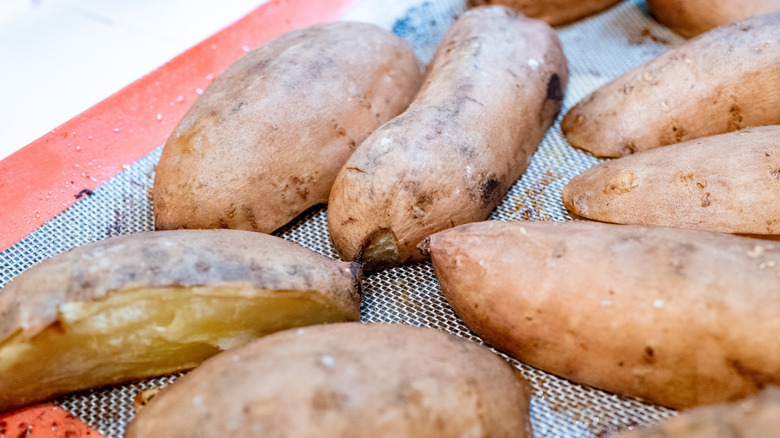
Luckily, there are many alternatives to baking sweet potatoes in foil that you should try. One of the simplest is to wash and dry your potatoes, poke holes in them to let out the excess steam, then bake them on a lined baking sheet. The absolute best temperature for baking sweet potatoes is around 425 degrees Fahrenheit. If you're curious to when they are done, just give them a poke with a fork. They should be easy to pierce.
Another game-changing tip for better baked potatoes is to slice them lengthwise and widthwise and place them directly on the oven rack cut-side down. Placed this way, the hot air from your oven will more readily circulate around your potato, giving it a better texture on all sides. However, this method isn't for everyone, as you will likely have to clean potato residue from your oven racks — which can be a pain.