

The Boomer Kitchen Staple That Turned Jell-O Into Table Centerpieces
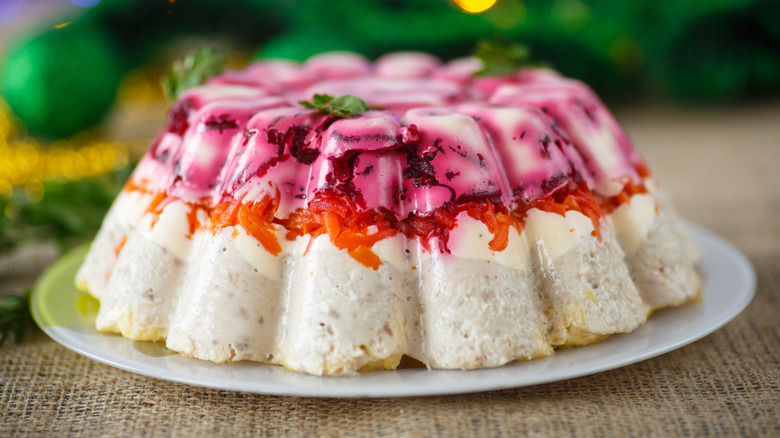
From our perspective, Jell-O salads may look like something made inside of a science lab. In post-war households, though, these wobbly towers filled with shredded carrots and floating pineapple rings would make regular appearances, often as elaborate dinner table centerpieces. And while you may wonder how people even managed to make such oddly shaped creations, in reality, all it took was some specially shaped kitchenware that was simply known to suburban cooks as a gelatin mold.
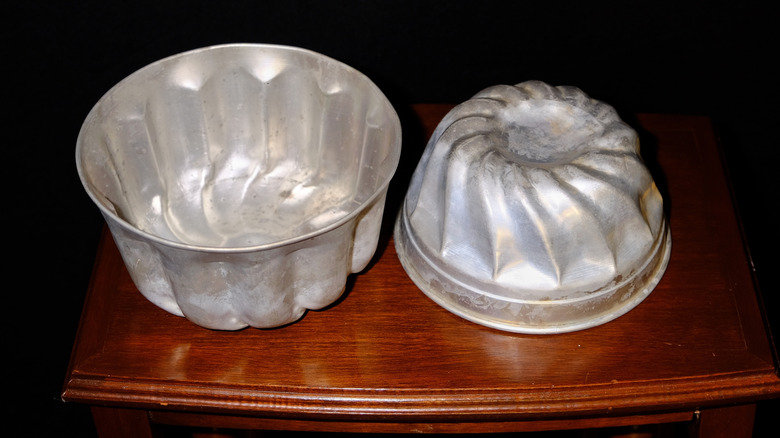
An old school kitchen tool loved by Boomers, the gelatin mold was used to transform simple Jell-O-based concoctions into showy, aesthetically pleasing dishes. Popular during the '50s and '60s, they were typically made of glass, pewter, tin, or copper that was molded into unique shapes like rings, towers, and animals. And they made for easy dishes that impressed dinner guests, especially when all you had to do was dip the mold in hot water and flip the Jell-O salad onto a plate.
But what actually went into these molds is perhaps the most interesting part. Used for both sweet and savory gelatin dishes, a Jell-O salad could include vegetables, fruits, meats, canned goods, and processed foods – sometimes all in one go. You could incorporate fruit and frankfurters, celery and cottage cheese, and even shrimp with tuna to create a (questionable) seafood aspic. And while a lot of these creations were the product of at-home experimentation, these salads were also so popular that almost every vintage cookbook featured at least one Jell-O recipe.
Why were gelatin molds so popular during the '50s and '60s?
You might have wondered why so many vintage recipes used gelatin, and a lot of it comes down to sociocultural changes in post-war America. By this time, instant foods became things associated with modernity and innovation, which also coincided with the idea of the perfect housewife. Part of her "job" was to produce beautiful meals and molded Jell-O dishes were a convenient solution, especially since they signaled sophistication and social status at dinner parties. Not only that, but they were particularly useful for busy women who continued to work after the war. After all, with a gelatin mold, some on-hand ingredients, and a little experimental creativity, it was incredibly easy to create a simple, yet impressive-looking dish that would wow your friends and neighbors.
Marketing efforts played a big role, too. The late '40s and '50s saw Jell-O producing booklets educating home cooks on topics like which fruits would float and which ones would sink to the bottom of a mold. By the 1960s, mainstream cookbooks would also have entire sections about savory gelatin salads, and Jell-O began to produce flavors like celery, Italian salad, and seasoned tomato. However, the craze would eventually die down by the '70s and '80s due to a combination of anti-sugar diet campaigns and more women entering the workforce, which led to the rise of more convenient foods like microwave meals. All of which is to say, there are several reasons why gelatin molds and Jell-O salads are no longer kitchen staples — for better or for worse.