

Giada De Laurentiis Names What Most Americans Miss About Italian Food

In the United States, geography and location have a lot to do with the shape of local culture, like accents, architecture, and especially food. Costal environments like the Pacific Northwest and New England tend to lean heavily in to their abundance of oysters, crab, and lobster, while in landlocked areas like Colorado and Kansas, you're more likely to see meat-based cuisine focused on beef and even bison and elk. Knowing how much local foods are shaped by the proximity of ingredients, it's a surprise that some Americans don't translate this idea to other countries, especially ones famous for their cuisine.
In an interview with the "Milk Street Radio" podcast, chef Giada De Laurentiis points out that many Americans overlook the vast regionality in Italian food. "Still to this day," says De Lauentiis, "a lot of Americans don't realize that Italian food ... it's very, very regional, the way they make things." Lasagna, for example, differs widely between the north and the south of Italy, like whether ricotta or béchamel is used in the layered pasta dish. De Laurentiis explains that this difference stems from "different traditions based on hundreds of years of people coming in and putting their sort of touch on them."
Like people in many countries, Italians have always leaned in to using local ingredients. In the north of Italy, dishes tend to be heartier, with more butter and dairy, compared to the south, where olive oil is much more predominantly used than butter. De Laurentiis says this is due to the varying availability in each region. "The north has more cows, the south doesn't have a lot of cows," De Laurentiis mentions. "... They have olive trees and olive groves."
Italian cuisine relies heavily on local abundance
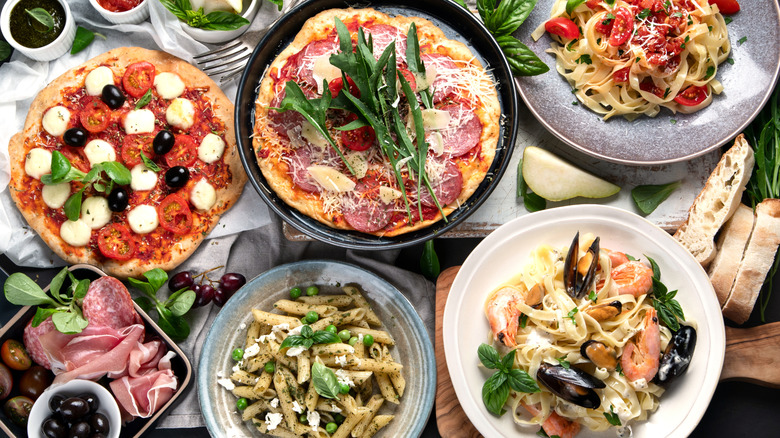
In central Tuscany and northwestern Liguria, for example, you'll find pasta dough made with both wheat and chestnut flours, given the bounty of chestnuts nearby. Regionality also dictates if eggs or water are used in traditional pasta doughs. In northern Italy, soft wheat flour and eggs make up most of the pasta doughs, while in the south, semolina flour rarely requires eggs and relies on just water to bind the high protein flour.
Even pestos look different around the country. Pesto alla Genovese, the bright green condiment most people associate with pesto, comes from the Liguria region in the northwest, but pesto alla Trapanese from southern Sicily takes on a red hue, swapping pine nuts for almonds and adding tomatoes and red pepper flakes. And pesto alla Calabrese, a spicy Calabrian version, uses cooked bell peppers, walnuts, ricotta, and hot peppers.
In southern regions of Italy, especially those along the coast, seafood is plentiful and commonly seen in a vast array of classic Italian fish dishes, from sardines to swordfish. As you travel further north, however, where the country is more landlocked and mountainous, you'll see heartier foods like risotto and polenta, and meats like beef, pork, and veal. Risotto is a classic dish well-known in Milan because rice is a major crop in the Lombardy region, with carnaroli rice being perfect for risotto. For centuries, the regionality of ingredients has been essential to shaping Italian cuisine.