

When Buying Seafood, It's A Major Red Flag If You Can't Find These Certifications On The Packaging
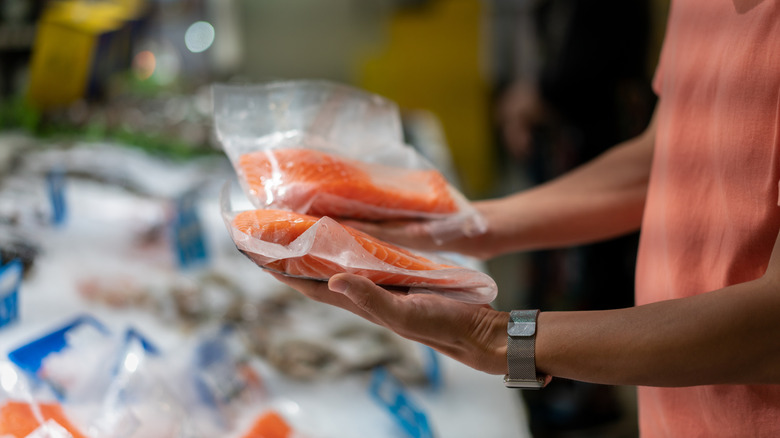
These days, buying seafood goes beyond simply picking what's for dinner. Consumers must be aware that seafood fraud, in which vendors label cheaper fish as products of higher quality and price, is common practice. According to Oceana, fish is mislabeled 25 to 70% of the time, especially when it comes to prized fish like wild salmon and Atlantic cod. Those of us who care about the environment are also concerned with traceability, as we might have no way of knowing if the fish comes from an unmanaged fishery, or if there were other issues throughout the supply chain. That's why we should look for labels from organizations that provide reputable certifications, such as the Aquaculture Stewardship Council (ASC), Best Aquaculture Practices (BAP), the Marine Stewardship Council (MSC), and Friend of the Sea, to ensure the best quality seafood.
Athena Davis, marketing manager for the ASC, told Tasting Table that lack of certification is one of the red flags to look for when buying seafood. "When grocers don't specify whether their seafood is certified by a reputable third party or what specific sustainability commitments and processes they adhere to, there is no way to prove where the seafood came from, how it was farmed or fished, or that major issues didn't occur throughout the supply chain," she says. The ASC works directly with seafood farms to achieve sustainability through its certification programs.
The ASC label "indicates responsibly farmed seafood that meets strict environmental, animal welfare, worker safety, and food safety standards," according to Bobby "Tuna" DiGregorio, director of seafood quality at Fulton Fish Market. ASC and BAP certifications guarantee a trustworthy source for commonly farmed fish and seafood like shrimp, oysters, and mussels.
Seafood certifications protect you and the environment
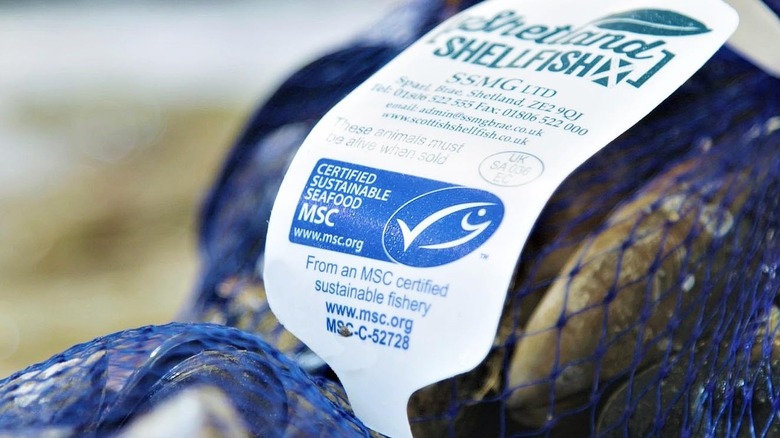
For wild-caught fish, look for the blue fish label from the Marine Stewardship Council, a worldwide organization that sets standards for sustainable fishing to protect wild fish stocks and preserve healthy oceans. The MSC Fisheries Standard is used to assess if a fishery is well-managed and sustainable, which means they catch fish in ways that ensure the long-term health of a stock or species while minimizing impact on other species and the environment. Currently, the MSC has certified more than 500 wild-capture fisheries around the world for a growing number of species, and just like the pioneering Dolphin-Safe Project, it also applies to packaged seafood such as canned tuna, surimi, and shellfish.
"The MSC blue fish label helps seafood consumers identify seafood that is wild caught and environmentally sustainable, whether they're shopping for salmon, clams, cod, tuna, mussels, or other fish and shellfish," Laura McDearis, U.S. Program Director of the MSC, told Tasting Table. "Among the plethora of sustainability claims on food packaging, certifications, like the MSC, offer third-party assurance many American seafood consumers are looking for at the grocery store." Be aware that these standards should also apply to restaurants, so be prepared to ask important questions and patronize restaurants that have solid answers. In the end, if you choose a more affordable seafood substitute for your lobster roll, the choice should be yours.