

10 Gins To Try If You Like Bombay Sapphire
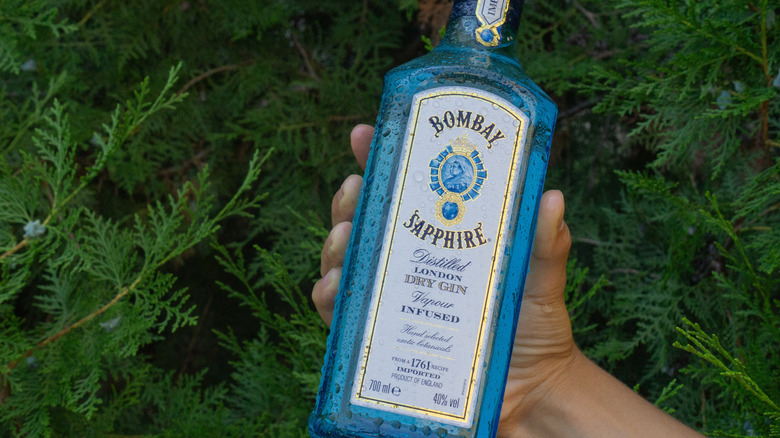
One of the most popular gins in the world, Bombay Sapphire is a delicate London Dry-style gin, featuring ten botanicals with superior provenance. Combining Spanish almonds, Italian juniper berries, and Moroccan coriander seeds, among others, the Bombay Sapphire distillery utilizes a vapor infusion process to craft the gin's delicate character. The brand's transparency regarding its botanical bill and production techniques has also been a factor behind its longstanding popularity.
Bombay Sapphire is a modern classic in the gin world, beloved for its balance of botanical essence and alcoholic heat. Citrus is most prominent on the nose; on the palate, juniper takes a backseat to earthy, floral notes of licorice and cassia. Texturally, Bombay Sapphire has a slightly oily mouthfeel, lending the spirit a good body that holds up exceptionally well in many gin cocktails, particularly a classic martini. Overall, it's a reliably enjoyable gin.
Still, there are folks out there searching for a new gin to expand their palates. With a decade of industry experience behind me, I'm very familiar with the iconic blue square bottle, and the expertise I've gained from working with both craft gin producers and major spirit brands positions me as something of an expert. Focusing on three tasting elements — aroma, flavor, and texture — here's my list of the best gins to try if you like Bombay Sapphire.
Tanqueray No. TEN
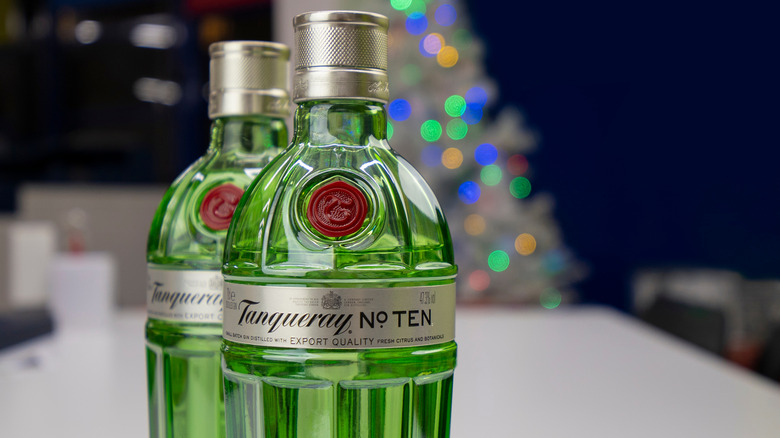
If Bombay Sapphire is light and polished, Tanqueray No. TEN is sharper and more tailored — less smart-casual, more silk suit. On the nose, the difference is immediate. Bombay Sapphire leads with acidic lemon, backed by a soft halo of florals and spice. It smells airy and lifted. Meanwhile, Tanqueray No. TEN delivers a broader citrus register: ripe grapefruit, lime peel, and sweet orange oils layered over a muscular juniper core. Where Bombay glows, Tanqueray crackles.
The contrast between Bombay Sapphire and Tanqueray No. TEN shows even more clearly on tasting. Bombay has an oily, gently rounded texture that lets it slip easily into martinis and Collins alike, cushioning the edges of the alcohol and citrus. Tanqueray No. 10 is leaner and more tensile — it grips the palate, giving classic cocktails sharper definition and a more robust structure once dilution sets in.
Where Bombay Sapphire balances citrus, juniper, and spice into a single, harmonious chord, Tanqueray No. 10 plays those same notes, but louder and with more distinction: bright citrus up front, resinous juniper in the mid-palate, and a dry, spicy finish that lingers. Bombay Sapphire is cool elegance; Tanqueray No. 10 is suave precision.
Citadelle
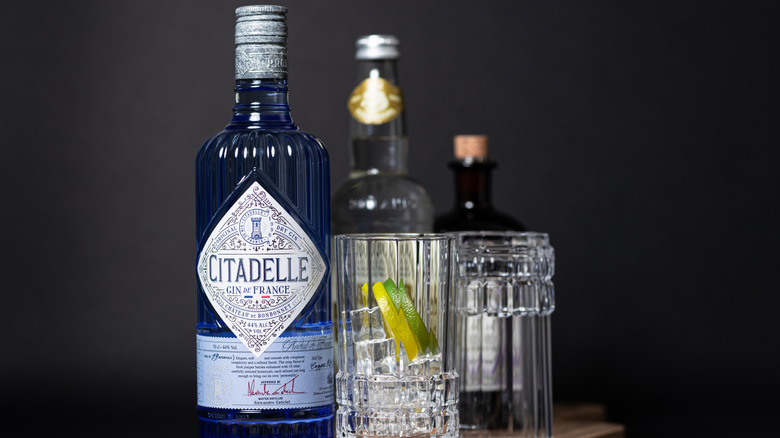
When compared to Bombay Sapphire — a de facto archetype of a delicately balanced London Dry — Citadelle feels like its French cousin, with a bit more botanical bravado. While Bombay Sapphire delivers that bright, lemon-driven citrus, Citadelle Gin opens up differently. Juniper is in the driver's seat, and the citrus is layered with orange peel and floral elements. The result is still acidic and expressive, but the nose is tempered by herbaceous and spicy notes from the 19 progressively infused botanicals.
Texture and structure tell a similar story. Bombay Sapphire's oily mid-palate gives it weight in stirred classics, where it holds its own without dominating. Citadelle's mouthfeel is also slightly oily, but leans a touch silkier and more layered — a result of slowly distilling the spirit in Cognac stills to emphasize aromatic extraction. In a martini or G&T, Citadelle feels elegantly complex yet cohesive, whereas Bombay Sapphire plays more of a straightforward supporting role.
Flavor-wise, Bombay Sapphire reads as clean citrus with a floral juniper balance, as opposed to Citadelle's unfolding citrus presence with hints of spice and herbal character. The result is an exotic, evolving profile that lingers gracefully on the finish. In short, Bombay Sapphire is bright and balanced, Citadelle is complex and refined. Both are exemplary gins that showcase similar, albeit slightly different, characteristics.
Martin Miller's Gin
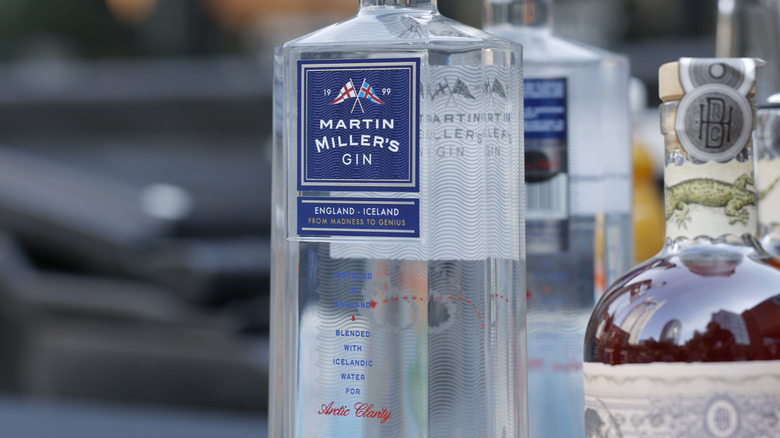
Enter Martin Miller's Original Gin, an innovative reinterpretation of the classic London Dry style. Rooted in tradition but elevated by technique, Martin Miller's was founded with the goal of creating a spirit that "tasted of gin and not of some highly flavored confection." It's made using time-honored copper pot stills in England, but there's a twist: The spirit undergoes two separate distillations (one for juniper and earthy botanicals, another for citrus peels) before being blended with pure Icelandic spring water. This uncommon cross-country process — distillation in England, refinement in Iceland — contributes to its trademark smoothness and clarity.
Compared to Bombay Sapphire's textbook expression of a botanically balanced London Dry, Martin Miller's brings brighter lemon and orange peel, framed by a gentler juniper backbone and subtle floral undertones. The result is a harmonious and refined bouquet of flavor that contrasts with Bombay's more pointed citrus expression. Structurally, the Icelandic water imparts a silkier mouthfeel that translates cleanly into gin-forward cocktails.
Four Pillars Rare Dry Gin
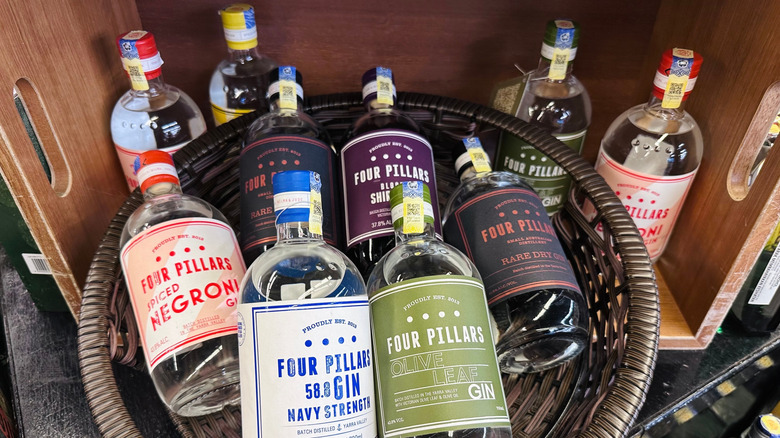
A vibrant expression of modern Australian craft gin, Four Pillars Rare Dry Gin is thoughtful, flavorful, and unabashedly botanical. While Bombay Sapphire's citrus-forward aroma is instantly recognizable, the use of whole Australian oranges and native lemon myrtle reveals a broader and more layered citrus flavor in Four Pillars. Additionally, Four Pillars' blend of Asian botanicals and Mediterranean citrus reflects the brand's ethos of combining traditional and local botanicals to create a truly modern Australian gin.
When it comes to structure, the two bottles diverge in intriguing ways. Bombay Sapphire's viscous texture makes it reliable in stirred classics, whereas Four Pillars Rare Dry sits equally well in both highballs and spirit-forward drinks. Triple-filtered Yarra Valley water gives the latter a lively texture — clean yet full-bodied — that tastes crisp rather than heavy. Flavor-wise, Bombay Sapphire's expression is more balanced, while Four Pillars Rare Dry delivers greater complexity with spice-accented, herbal-citrus aromas that continue to evolve on the palate.
Four Pillars is a worthy substitution for Bombay, but juniper lovers may take umbrage, as the piney berry tends to play a supporting role to the orange and spice. However, if rich aromas of warm Mediterranean citrus and pepperberry sound appealing, Four Pillars Rare Dry give classic gin cocktails a more distinct character, adding a notably different botanical accent.
Distillery No. 209
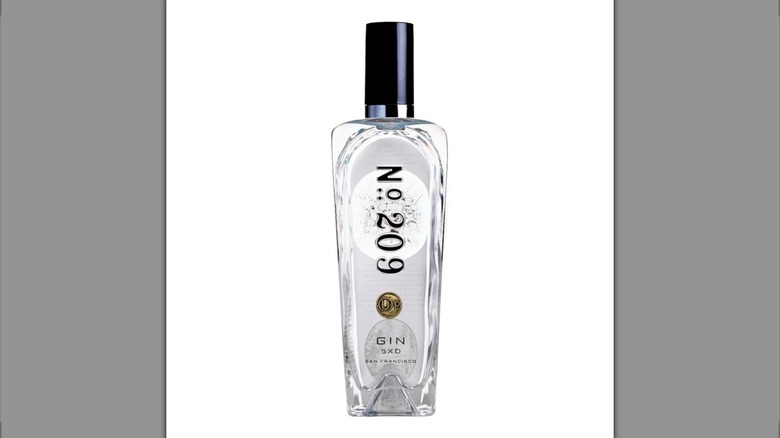
No. 209 is another artisanal gin that's sure to impress any fan of Bombay Sapphire. Operating from San Francisco's Pier 50, Distillery No. 209's flagship gin is meticulously crafted, using a custom-made copper pot still and a five-times-distilled process. The result is a spirit with notable clarity and balance.
No. 209 delivers an immediate punch of citrus, similar to Bombay Sapphire, but the addition of fragrant bergamot orange lends it a more floral aspect, making its aromatics feel richer and more complex. Another subtle point of departure between the two is the texture. Thanks to the repeated distillations, No. 209 is crisper on the palate compared to Bombay's oily mouthfeel, and while both make for a bold gin cocktail, No. 209 provides a livelier backbone to gin and tonics.
However, what truly sets No. 209 apart is the brand's commitment to producing kosher spirits. As the world's only kosher-for-Passover gin, No. 209 is produced under Orthodox Union supervision, using a sugarcane base and carefully selected botanicals to meet strict dietary laws while preserving its citrus-spice profile.
Roku Gin
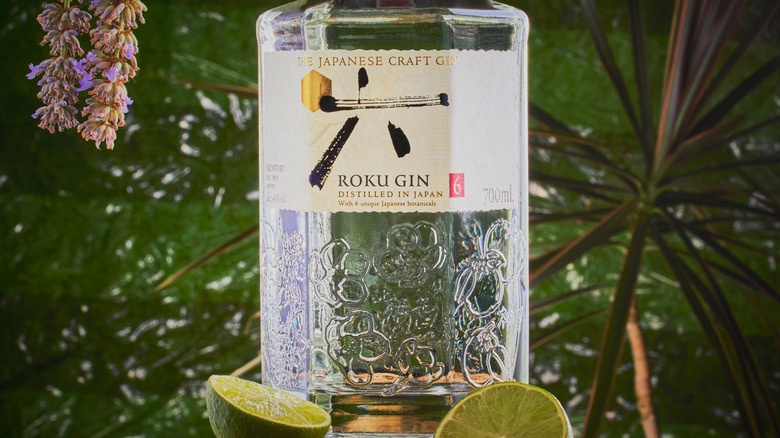
If fresh, lemon-forward aromas are what get you excited about Bombay Sapphire, then it's worth sampling Roku Suntory Gin for a distinctly Japanese take on citrus. Peels of yuzu — a fragrant, tart East Asian fruit – result in a sharp, aromatic top note that feels brighter and more exotic than regular lemon. With Sansho pepper rounding out the lower notes of the flavor profile, Roku incorporates a delicate combination of flowers and green tea to capture a year-round seasonal essence. Based on an interplay of distinct Japanese ingredients, Roku's unique character yields herbaceous depth and exotic citrus that truly shines in simpler, lighter cocktails.
Roku is an elegant, botanical-rich alternative to the versatile workhorse that is Bombay Sapphire. Reflecting Japanese craftsmanship in every sip, its distinct aromatic citrus character is best suited for subtler mixing, whereas Bombay is bold enough for a wide range of classic cocktails.
Sipsmith London Dry
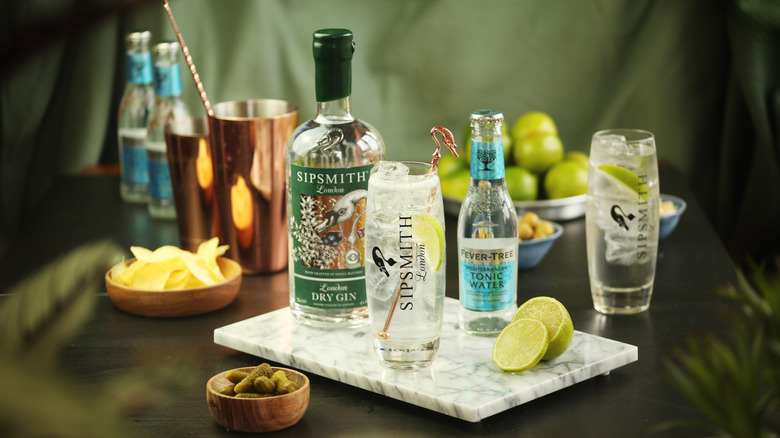
Sipsmith sits firmly in the traditional London Dry camp for several reasons. First, it's made at the Sipsmith Distillery in London, and second — more importantly — it delivers robust cocktail versatility and a zesty, citrus- and juniper-forward character. A gin as bold as Bombay Sapphire, Sipsmith London Dry leans into the style's aesthetic with pronounced juniper, balanced citrus, and a dry finish. Its aroma is piney, with floral and citrus peel hints that segue into a crisp palate that's drier than Bombay Sapphire.
Sipsmith's London Dry citrus bill features both Seville orange peel and Spanish lemon zest, showcasing deep marmalade notes atop warm spices, balancing brightness with subtle depth. Sipsmith's mouthfeel is smooth but not as unctuous as Bombay's, and it's still an excellent choice for traditional gin cocktails. That's because it delivers clearer botanical delineation and a more classic gin profile, making it particularly effective in martinis and other mixed drinks where the gin takes center stage.
Plymouth Gin
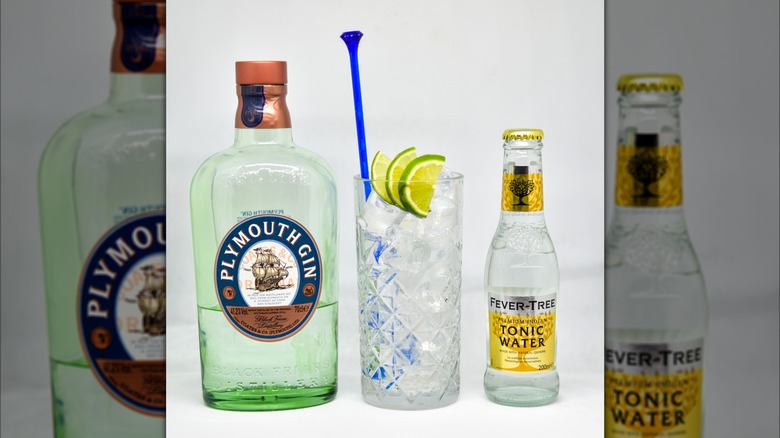
Plymouth's historic recipe is over 200 years old, emphasizing authenticity and heritage. Considered one of England's foremost premium gins, Plymouth Distillery was awarded Protected Geographical Indication (PGI) status in 2008. Besides requiring production within the city of Plymouth, England, the PGI stipulates that "Plymouth gin" must have a predominant juniper flavor and a minimum 37.5% ABV.
Featuring a blend of astringent botanicals and citrus that temper the juniper's piney intensity, Plymouth Gin is a fuller, smoother, and somewhat earthier version of the London Dry style. Whereas Bombay Sapphire's vapor infusion process yields a more refined, lighter character, Plymouth Gin is weightier on the palate, and its buttery mouthfeel makes for a satisfying sip, whether enjoyed neat or used in spirit-forward cocktails.
On the nose, you'll detect bitter roots like angelica and orris, warm spices like cardamom and coriander, and pronounced citrus zest that come together to create an earthier profile than most gins in the London Dry family. Plymouth also delivers on the palate, with a gently viscous texture and creamy mouthfeel that echo Bombay Sapphire's silkier profile. While Bombay stands out as the more refreshing and versatile base spirit, Plymouth Gin is ideal for those seeking deep, complex citrus-spice flavors.
Edinburgh Gin
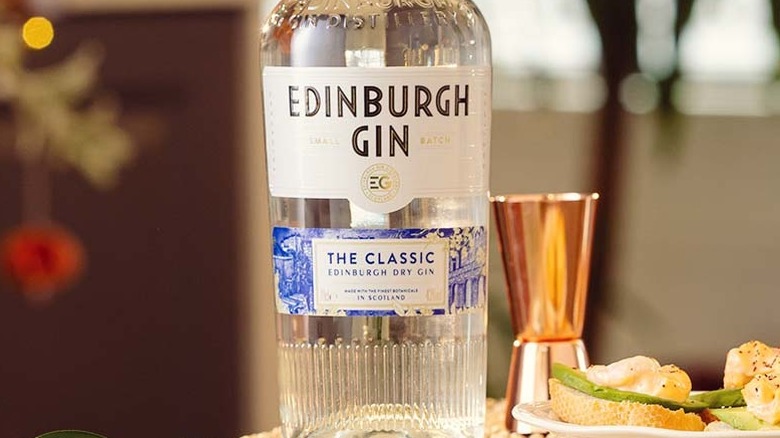
The Classic is a dry style of gin from Edinburgh Gin, a craft distillery located in Scotland' capital city. Designed to be paired with tonic, The Classic boasts a signature blend of 14 botanicals, including pine buds, lavender, Scottish heather, and milk thistle. The result is a heady profile that's botanically rich yet balanced. With lively aromatic complexity on the nose, delicate herbal elements follow on the palate, complemented by hints of nuttiness from subtle botanicals, like cobnut (also known as hazelnut).
Edinburgh Gin showcases an innovative botanical interplay that feels both traditional and expressive; however, Bombay Sapphire's smooth, subtle juniper and bright citrus character remains more immediately accessible. By contrast, those who prefer detailed, layered profiles in martinis or G&Ts will love The Classic, as it offers greater textual and aromatic depth. Medium-bodied with a clean, crisp texture, the Scottish expression boasts a nuanced and complex herbal-citrus spine. Where Bombay Sapphire's subtly rounder and softer flavor integrates the botanicals, Edinburgh gin allows each to shine individually.
The Botanist
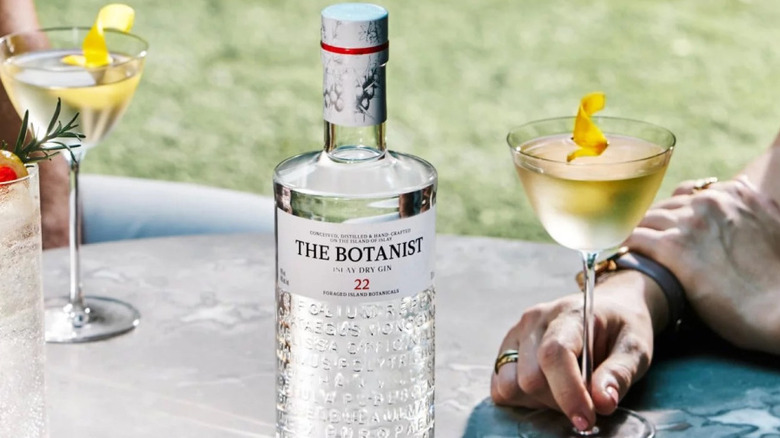
Another Scottish gin, The Botanist is distilled with 31 botanicals, including 22 hand-foraged herbs from the island of Islay, giving it remarkable aromatic complexity. The nose opens with fresh juniper, herbal heather, and citrus peel, while the layered palate leans toward a herbaceous, floral, and gentle spice profile, with hints of pepper and delicate citrus zest. The overall impression is a multidimensional and nuanced spirit that refuses to be dominated by a single tasting note.
Medium-bodied with a smooth, slightly oily mouthfeel, The Botanist coats the palate without feeling heavy. That superior texture and aromatic depth are all thanks to "Ugly Betty," the affectionately named pot still that carries out The Botanist's low-pressure distillation process to ensure a slow extraction of flavors. More botanically resonant than Sapphire's comparatively simpler, citrus-laced finish, The Botanist still finishes clean and moderately dry, but with lingering aromatics that echo its island-foraged character. This unique Islay gin is a must-try for anyone familiar with Bombay Sapphire, but interested in a fuller, more botanically complex expression.