

10 Mistakes Everyone Makes When Making Homemade Clam Chowder
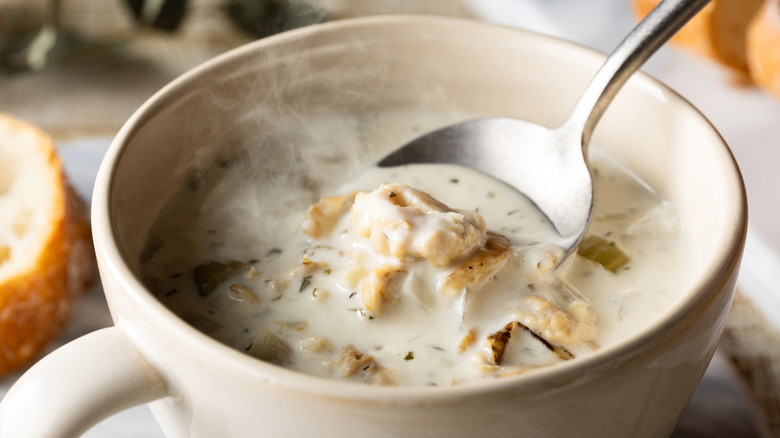
Creamy New England clam chowder: It's one of the best dishes when you're craving seafood and something hearty simultaneously. The slight chewiness of the clams, the creaminess of the sauce, and tender vegetables come together to create a sippable soup that'll keep you warm during the coldest months of the year while highlighting the fresh flavor of the ocean. But let's be honest: Clam chowder isn't exactly the easiest dish to make at home, especially if you're not well-versed in cooking seafood. Therefore, there are a lot of ways in which it's easy to make mistakes when you're trying to prepare a big batch of clam chowder.
We want to make sure you avoid those mistakes, though, so you end up with a bowl of clam chowder that tastes way better than anything you could ever get from a can. That's exactly why we consulted clam chowder experts like Chef Reid Shilling, executive chef and partner of Cowbell Seafood & Oyster at Union Market in Washington, DC; Chef Chris Ibarra from The Edgewood Tahoe Resort; Chef Monique Mickle, executive chef at The Darling Oyster Bar in Charleston, South Carolina; and Chef Dan Witwer, executive chef at The Darling Oyster Bar in Savannah, Georgia, to give us the 411 on the most common mistake people make with homemade clam chowder. Once you know that you should avoid these mistakes, you can guarantee a better chowder every time.
Cutting the vegetables for the soup unevenly
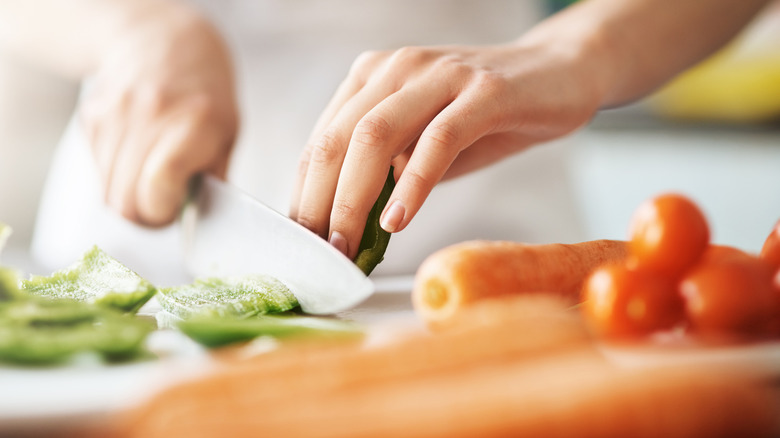
Sure, clams are the star of the show in clam chowder, providing the somewhat chewy texture that this dish is known for, as well as its distinct, seafood-like flavor. But that doesn't mean that clams are the only ingredient you need to pay attention to when you're making this kind of soup. In fact, vegetables like carrots, potatoes, celery, and onions are just as important, infusing the chowder with a more complex flavor and offering a different textural experience so the dish isn't so one-note. However, it is possible to make mistakes with those vegetables, resulting in a soup that just doesn't taste quite right.
One of the biggest mistakes you can make when it comes to the veggies in your clam chowder? Not cutting them into the same-sized pieces. "You always want your vegetables to be cut the same size," explains Chef Reid Shilling of Cowbell Seafood & Oyster. "When they aren't, they don't cook at the same rate, so you get unevenly cooked vegetables." This may lead some pieces to be too hard, while others end up being too soft. Just make sure to be careful about how you're chopping your veggies, and you won't have this issue.
Not adding some miso paste to your homemade clam chowder
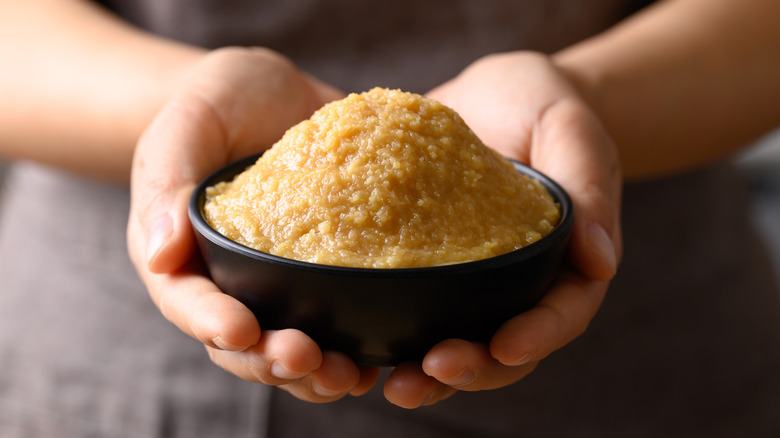
Sometimes, you may discover that an unexpected ingredient can completely transform a classic recipe you already know and love. There's a good chance that you've never used miso paste in your homemade clam chowder before, but we're here to tell you that it may just be a mistake to skip it. Miso, with its signature umami flavor, can add a lovely note of complexity to your clam chowder that you just can't achieve any other way. That salty, umami note is bold, sure, but it won't overpower other ingredients. Rather, adding a small amount of the ingredient just provides your dish with another layer of depth.
So, what kind of miso should you use in your homemade clam chowder? There are various varieties you can buy at the store, but we think that white miso is best, since it's known for its milder, more approachable flavor profile. This variety won't be too heavy for the dish.
Underseasoning your clam chowder
Clam chowder is known for its creaminess and its unique texture, but taste some varieties of the soup, and you may just notice that it's otherwise not a super flavorful dish. Because you're working with a lot of milder ingredients, it's a mistake not to season your soup well. After all, you don't want it to end up tasting bland after putting in so much work to make it from scratch. "I think the way you season your chowder matters most," says Chef Monique Mickle of The Darling Oyster Bar in Charleston. "A lot of people drop the ball here, and you have to go the extra mile. Don't underestimate the power of a flavor profile."
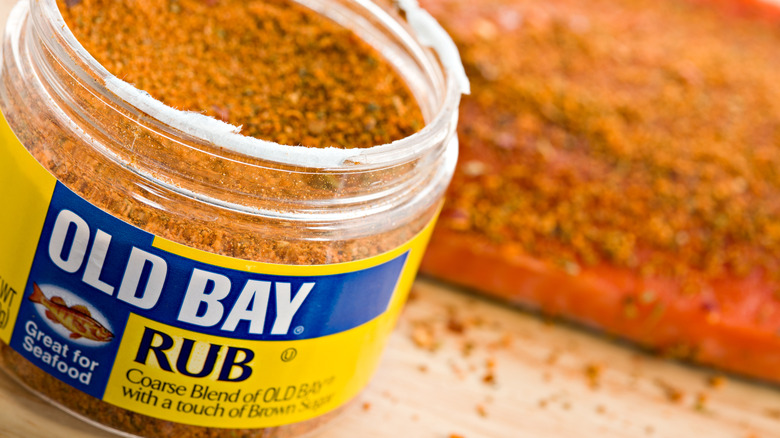
Of course, she explains, you'll want to taste some of the basic ingredients in the dish, like celery, onions, and garlic. Salt is also an especially important ingredient, since it enhances the flavor of all the other ingredients you're working with. But Mickle also suggests adding in some Old Bay seasoning (which can be used in some surprising ways beyond clam chowder). And if you really want to ensure that those delicious flavors are well-incorporated into the soup? "I would suggest making it without the seafood the day before so those flavors really get a chance to soak into the potatoes," advises Mickle.
Overcooking the clams
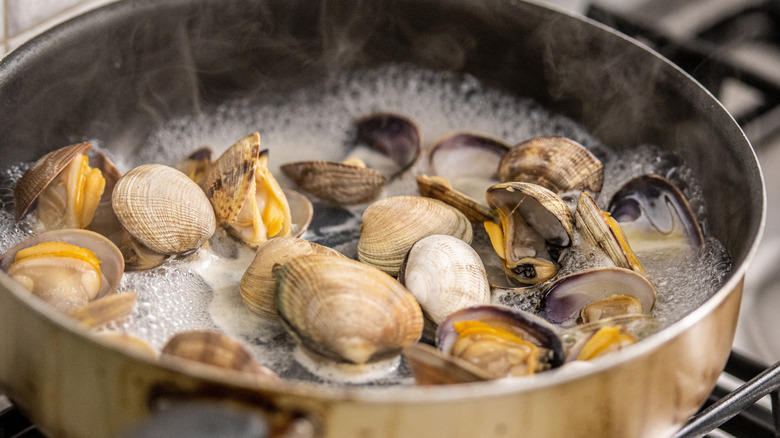
There's really nothing worse than overcooked seafood. It completely ruins the texture of the fish you're working with, and with a recipe like clam chowder that literally depends on a good texture, that's obviously not ideal. But according to Chef Chris Ibarra of The Edgewood Tahoe Resort, "One of the most common mistakes people make with clam chowder is overcooking the clams, which turns them rubbery." Yes, you'll want a bit of chewiness to your clams, but cooking them a bit too long can make them actually difficult to bite into — that's not what any clam chowder lover is going for.
Before you add the clams to your chowder, make sure that you've cleaned and steamed them until the shells open. At this point, you're ready to chop them up and add them to the pot. Just keep in mind that at this point, they're already cooked through — you just want them to incorporate into the recipe and warm up a bit. That process should only take about five minutes, so don't continue cooking the soup much longer after this point.
Skipping the bacon
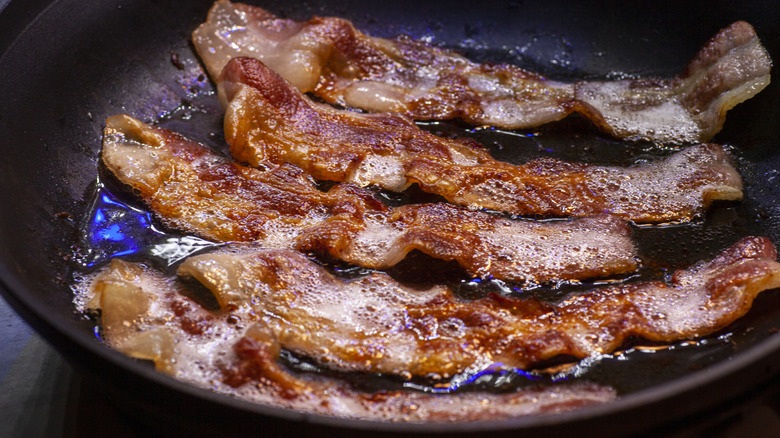
When you think of clam chowder, clams are, of course, the first protein source that comes to mind. But that doesn't mean that this seafood-centric dish shouldn't include any meat. In fact, we think that one of the best ways to enhance the flavor of your clam chowder is to add some bacon to the mix. The bacon itself adds a ton of flavor to your chowder by providing a lovely salty note along with a meaty element that you wouldn't otherwise get in a seafood dish. Additionally, crispy bacon also offers a textural counterpoint to the chewiness of the clams, creating a crunchy element that automatically makes the dish more interesting.
But it's not just the bacon itself that plays an important role here — the bacon grease can also be incorporated into the dish. After you've finished crisping your bacon bits, use that grease to cook your garlic, onions, and celery in to infuse the vegetables with even more flavor.
Over-blending the potatoes for your clam chowder
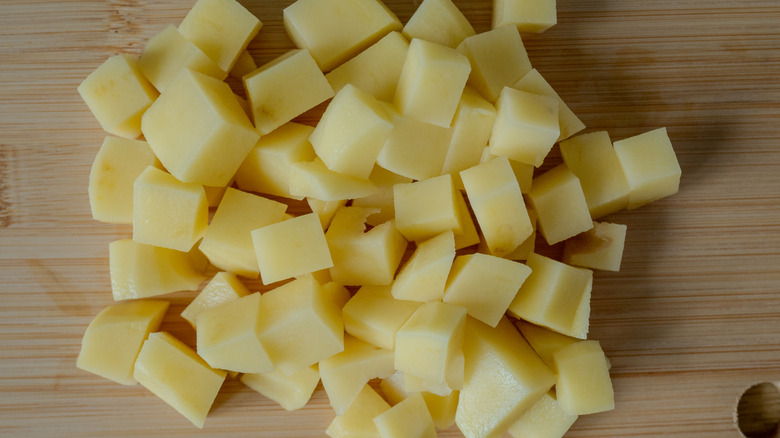
Texture is an incredibly important aspect of just about any dish, but especially clam chowder, where creaminess and chewiness join forces to create a deeply texturally interesting dish. However, you can throw that texture off by making one common mistake: over-blending the potatoes. "When you overblend potatoes, it makes for a glue-like consistency, which ruins the chowder," explains Chef Dan Witwer of The Darling Oyster Bar in Savannah.
That's why you need to work with potatoes in a few different ways in your clam chowder, according to Witwer. First, he says, you should pulse the potatoes. Make sure that you don't leave them in your food processor for so long that they essentially become mashed potatoes. However, you should also leave some that are more roughly chopped. This creates a nice textural contrast between the base of the soup and actual pieces of potatoes. Then, he says, you can finish it off by blending in the cream.
Boiling the soup after adding the cream
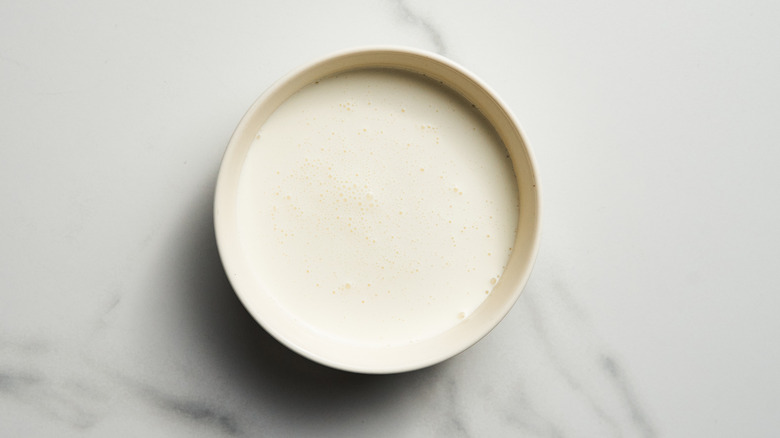
When you're making clam chowder, you want the broth to be rich and creamy — not curdled and oily. Unfortunately, though, it's all too easy for this to happen, especially if you're not paying attention to the order in which you add the ingredients to the pot. Cream, for instance, needs to be added to your clam chowder near the end of the cooking time. Otherwise, you might just end up with a broken, curdled mess.
"Another common mistake is once you add your cream, you never want [to] boil the soup again," explains Chef Reid Shilling. "Cream will break when you boil it." This is a common problem when you're working with creamy sauces and broths — the proteins in the dairy bind together, which is when the cream "breaks." Once that happens, you're going to be left with a batch of soup that has a clumpy, unappetizing texture. Therefore, when you're ready to add the cream to the pot, ensure that the temperature is down low enough, then don't raise it too high again.
Not using the freshest ingredients
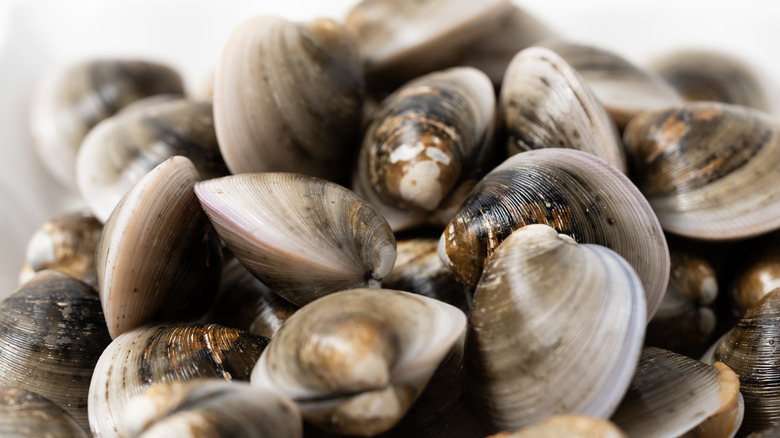
When it comes to just about any recipe, you're going to want to be using fresh ingredients. After all, vegetables, meat, and other foods that are too old or stale can ruin both the flavor and texture of whatever dish it is you're making. But ensuring that you're using the freshest ingredients is even more paramount when it comes to clam chowder. This is because using clams that have already gone off is a huge risk for food poisoning, the symptoms of which can range from mildly unpleasant to deeply serious.
"Of course, always using fresh product is paramount!" Chef Dan Witwer advises. When you're buying your clams, first be sure that the shells are closed. Open shells could indicate that the clams have already died, which means that they are most certainly not fresh. If the shells are somewhat open, give them a squeeze — they should shut if they're still fresh. Additionally, you'll want to make sure that you're buying your clams from a trusted source, not a random market that you aren't familiar with. Of course, ensuring that you're using fresh vegetables, bacon, and cream is also an important part of making sure that your clam chowder comes out tasting as fresh as possible.
Adding too much thickening agent

A good clam chowder is rich, thick, and creamy. That being said, it's important to remember that you're ultimately making a soup, not a stew. Therefore, the broth should still be thin enough that it's easy to eat with a spoon. However, one of the biggest mistakes that Chef Chris Ibarra sees home cooks making with clam chowder is "adding too much thickening agent." Adding too much flour or potatoes, for example, can result in a less-than-pleasant texture in your soup. "This allows the soup to become too thick and pasty, or heavy," he explains.
Rather, you should have some restraint when you're using the thickening agent of your choice, whether that's blended potatoes or flour. Ibarra suggests building the broth through reduction, or letting the soup cook and some of its moisture to evaporate over time, rather than just dumping in a ton of thickening agent. Yes, that process takes a bit longer, but it also renders a better texture and more well-integrated flavor profile.
Rushing the cooking process
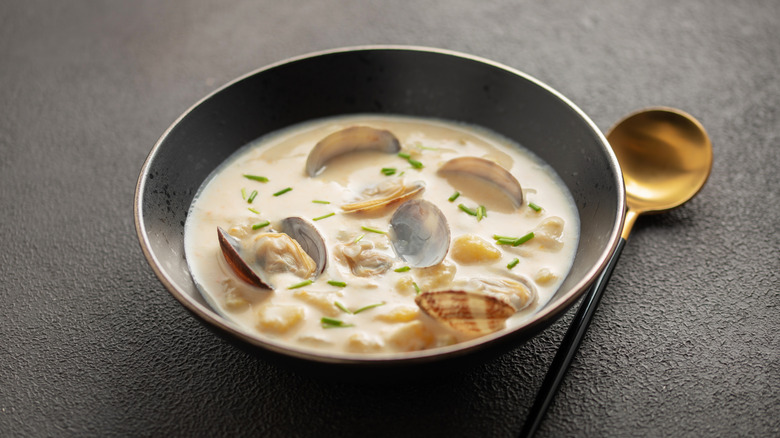
You know what they say: Good things take time. And clam chowder certainly isn't an exception. We get it — you want to get dinner on the table as quickly as possible. But clam chowder isn't a dish that you can whip up in a matter of minutes. Rather, you're probably looking at over an hour of cook time, so keep that in mind before you get started.
As we've already mentioned, it's important to give your chowder time to reduce, which helps thicken the broth, resulting in that creamy texture you're going for. But you're also going to want to work at a relatively low temperature, since you could otherwise scorch the cream, which will render your clam chowder recipe a total mess before you even get it into a bowl. So, the next time you plan on making clam chowder, give yourself plenty of time and really allow yourself to enjoy the cooking process instead of rushing through the recipe.