

This Tropical Fruit Is One Of The Highest In Sugar — Here's What That Actually Means
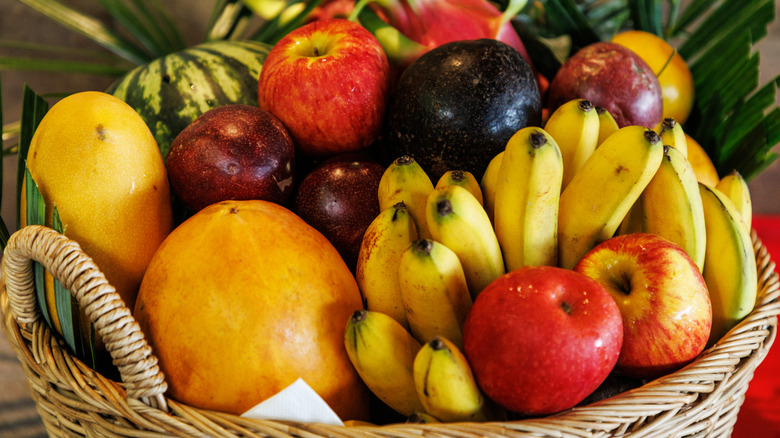
With all the cautions out there about consuming too much sugar, you might be wondering whether the sugar in fruit lessens its health benefits. After all, fruit is often described as nature's candy, and too much sugar is linked to heart problems, obesity, high blood pressure and diabetes.
Let's focus on mangoes. They're an easy target because they're higher in sugar than many other fruits because of their size and chemical makeup. As they ripen, enzymes convert starch in the fruit into fructose, glucose, and sucrose, sweet-tasting chemical compounds that help attract animals to eat them and spread their seeds.
One mango contains about 46 grams of sugar, which is more than what's in a 12-ounce can of Pepsi. By way of comparison, a large apple has 25 grams of sugar, a banana 15 grams, and a medium pear 17 grams. A whole watermelon has 280 grams of sugar, but you can hardly call those hand-held fruits. When you equalize fruit weight, however, mangoes fall somewhere in the middle. For example, 100 grams of mango contain 11 grams of sugar while black grapes have 17 grams. Lychees, bananas, and pineapple also have more sugar than mangoes. Going even higher, dates have 63 grams of sugar and tamarind pulp has 38 grams.
Mangoes: High in sugar ... and nutrients
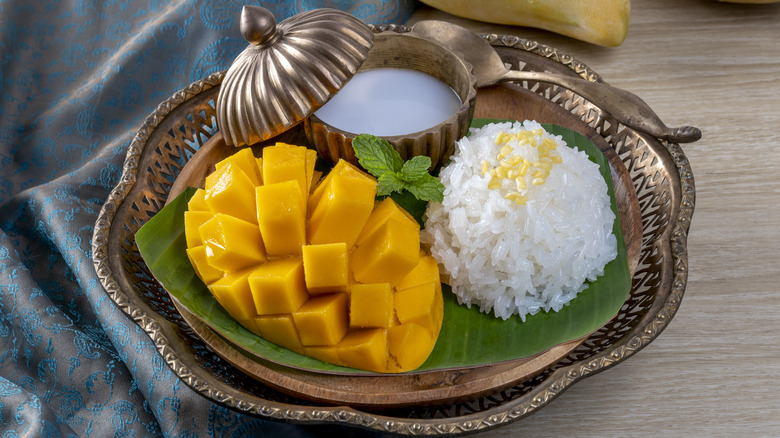
Any way you slice it, mangoes are high in sugar, but that's not necessarily a bad thing. Eating a mango is much better for you than drinking soda — or even fruit juices for that matter. That's because mangoes, like other whole fruit, contain fiber that helps smooth out the body's metabolism of the fruit so as to not spike blood sugar. Sugary sodas, as well as pulp-less fruit juices, don't have fiber. Even though mangoes are relatively high in sugar content, they're not that high on the glycemic index, meaning they won't spike your blood sugar like white bread or candy. They're packed with nutrients like vitamin C, potassium, and niacin and have polyphenols, which are compounds found in plants that act as antioxidants.
If you love eating perfectly ripe mango or want to try these recipes for using up fresh mangoes but are sugar-sensitive, you needn't totally abstain; just limit your portions and still enjoy that sweet, tangy goodness along with nutrients and fiber that added sugar doesn't have. You can also eat mangoes with a protein like these Greek yogurts to slow down the sugar release into your blood stream. If you'd like some lower-sugar fruit alternatives, blueberries, orange, peaches, cantaloupe and watermelon all have less sugar per 100 grams than mangoes. And if you're looking for more exotic tropical fruits, papayas and guavas are both lower in sugar per 100 grams.