

The Defunct Chicago Museum Where Pizza Took Center Stage
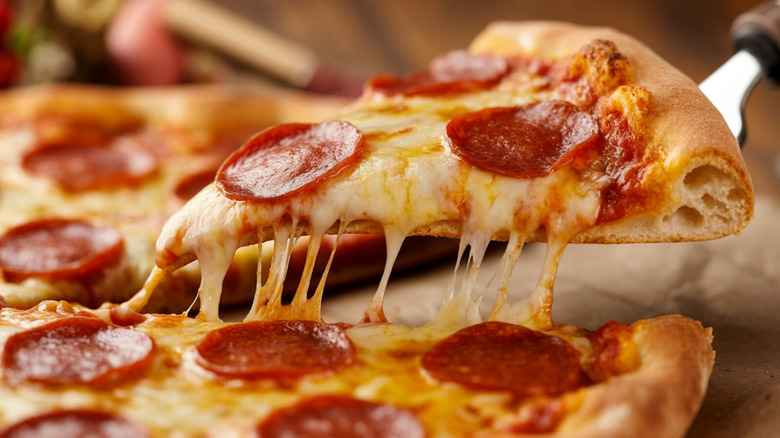
Pizza holds a special place in people's hearts. It's what you get when you can't agree on dinner, the obvious choice if you're feeding a crowd, and a constant presence at gatherings from birthday parties to late-night study sessions. Sure, it may just be a humble combination of tomato sauce, bread, and cheese, but it's also something people feel genuinely attached to. And no place was this love more evident than in a small museum in Chicago, where everything was about — and only about — pizza.
The U.S. Pizza Museum was initially founded in 2015 by Kendall Bruns, a Chicago-based artist and graphic designer who spent years collecting pizza-related memorabilia. For the first few years, he showcased his collection online and through pop-up events until finally opening a physical location in 2018. At first, the museum was supposed to be another pop-up only meant to last a few months. However, Bruns was able to keep it open for a little over a year, hosting dough-making demonstrations and book signings while exhibiting pizza-related items, including menus, toys, art, vintage ads, and even a wood-burning oven.
Unlike NYC's Museum of Pizza, admission to the U.S. Pizza Museum was free with an online reservation, with all proceeds coming from donations or the gift shop. Ultimately, though, financial issues were the main reason behind the museum's closure in October 2019.
Chicago's contribution to American pizza history
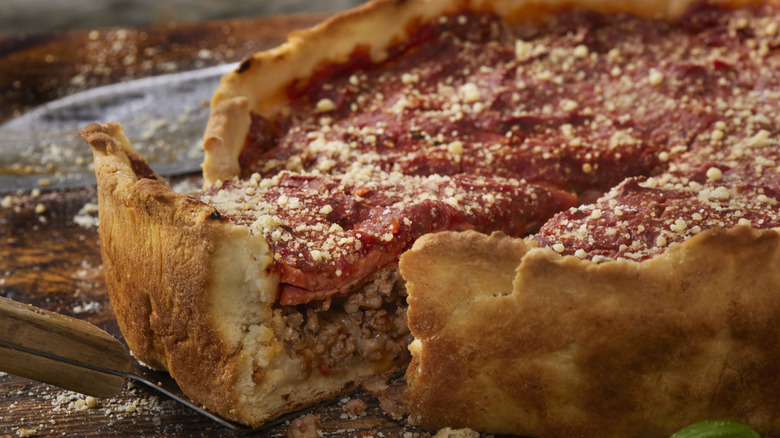
It's fitting that Chicago was home to the U.S. Pizza Museum, as it's played a significant role in American pizza history. Despite many Chicagoans preferring tavern-style pizza, most people associate the Windy City with deep dish, which was created by Pizzeria Uno at 29 East Ohio Street. Founded by Ike Sewell and Ric Riccardo in 1943, the restaurant invented something much different from the thin, Neapolitan-style pizza familiar to Chicago's Italian American community. A casserole-like creation with a thick crust and layers of cheese, toppings, and tomato sauce, it became popular in part because the wheat flour, corn oil, salt, and yeast for its dough weren't rationed during WWII. The filling was also made with leftovers, which made it an affordable meal for workers and returning soldiers.
Deep dish would quickly spread beyond Pizzeria Uno through key figures like cook Alice May Redmond, who was integral to the style's development and later made pizzas at Gino's East. Meanwhile, co-manager Lou Malnati opened his eponymous restaurant in 1971, with his brother Rudy Jr. later founding Pizano's. And alongside other chains, these restaurants would eventually bring deep dish to national and international audiences.
With deep dish, Chicago didn't just create a new pizza, but proved it could be reimagined beyond its Italian origins. Now one of America's most iconic regional foods, it has both devoted followers and vocal detractors. But regardless of where you stand, it's hard to deny Chicago helped transform pizza into something unapologetically American by bucking tradition.