

Follow Michael Symon's BBQ Smoking Rule And Look Like A Master

If you have some experience cooking meat, then you're probably already aware of the age-old resting rules. But smoking is a pretty long and rigorous process, so it can be tempting to try to dig in as soon as you pull the meat from the heat. But according to award-winning chef Michael Symon, what you do after smoking your meat is crucial — and skipping it could ruin your meal.
Symon spoke to Tasting Table about some of the simple ways to elevate BBQ, and one of his top tips is to thoroughly rest the meat after pulling it off the grill. "Let your meat rest for at least 2 hours after smoking, wrapped in peach paper and tucked into an insulated cooler. It makes a huge difference," he said.
This is because all of the juices in the meat tend to pool together as the muscle fibers contract during cooking. But as the meat cools and the fibers relax, the moisture can redistribute evenly. Any excess water will also have the chance to evaporate, which prevents the meat from turning out dry and flavorless.
Meat will continue to cook after it's taken out of the smoker
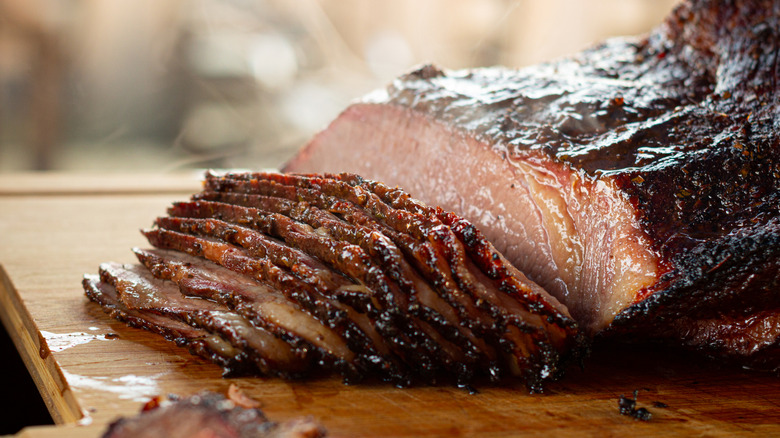
The meat will continue to cook as it rests, which is important to take into account for timing. Symon says, "Remember: the internal temperature will rise about 10 [degrees Fahrenheit] after it comes off the smoker. Don't overcook — pull it early and let the rest do the work." As the Food Network and ABC alum recommends, a few hours is an ideal rest period, especially for larger cuts like a smoked brisket. However, even five to 10 minutes can work wonders for something like thin smoked pork chops.
If you skip the resting period altogether, then all of the juices can spill out when you cut the meat, which not only causes a mess -– it also impacts the texture and flavor. The more moisture detected by the palate, the more tender the meat feels. And the longer the meat has to relax, the more evenly distributed the juices will become.
To try it out, follow Symon's instructions and wrap the meat in peach (or butcher) paper for resting. Aluminum foil works fine too. A cooler or warming box will help keep the meat above an internal temperature of 140 degrees Fahrenheit, which is critical for food safety, but a warmed oven with the heat off should also work for meats with a crust. If you're planning on resting the meat overnight, then move it into the refrigerator after four hours.