

Store Coffee Above Your Stove, And You'll Learn A Mistake The Hard Way
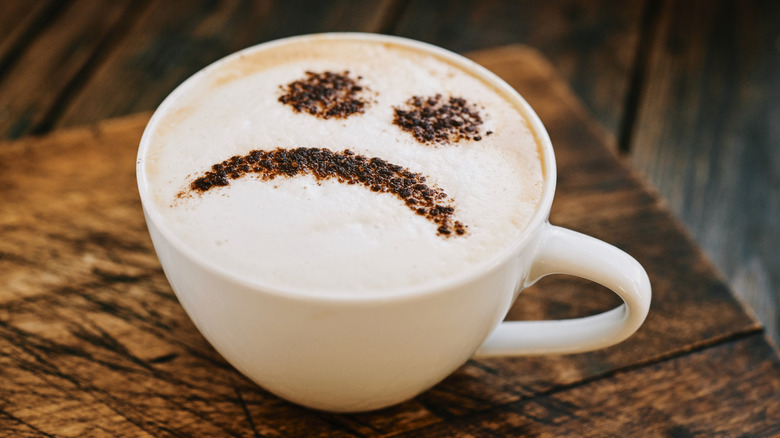
If you're wondering why that delicious, single-estate coffee you bought less than a week ago just isn't tasting the same anymore, it might be because of where you're storing it. It's common for kitchens to come with cabinets above the stove, and it's quite likely that's the designated spot for your coffee jar. Unfortunately, that happens to be one of the worst places in the kitchen to store coffee, according to Claire Chan, founder and owner of New York specialty coffee shop The Elk. "This is a poor location," Chan told us. "Coffee is sensitive to heat and temperature changes, and cabinets above the stove experience both". The end result, she says, is stale, flat-tasting coffee.
Now, it's natural for coffee to lose freshness and flavor over time. In fact, coffee's peak flavor window is two weeks after it's been ground. But this deterioration happens faster with exposure to high temperatures. Chan says, "Heat accelerates oxidation and causes the coffee's natural oils to break down." She explains that when stored right above the stove, the heat causes coffee to prematurely release its oils, which leads to an accelerated degradation of both flavor and aroma.
Incidentally, coffee isn't the only thing this tip applies to. Cooking oils and spices are all on the list of items you should never store above the stove.
The best way to store coffee
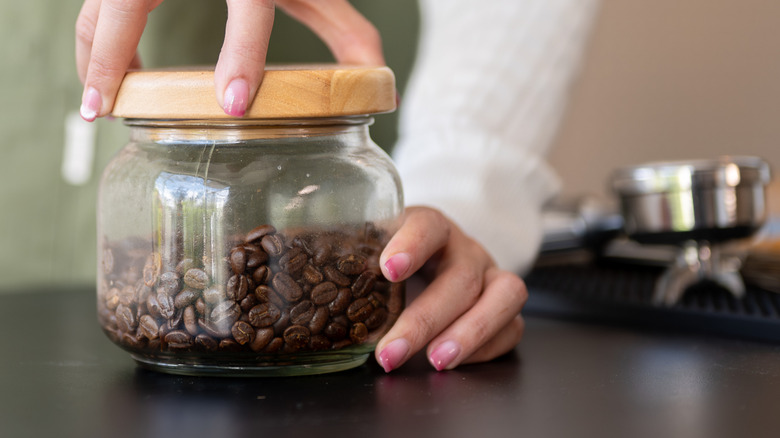
When it comes to storing coffee, the goal is to keep it as far away from extreme conditions as possible. Outside of temperature, there are two other factors that affect the freshness of coffee: Exposure to oxygen and light. Chan says, "A cool, dark place in an airtight container is ideal." Find a spot with a consistent cool temperature to help preserve the freshness of your precious coffee.
There's one more thing you need to worry about though, and that's moisture. Coffee readily absorbs moisture from the air. So while you can store coffee in the fridge, leaving it in an unsealed bag, or even the paper bag it came in, is a bad idea. It risks the coffee picking up the smell of whatever else is around it, like the pork roast sitting on the next shelf. "If using the refrigerator, ensure the container is fully sealed and allow the coffee to warm to room temperature before brewing," Chan says.
Drinking coffee that has lost its freshness is a complete waste, especially in a world where we're routinely exposed to an incredible range of flavors, from berries to cinnamon (here's a list of 8 Crazy Cups ground coffee flavors, ranked). And while proper storage can increase the shelf-life of your favourite brew, by far the easiest way to ensure you never drink stale coffee is to buy small amounts and finish it as soon as possible before moving on to the next batch.