

New Facial Recognition Technology Has One Popular Grocery Chain Under Scrutiny
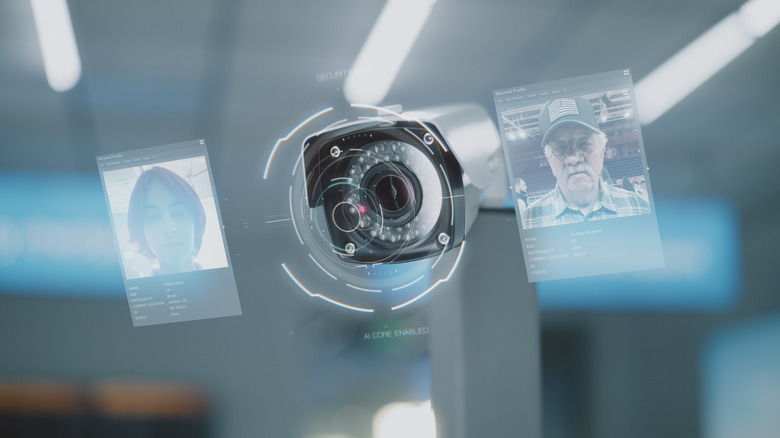
If you are worried about how technology may affect your shopping experience in the future, you may want to pay close attention to what's going on at Wegmans. The grocery chain has been called out for its use of biometric surveillance. When you go into a Wegmans location that uses this technology, the store can scan and save your biometric data through the use of facial recognition, eye scans, and even voice scans.
While Wegmans is known to be cheap, now if you head in for a loaf of bread, cameras will scan your face and eyes to compare with a database. If you speak to anyone, they will do the same with your voice. This company says it can "convert or share" this data, which is both vague and concerning language. Studies show these biometric scans have a much higher error rate for darker-skinned individuals, especially women.
Currently, the technology is in use at some New York City locations, but the company also said it's in "a handful of states," according to Newsday. The doors are marked with warnings that state this is happening, so at least it's not totally cloak and dagger, but only New York City stores are required to post these alerts.
Wegmans has said that, like other retailers, it uses cameras for security. However, some stores that have demonstrated "elevated risk" now use facial recognition technology, "to identify individuals who have been previously flagged for misconduct," a spokesperson told Fox News. It's worth noting that in some stores this identification can be based on an internal database and not necessarily because anyone has been convicted of a crime. A shopper can be merely suspected of a crime by store staff.
Surveillance for safety
So what happens to your data when the store records you? Obviously, it needs to scan everyone before it can tell who might be a safety risk. Wegmans says it retains the data for as long as it needs to without elaborating further. The company states it "aligns with industry standards."
The store says it does not share the data with any third parties, but there is a risk that the information could be compromised. Database hacks are not uncommon, and biometric data is not the kind of thing you can change to keep yourself safe. There are documented cases of scammers using cloned voices and deepfake videos to commit fraud. In 2024, scammers used deepfake technology to fake executives in video calls and steal $25 million from a bank. On a smaller scale, this can be used to access individual bank accounts. The cause for concern is not without merit.
In the U.K., Sainsbury's and Asda stores have gone beyond adding security stickers and have also made use of facial recognition. The same was done at Foodstuffs stores in New Zealand. Over 5,000 people complained after the Asda trial. Companies claim that data from everyday customers is not saved. However, concerns remain about false positives and whether technology providers save the data even if stores do not. If you are wrongly flagged by a store's AI, you could be banned from shopping despite having done nothing wrong. That's definitely worse than just ending up in Costco jail. Time will tell if Wegmans and other stores make a permanent move to these sorts of security measures.