

This Kitchen Floor Trend Is Being Replaced By Warmer Alternatives
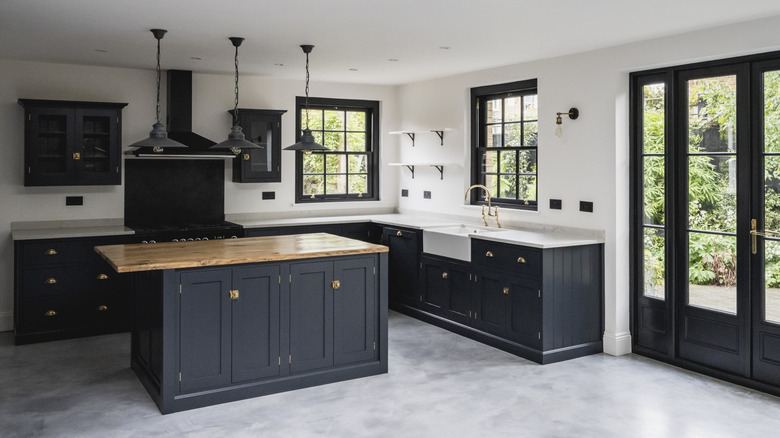
Along with cupboards and counters, choosing a kitchen floor is one of the biggest decisions you'll have to make in your home. For many people, the floor gets a little less consideration than the cupboards and the counter because you do less with it. Sure, you're always standing on it, but it's not a focal point the way the rest of the kitchen is. Because of that, many kitchen floor designs can be very basic and also slow to change. How many kitchens have you been in that have variations of the same cool white or grey tiles? These floors have persevered for years, but warmer tones are beginning to grow in popularity.
In the early 2010s, gray flooring became the go-to choice for home design. In part, this was because it was considered a minimalist design option. There is a reason we describe bland and forgettable things as gray, after all. It's a "gray day." Things exist in a "gray area." It implies a sense of nothingness. It's also very neutral. If you decorate a house in royal blue and chartreuse, it will put a lot of people off. Gray is just a background color, so it is seemingly inoffensive. Home design shows picked up the trend, and it spread like lifeless wildfire.
Part of the reason this trend is on the way out in 2026 is that cooler tones are now perceived as cold and impersonal. If you want a warm, welcome vibe in your kitchen, you need a palette to match. The color shift doesn't need to be extreme, but more personality, and more vibrance, are key.
Elevating your kitchen floor
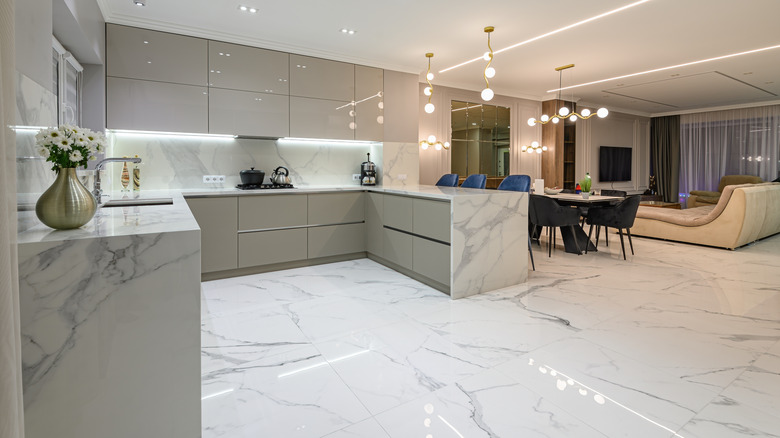
Trends for 2026 are definitely leaning into the cozy and natural vibe. Even lighter wood tones, those soft, faded colors, are giving way to the darker, richer options that bring to mind the forest and nature. That doesn't necessarily mean dramatic like deep, dark walnut or mahogany, even though those wood tones are often considered timeless. Welcoming sandy and caramel tones are becoming more prominent instead of the faded, neutral wood that had dominated. The idea here is for the floor to be more of a part of the whole kitchen experience, rather than being an afterthought or an overlooked part of the background.
It's not just the creamy shades and the brown, earthy tones that are gaining ground, either. Colors like green and blue are becoming more popular, but in tones that fit the overall theme, and not just for tile. Green polished concrete as well as painted wood are catching on, in shades from a subdued sage to more robust forest green.
In terms of simple wood tones, the warmer shades bring out the character of the wood. Again, this speaks to a shift away from looking at the floor as background and toward wanting it to play a more prominent role in the overall design of the kitchen. If your ultimate goal is for a kitchen to feel inviting, like a welcoming place, then it should be a ground-up experience. You can't have partial warmth that floats over a cool, dispassionate surface. That would defy the whole purpose.