

Stop Throwing Away Garlic Peels — They Belong In Your Soup Pot Instead
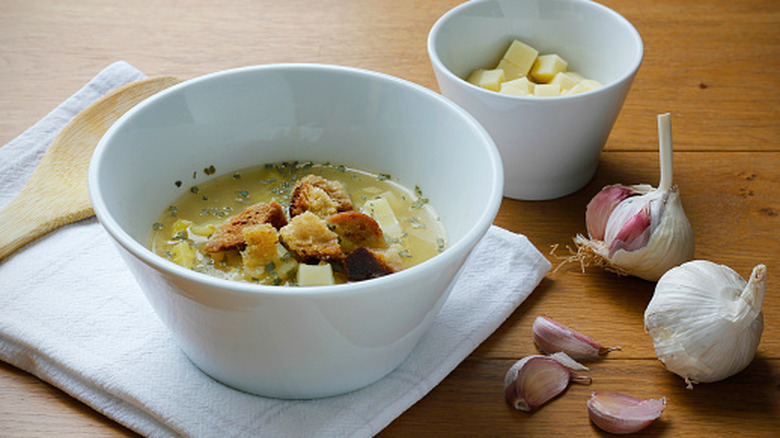
There aren't many meals out there that wouldn't benefit from an extra dose of garlic, but prepping it is one of those culinary tasks that no one really enjoys. The sheer number of tricks for peeling garlic you can find on social media are a testament to this. The process takes on a slightly different light, however, when you realize that those peels you are removing don't need to head straight to the compost bin. As it turns out, those papery skins are actually worth saving and can be a real asset next time you make a stock or soup.
Now, on their own, right after you peel them off the cloves, garlic skins don't make a great snack. Technically you can eat them, but the tough, fibrous texture isn't exactly something that you'll look forward to either chewing on or choking down. If you do sample a bit, however, you will notice that despite seeming like a useless bit of waste all this time, these peels actually do contain a lot of flavor.
One of the best ways to repurpose these kitchen scraps is to toss them in the stock pot. Simmering in water extracts both the flavor and the nutrients — vitamins A, C, and E, potassium, calcium, and more — present in these leftover bits, adding all of that goodness to your soup or stock. Even a long simmer won't make these peels nice to eat, but you can just scoop them out later and then they're ready to be composted. If you simmer them wrapped in cheesecloth or in a mesh bag, it's a breeze to pull them out of the pot when the time comes.
Other uses for garlic peels
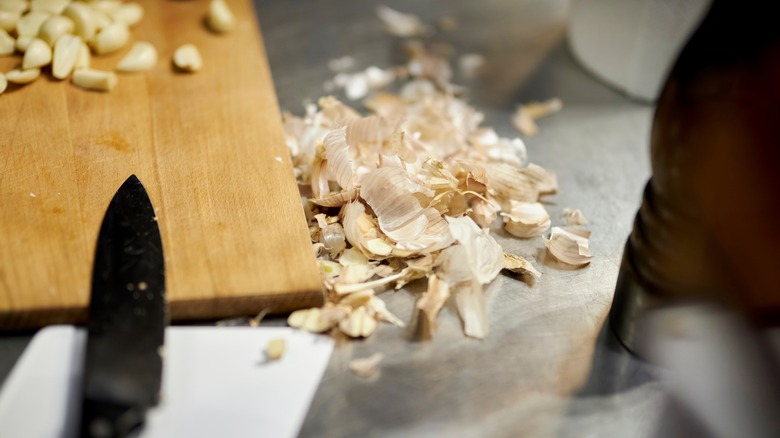
Soups and stocks aren't the only place for your garlic peels, however. You can also mix them into a pot of cooking grains or a braise, anywhere that adding a touch of garlic flavor would be nice, and pull them out before serving. But if you really want to entirely save your garlic peels from the garbage or compost, there are ways to eat them as well, though they require a bit more preparation. Just like you can make flavorful onion salt from leftover onion skins, so too can you make garlic salt or a garlic-free garlic powder with these papery skins.
Fresh off the clove, garlic skins are a bit crumbly, but not quite as crumbly as you need them to be to make a fine powder that can serve as a seasoning. To get to that state, they need to be dehydrated a bit. This can be done via air-drying, with a dehydrator, in the oven, or even the microwave. Once properly prepared, grind the peels up in a spice grinder or mortar and pestle — or just crumble them with your hands — and store the powder in a spice jar for later use.
This garlic peel powder can be added to stews, braises, grains, and stocks just like the whole peels, with the added benefit that they don't need to be pulled out at the end. But you can also use this new spice just like you would garlic powder, sprinkling a bit on just about anything to give it an extra kick of allium flavor. However you choose to use them, it is clear that you should think twice before throwing away garlic skins.