

7 Store-Bought Vegetable Broths, Ranked
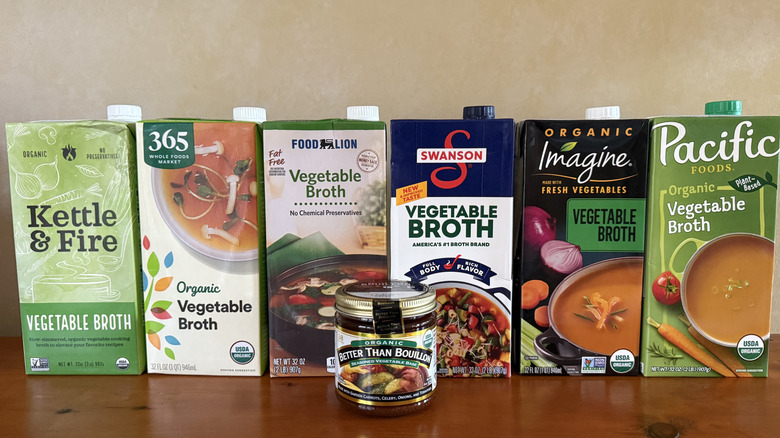
At least three or four nights a week, vegetable broth is a crucial ingredient for my family's dinners. That's especially true during the winter, when we can't get enough of soups, stews, and casseroles. As a vegetarian (and mostly vegan) family, we've tried many vegetable broths over the years, learning — by trial and error — which ones are too salty and which ones are too bland. Since a high-quality vegetable broth can be the difference between a good and a stellar meal, I decided to test a handful of the most popular brands.
Whether you're preparing a homemade vegetarian soup or hoping to caramelize onions without setting off the fire alarm, vegetable broth should always be on hand. Though sometimes used interchangeably, broth and stock are two different ingredients. Notably, vegetable broth is seasoned and simmered for a shorter duration than vegetable stock and can be feasibly enjoyed on its own, so I've chosen to only test vegetable broths for this article.
I tasted each of these vegetable broths to get a clearer picture of each one's pros and cons. I then ranked each product according to its flavors, favoring those with less reliance on salt and more emphasis on the various sweet, savory, and umami notes of real vegetables. I slightly warmed each broth before sipping it plain, allowing me to closely observe the flavors at play. Without further ado, here is my ranking of seven vegetable broths available at stores.
7. Kettle & Fire organic vegetable broth
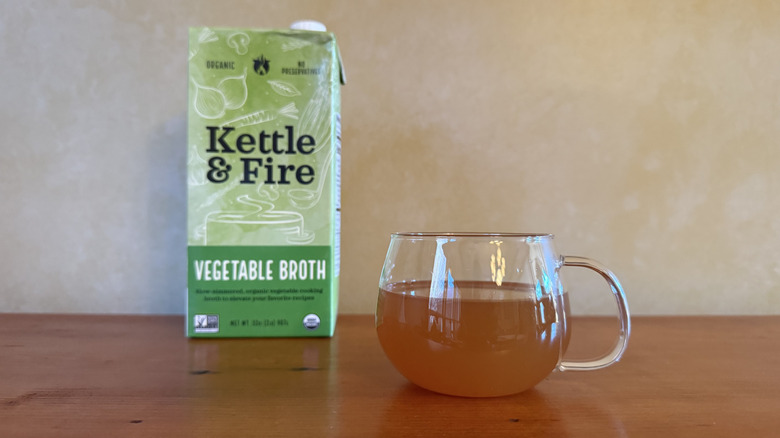
I've seen several influencers advertising Kettle & Fire's bone broths, but I didn't know the company also produces vegetable broth before this ranking. Indeed, this product is entirely vegan and contains an extremely straightforward list of ingredients. In fact, unlike all the other products on this list, it contains neither celery nor celeriac; instead, tomatoes, carrots, onions, leeks, and mushrooms are the vegetables in the spotlight. Otherwise, this broth contains only water and sea salt.
Now, considering all the chit chat it has inspired in the food and wellness worlds, I thought I'd like this brand's vegetable broth more. Sadly, though, I found it to be too acidic — probably because of the recipe's reliance on tomatoes. After all, tomato paste is one of the first ingredients listed, and flecks of tomato were readily visible in the broth.
Additionally, with 480 milligrams of sodium per serving (or 21% of the recommended daily limit), this brand contains less salt than any other product I tested. The moderate amount of salt helped enhance the flavor of the vegetables without overpowering them, but the low sodium content — paired with this broth's acidic nature — meant that it wasn't nearly as comforting as some of the other list entries. While I found the flavors offered by leeks and mushrooms to be pleasant, this broth was also the most expensive one I tested on a per-serving basis. I don't think it's worth the extra pennies, so it comes in last.
6. Swanson vegetable broth
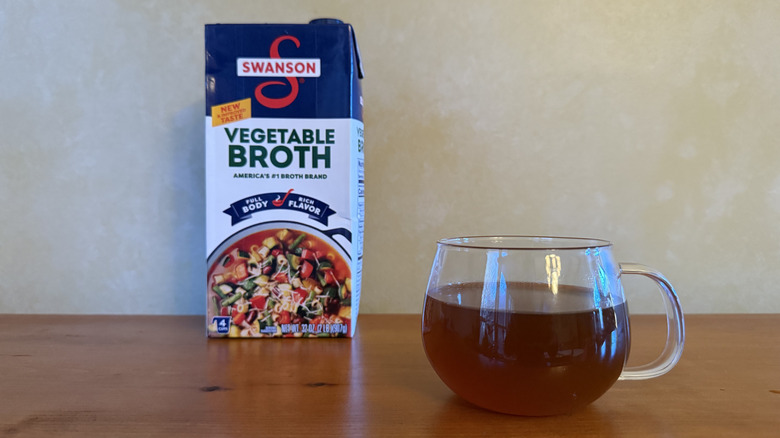
Swanson has been owned by Campbell's since 1955, and while the brand's TV dinners have practically dwindled into extinction, the broths can still be found in many grocery stores. Now, this vegetable broth is on the more affordable end of the spectrum, but I wouldn't hesitate to pay more for a better product. I felt like I was drinking flavored salt water, which might be ideal if you have just finished a marathon (not if you're one of the majority of Americans who consume too much sodium).
This vegetable broth contains carrot and celery juice concentrate, cabbage, onion stock, dehydrated onions and garlic, parsley, and mirepoix (a mixture of carrots, onions, and celery). It's somewhat surprising that with all these vegetables, the product still relies on natural flavoring. Like many other vegetable broths, cane sugar is present (1 gram added sugar per 1-cup serving), as well as yeast extract and salt. Unfortunately, the salt overpowered the other flavors in this broth, which is a shame because I would have loved to taste the parsley.
On the bright side, Swanson vegetable broth had a nice tint to it, mimicking that of black tea. Its somewhat thick consistency lent a comforting mouthfeel, and the yeast extract added a bit of umami complexity to the broth. If it weren't so salty, I may have been able to appreciate this product more. As it stands, it ranks near the bottom.
5. Food Lion vegetable broth
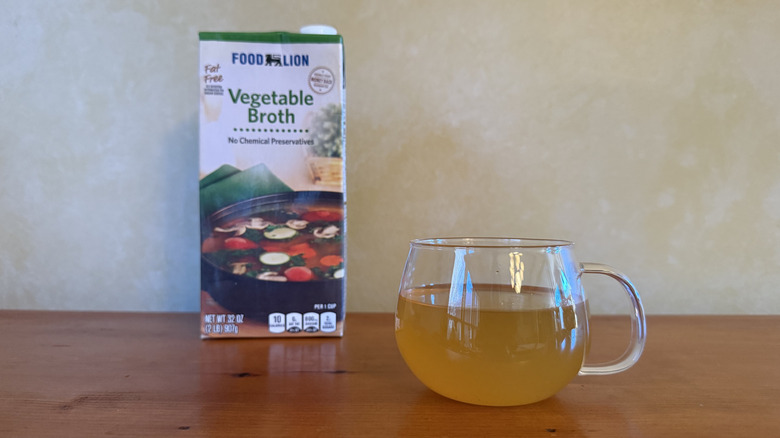
Food Lion vegetable broth is fat-free and contains zero chemical preservatives, though it does contain natural flavor, a surprisingly ambiguous term that makes no promises of purity or nutrition. Also present are sugar (2 grams per 1 cup serving), potato flour, yeast extract, and citric acid. While I thought the natural flavor component might be potentially off putting, I found it was subtle enough to blend into the other vegetables' flavors. The sugar wasn't too prominent, either, and I imagine the potato flour helped thicken this broth's texture. However, this was among the less-enjoyable entries overall.
Now, Food Lion's product contains things you might expect to see in a vegetable broth, like tomato concentrate, carrot, onion, and celeriac juice concentrates. But there's also a generous helping of salt we can't forget about. In fact, a single 1 cup serving contains 800 milligrams of salt, or 35% of the recommended daily limit. This turned out to be way too much salt for me, making this broth score lower than several others on this list.
For being the cheapest product of all that I tested, I was impressed with this broth's rich flavor, which was smooth rather than acidic. Even so, this product didn't stand out for any particular quality, and I gave it a lower ranking as a result.
4. 365 organic vegetable broth
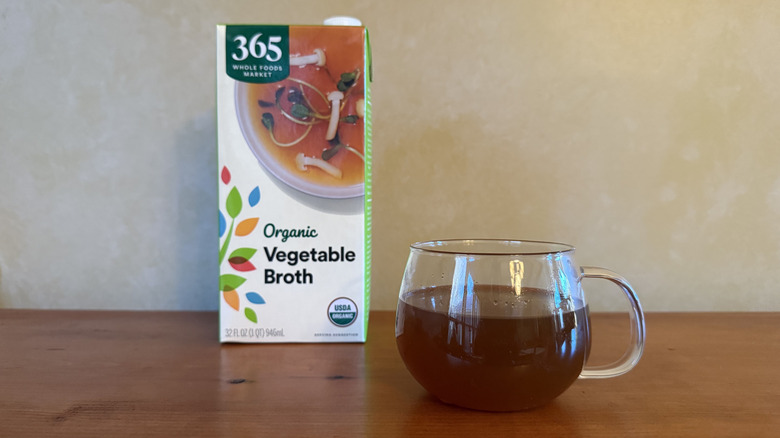
I was pleased that the 365 organic vegetable broth allowed me to taste more of the complexities of its vegetables. After all, the broth doesn't contain any unnecessary fillers. Carrots, onions, celery, tomatoes, and garlic all provide genuine flavors without the need for ambiguous natural or artificial flavors to satisfy the palate. Plus, there's only 540 milligrams of sodium (or 24% of the recommended daily limit) per serving; indeed, sea salt brought out the vegetables' flavors without being too distracting.
Nevertheless, this vegetable broth was far from my favorite. Although its dark hue immediately attracted me, I was surprised to find that it was on the watery end of the spectrum. Furthermore, the onion and garlic flavors were too bold and overpowered the other vegetables. I wouldn't say no to using this vegetable broth, but I certainly would prefer a few others instead.
Finally, if you're wondering about how this broth might fit into your budget, take heart. Although my family often calls Whole Foods "whole wallet," 365 products tend to be surprisingly affordable. In fact, despite being organic, this vegetable broth was the second cheapest product of all the broths that I tested.
3. Pacific Foods organic vegetable broth
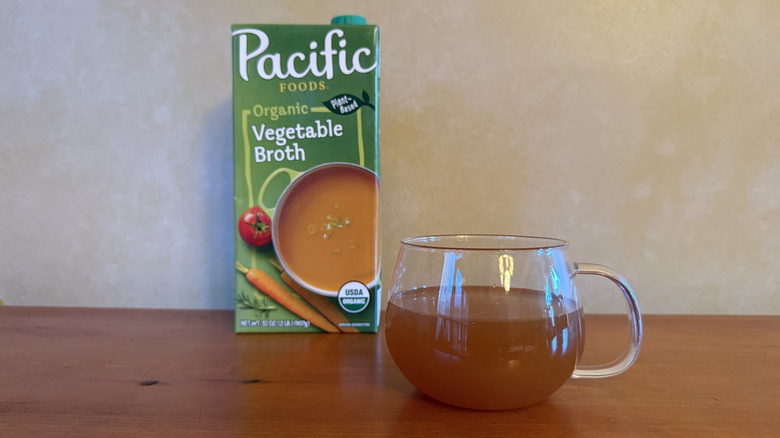
I first became familiar with Pacific Foods when I became a vegan in 2017 and began experimenting with different plant-based milks. You, too, may know the brand for its hemp, oat, soy, almond, and coconut milks. If you haven't tried the vegetable broths, however, you're missing out. Pacific Foods offers organic mushroom broth and vegetable broth, and I tested the latter for this round-up. This broth contained the second lowest amount of sodium per serving with 500 milligrams, and after sampling it? I can confirm that this was an ideal amount of salt.
This vegetable broth's ingredient list was also simpler than most other products on this list. Carrots, celery, onions, and tomatoes are, of course, present, but leeks and mushrooms join the party for extra flavor. Mushrooms famously add umami flavor to vegetable broth, so I was happy to note their inclusion. Meanwhile, garlic and spices lend more savory notes to this broth, while sea salt complements the whole concoction.
Now, this broth wasn't perfect, hence the two higher-ranked entries. But it was an indisputably superb contender in this taste test. Its pleasant, well-balanced aroma impressed me from the moment I opened the carton. Although it was a tad watery and more tangy than sweet, I would gladly use this broth again.
2. Better than Bouillon organic seasoned vegetable base
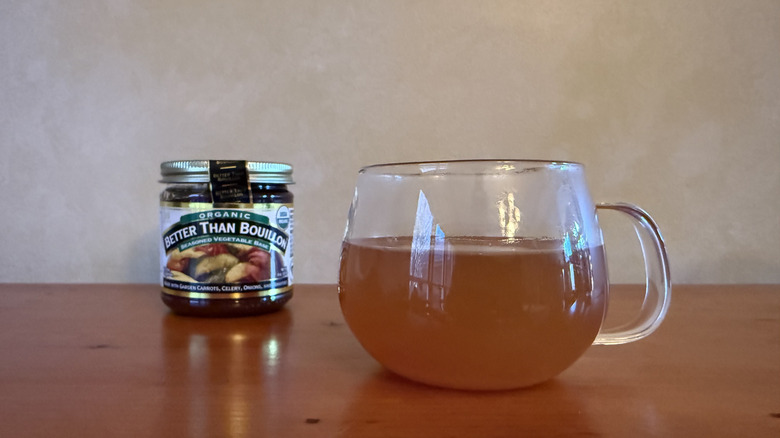
We love Better than Bouillon for its budget-friendly nature. One 8-ounce jar of concentrated broth can produce 9 ½ quarts of broth — nearly 10 times the amount offered by most other products. Plus, rather than needing to finish the jar within two weeks, I'm able to keep it in my fridge for well over a year (though it's good to know the signs of an expired broth, as well). And while I tend to prefer this brand's reduced sodium seasoned vegetable base – I've been disappointed in how salty my dishes turn out when using the full sodium version — this broth won extra points for being customizable. As a result, it ranks second on this list.
Now, one can easily incorporate slightly less paste than the recommended 1 teaspoon per 8 ounces of hot water and still end up with a tasty and comforting broth. But for this taste test, I followed the recommended protocol. Consequently, if it had tasted less salty, this brand may have won the top spot.
Among other ingredients, this vegetable broth features carrots, onions, celery, tomatoes, onion and garlic powder, yeast extract, cane sugar, and soy sauce. Natural flavors are likewise present (whatever that may entail). The broth isn't free of all major allergens, but I thought the soy sauce added a lovely umami flavor. Finally, just the right amount of garlic complemented the broth without leaving me feeling like I needed a breath mint.
1. Imagine organic vegetable broth
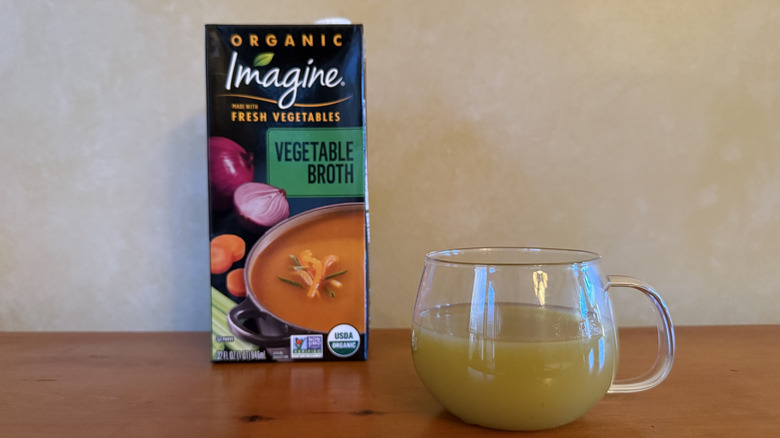
Despite its humble aesthetics, Imagine is a brand that offers excellent broths, soups, and even gravies. Before this experiment, I was more familiar with its tomato basil soup, which I sometimes bought in college when I missed my mom's cooking. This vegetable broth was on the more expensive side, but I chalked that up to its organic nature and fantastic flavor, which helped it earn first place.
This broth is somewhat lower in sodium than other products, as well, despite being the full-sodium variety. Then again, with 630 milligrams of sodium (or 28% of the recommended daily limit), you still might prefer the alternate version of the product that contains only 135 milligrams of sodium. Regardless, I'm happy to note this broth wasn't overbearingly salty. Onions, carrots, celery, and tomato paste are all accounted for in this broth, as well as a bit of oil and garlic (along with unspecified spices, too).
This was one of the few broths that could easily fly solo without needing to be incorporated into a soup. In fact, I might enjoy sipping on a warm cup of this broth if I were sick. Its vegetable flavors were strong enough to be detected by someone with a stuffy nose, and they were extraordinarily well-balanced to boot. The color of milky tea, you can tell this broth has substance to it from just one glance, and it will not disappoint you with its thick, comforting texture.
Methodology
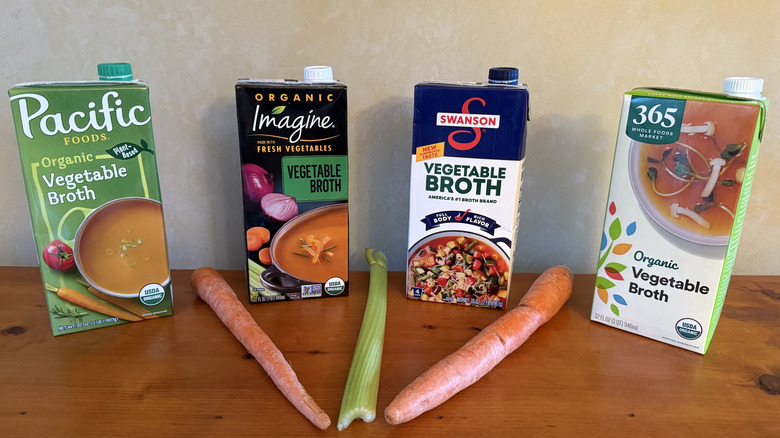
I solely selected vegetable broths (not stocks) for this article, making sure to only choose full-sodium varieties to level the playing field. I also only considered one primary factor when conducting this taste test: flavor. Products that were overwhelmed by salt tended to receive lower rankings than those that were more vegetable-forward, largely because I would rather add salt after cooking than have no control over a dish that tastes like the ocean. To sample each broth, I gently warmed it over the stovetop before sipping it plain. And while I sometimes noted price, this wasn't a factor in determining rankings.