

Where To Find 'Dino Ribs' And What They're Actually Called
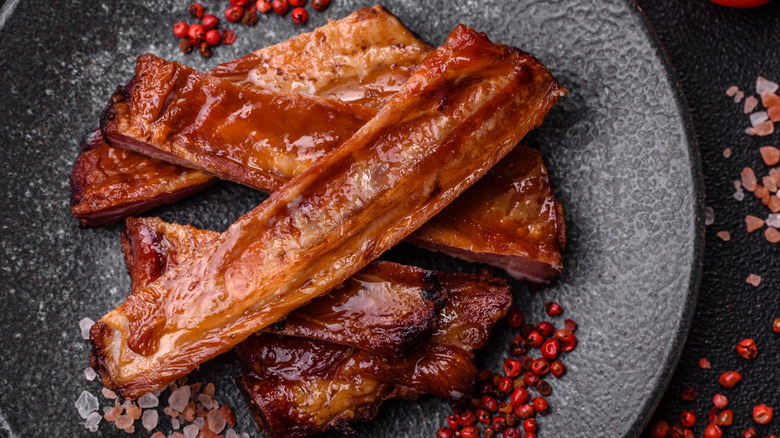
You've heard of dinosaur-shaped frozen chicken nuggets. Now, get ready for dino ribs. These huge cuts come from the steer's plate primal section and totally dwarf baby back and short ribs (think 8-12 inches long and two pounds per individual rib). They're the beefy equivalent of the comically large, handheld turkey legs of stereotypical Medieval table spreads. On the palate, dino ribs are rich, savory, and smoky — a profile reminiscent of brisket. In your grip, they're gargantuan, which brings a fun novelty experience to dining.
Technically, dino ribs are called "plate ribs," coming from the same region as short ribs (the plate section). More specifically, they're part of the highly-active serratus ventralis muscle in the chuck primal. This makes dino ribs meatier and fattier than back ribs, an ideal fit for slow-cooking, long-smoking, and braising. As their generous fat ripples melt, that hearty, rich, well-marbled beef becomes ultra-tender when cooked for long enough to break down the tough connective muscular tissue.
Beef dino ribs are customarily cooked as a whole rack. The process typically begins with an allover dry rub coating (your go-to brisket seasoning blend will work perfectly here). Then, the meat is allowed to sit for a prolonged period before enduring a proportionately prolonged cooking period. 6-8 hours on the smoker (low and slow at 225 degrees Fahrenheit), 2-3 hours on the grill, or 3-4 hours in the oven is standard, but depending on preferred techniques, that cooking time can extend even longer.
Gargantuan dino ribs need to be special-ordered or bought directly from a butcher
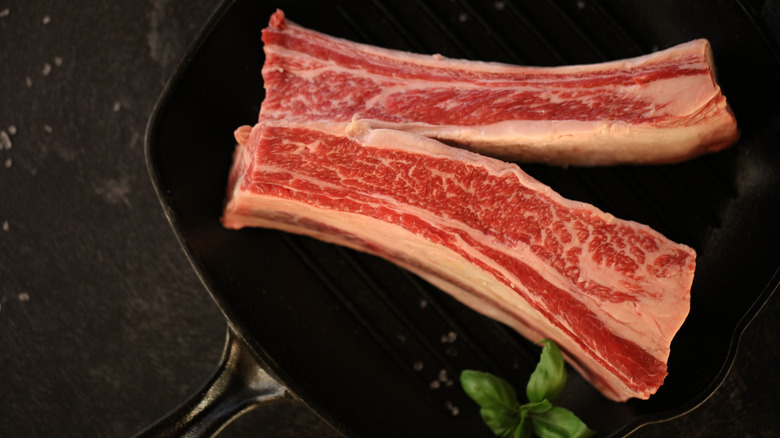
Dino ribs are finished cooking when a meat thermometer inserted into the thickest part of the rib reads 200 degrees Fahrenheit. After a resting period, the ribs can be sliced and served as omnivores might normally enjoy their short ribs. Due to its required slow-cooking and somewhat lesser-known status, this cut tends to come at a fairly affordable price for its sheer size and meatiness. Cooking dino ribs makes a fabulous excuse for visiting your local butcher shop (ask for "plate ribs" or "primal ribs"). Beef dino ribs are also available for purchase from a variety of reputable online meat suppliers, including Five Marys Ranch ($46 per 2-3 pound package), Better Beef Company ($64.99 per five-pound package), and Thomas Cattle Co. ($109 per full plate). Beyond these avenues, however, dino ribs can be tough to track down for purchase.
A Reddit thread in r/smoking asks, "How do you guys find Dino Ribs to buy?" noting that grocery retailers like Sam's Club and Meijer commonly stock short and chuck ribs, but not their larger counterpart. Luckily, dino rib fans chime in with pro tips for acquisition: "If there's an Asian market, or better yet, a Mexican market (carniceria) near you, go in early in the week and ask for them to pick up on Fri/Sat. A butcher can save a full plate of whole uncut ribs, if you request them, before they prep meat for sale."