

The Biggest Misconception People Have About Wood Veneer Dining Tables
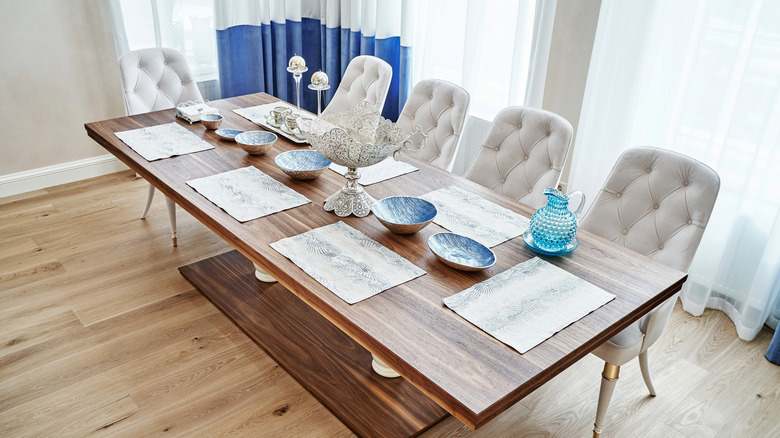
Your dining room table can be the focal point of a space — both literally and metaphorically. It's the spot where family dinners are enjoyed, homework is done, and hard conversations are had. As such, if you're shopping for a new wooden dining table to complete your rustic-inspired kitchen, you're going to want it to check all of your boxes. Enter: veneer.
A veneer coating can offer an affordable and retro alternative to a 100% solid wood dining table. One of the biggest misconceptions that people assume to be true about veneer is that it isn't real wood, when in fact, it's real wood that's stuck to fiberboard, particleboard, or some other wood base. You can tell the difference between the two if you look at the edges. If the grain pattern changes, the table (or product, as veneer can be used for many different surfaces) is veneer, while if it stays consistent, it's solid wood.
This gives the visual illusion that the dining table is made of very expensive, very thick wood, when in reality, that exterior wood layer may not be very thick at all. Veneer utilizes thinner slivers of wood, meaning producers can get more from the cutting — meaning that laminate tends to be cheaper than solid wood furniture.
A better alternative to solid wood
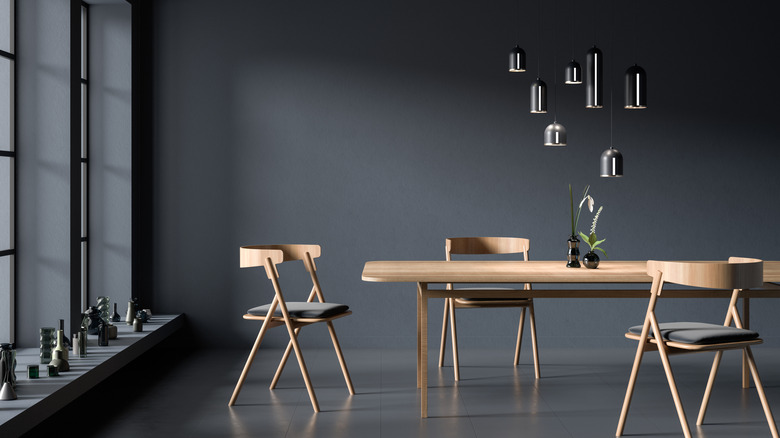
There are many instances in which veneer is a better option than solid wood. Veneer, and the plywood underneath it, doesn't warp like solid wood, making it an excellent options for spaces that are humid or wet — like your kitchen. There are also numerous finishes to choose from, and since it's made with a smaller sliver of more expensive hardwoods, you can get a little more bang for your buck appearance- and cost-wise.
However, veneer may not be for everyone. For one, it's easier to refinish solid wood than it is veneer because the veneer coating is so thin. And, because this coating is rather thin, chips and dents are more obvious than they would be on a solid wood table. As such, solid wood is generally thought of as a better long term investment, as it's more durable and resistant to cracks and damage, though you should expect to pay a higher upfront cost for it. Of course, if you care for veneer well and clean it with mild soap and water, you can keep it looking decent for longer.